
This post may contain affiliate links. We may earn a commission if you buy through them, at no extra cost to you. See our Affiliate Disclosure.
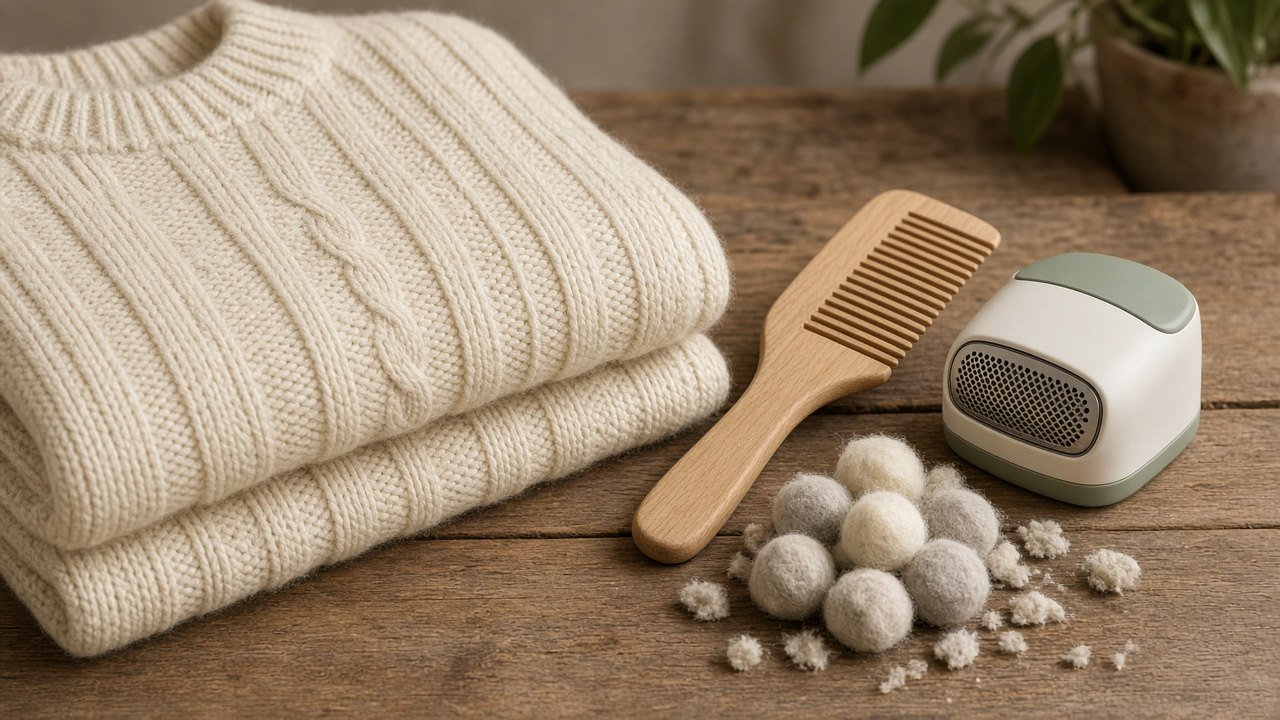
To de-pill a sweater, lay it flat, hold the fabric taut and gently remove the bobbles with a sweater comb, a fabric shaver or a pair of small scissors. Work in one direction with light pressure, then shake or lint-roll the loose fuzz away. Pilling is normal on wool and blends, and it usually slows down after the first few wears.
Quick answer
Lay the sweater flat, pull the fabric taut and glide a sweater comb or fabric shaver over the pills with light pressure. Finish by washing gently and drying flat.
Key takeaways
- Pills form where fabric rubs: underarms, sides and cuffs.
- Combs suit fluffy wool and cashmere; shavers suit flat, tighter knits.
- Never press hard or you can thin the knit or cut a hole.
- Wash less, wash inside out, and store folded to reduce new pills.
Why do sweaters pill?
Pills are small balls of short fibres that work loose from the yarn and tangle together on the surface. Friction is the trigger: a bag strap, your arms brushing your sides, or a rough wash cycle. Soft, short-staple fibres such as merino, cashmere and some cottons pill more than long, smooth fibres, and loosely spun yarns pill more than tightly spun ones. A bit of pilling is not a sign of poor quality on its own. It is how many natural knits wear in. If you are new to wool care, start with our guide to hand washing a wool sweater.
Which de-pilling tool should you use?
| Tool | Best for | Watch out for |
|---|---|---|
| Sweater comb (wooden handle, fine metal teeth) | Wool, alpaca, mohair, cashmere | Too much pressure can drag up new fibres |
| Sweater stone or pumice-style bar | Chunky knits and heavy wool | Can be rough on fine-gauge knits |
| Electric fabric shaver | Flat, tight knits and blends | Keep the guard on and the fabric flat to avoid cuts |
| Small sharp scissors | A few big pills on delicate knits | Slow; cut only the pill, never the yarn underneath |
| Lint roller or tape | Finishing off loose fuzz | Will not remove attached pills on its own |
How do you de-pill a sweater step by step?
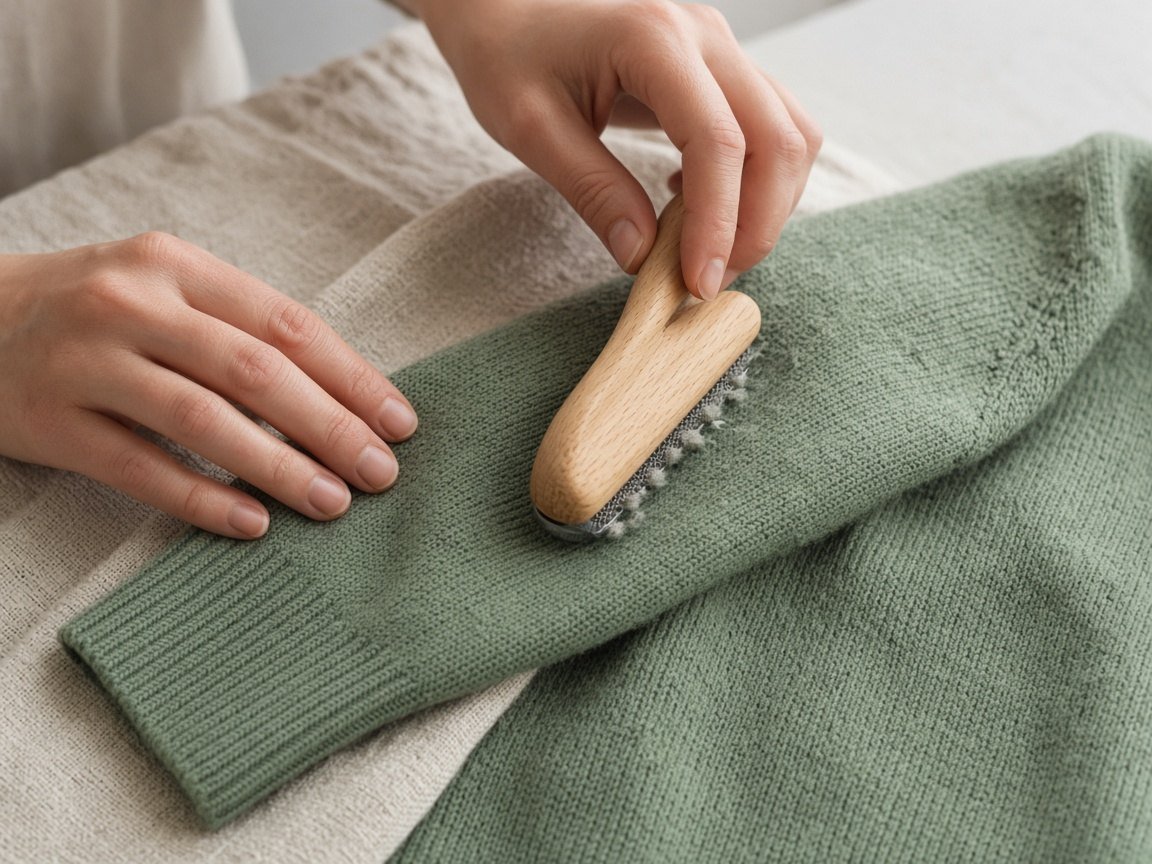
- Lay it flat on a table or ironing board in good light.
- Hold the fabric taut with one hand so the knit does not bunch.
- Work in short strokes in one direction, using light pressure.
- Check as you go. Stop when the surface looks even; do not chase every last fibre.
- Remove the fuzz with a lint roller or a quick shake outdoors.
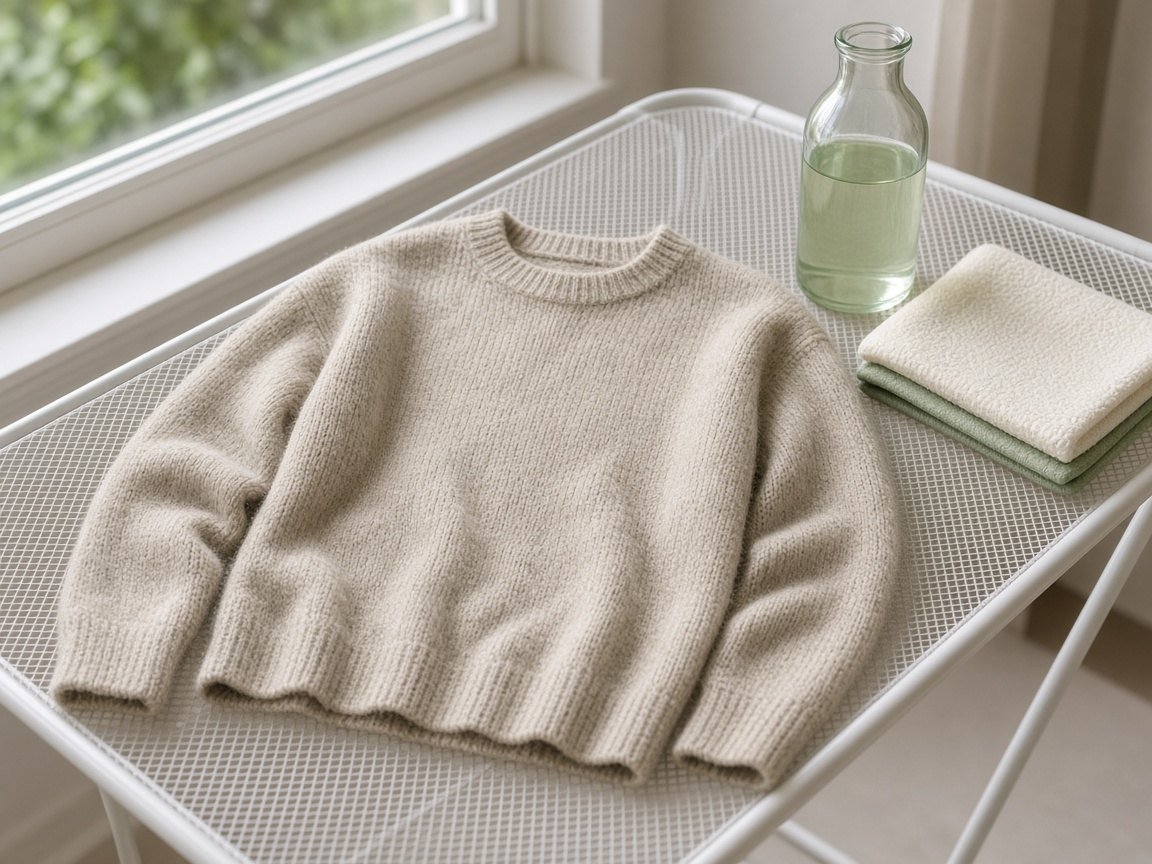
- Refresh the shape with a gentle wash or steam, then dry flat.
How do you stop sweaters pilling in the first place?
- Wash less often. Air a sweater on a chair overnight between wears.
- Wash inside out, on a wool or hand-wash setting, ideally in a mesh bag.
- Avoid rough bags and straps rubbing the same spot every day.
- Store knits folded, not hung, so the shoulders do not stretch. Our sweater storage guide covers moths and summer storage too.
- Give a new sweater a few wears. Early pilling often settles once loose fibres are gone.
Can you de-pill mohair, alpaca and hand knits?
Yes, but go gently. Fluffy fibres such as mohair and alpaca have a halo you want to keep, so use a fine comb or pick pills off by hand rather than shaving. Our mohair washing guide explains how to keep that fluff. For hand-knit hats and accessories, like those in our French Knot brand spotlight, snip only the biggest pills with small scissors, and see our hand-knit wool hats guide for care.
FAQ
Not necessarily. Many soft natural fibres pill at first. Heavy, constant pilling on a very loose knit can be a sign of short fibres or loose spinning.
A comb is gentler on wool, alpaca and cashmere. A shaver is faster on flat, tight knits and blends. Test on an inside seam first.
Only when it looks fuzzy. For most knits that is every few weeks of regular wear. Over-de-pilling can thin the fabric.
Some people do, but a disposable razor can easily cut the yarn. A shaver with a guard or a comb is safer.
Bottom line
A comb, a light hand and a flat surface fix most pilling in ten minutes. Washing less, drying flat and folding your knits will keep the bobbles from coming back so quickly.