
By Sarah J. · January 8, 2026
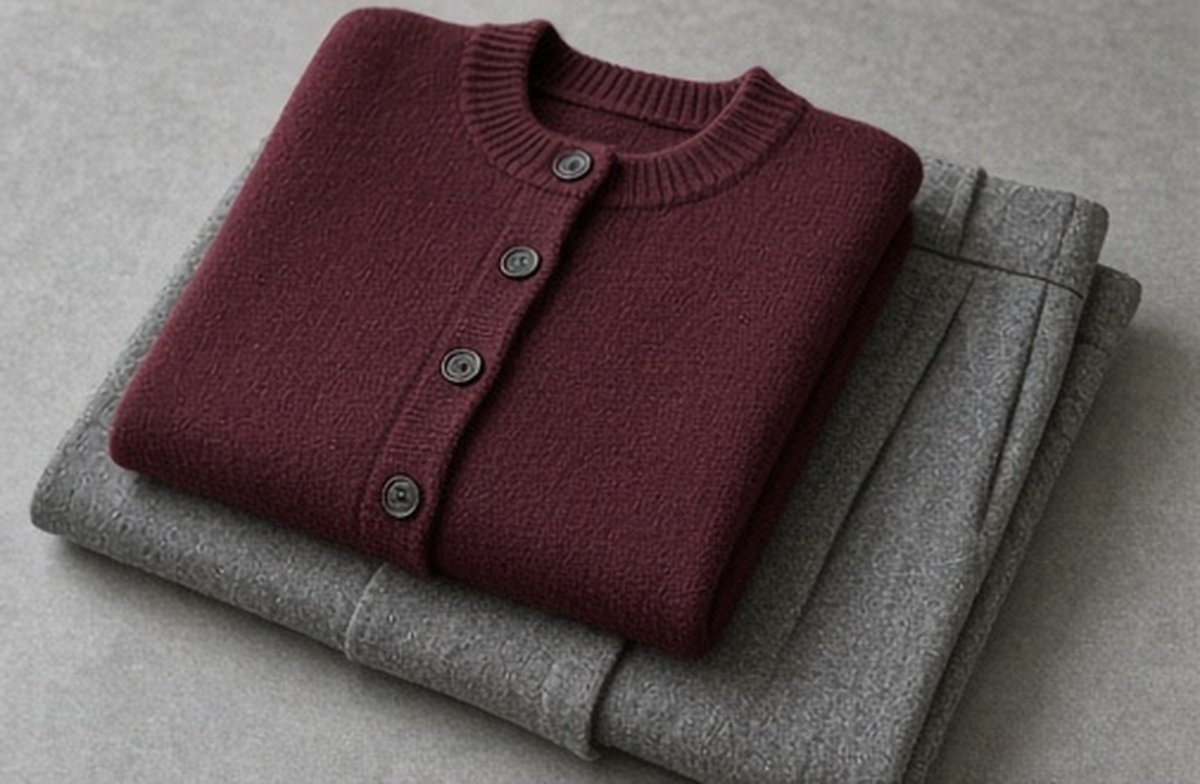
A winter cardigan needs a practical sleeve arrangement before you start at the sink. Check ordinary reach, keep cuffs clear without forcing them, and remove the layer where another suitable outfit is simpler; afterward, use the actual care label rather than a fibre-based shortcut if attention is needed.
Key takeaways
- Test a forward reach.
- Avoid straining the cuff.
- Keep removed layers clear.
Check the sleeve at rest
Notice where the cuff ends when your arms are relaxed, then reach forward as you would at the sink. A sleeve that looks tidy standing still may slide over your hand during the task. Compare an existing alternative rather than immediately seeking a new cardigan.
Avoid a forced solution
Do not stretch a narrow cuff over the forearm or secure delicate knitting with a rough clip. If the sleeve cannot stay comfortably clear, remove the cardigan before beginning and wear a suitable layer beneath. Follow workplace and food-safety requirements where relevant.
Give the removed layer a place
Set it somewhere clean and dry, away from splashes, heat and food. Reassess any mark before putting it back on; fibre type alone does not decide the cleaning method. The actual care label remains the starting point for treatment.
How do you assess a winter cardigan before starting at the sink?
Look at where the sleeves end with your arms relaxed, then make the ordinary forward reach relevant to the task over a clear area. A cuff that sits neatly while standing may move differently once the hands reach ahead. Keep the check gentle and practical rather than testing contact with water, food or tools to find out whether the fabric will get in the way.
Name the actual job and follow relevant task, workplace and food-safety requirements. Washing-up and food preparation are not simply outfit photographs; they involve materials and movements that need attention. Choose clothing that supports that work without continual adjustment. A cardigan can be a useful everyday layer while another familiar arrangement is more practical for this particular part of the day, and that limited role does not reduce its wardrobe value.
What should you notice about cuffs rather than sleeve length alone?
Check the opening, amount of fabric and how the sleeve behaves during ordinary movement. Two sleeves of a similar apparent length can have different constructions and handling needs. Do not assume that a relaxed cuff and a close cuff can be adjusted in the same way. Use the actual garment rather than a general rule that every knit can be rolled or pushed into a stable working position.
If the cuff needs force to stay clear, choose another appropriate arrangement instead of holding it with an improvised clip or stretching it tightly over the forearm. A temporary-looking adjustment can still be unsuitable for the construction. The goal is manageable work, not proving that a favourite layer must remain on throughout every household task or that one sleeve solution belongs to every cardigan in the wardrobe.
When is removing the cardigan the simpler choice?
If no intended comfortable arrangement keeps the sleeves appropriately clear, use a suitable layer beneath or another familiar outfit before beginning. Keep that decision ahead of the task rather than waiting until your hands are wet and you are repeatedly moving the fabric back. A brief clothing change can be easier than maintaining an awkward workaround while also managing the materials and instructions of the job.
Choose for the actual room and your own comfort without treating removal as a universal rule. Another cardigan may behave differently, or a different task may not create the same sleeve issue. The useful conclusion is specific to the garment and setting. You do not need a new category of short-sleeved knitwear merely because one existing piece is inconvenient at the sink on this occasion.
Where should the removed layer go?
Select a clean, dry, appropriate place away from splashes, heat, food and working materials. Follow the garment’s support needs rather than hanging every knit from the nearest narrow point. Keep shared space available where others need it. A location that is clear at the beginning can become part of the task later, so notice if supplies or wet items spread into the area you chose.
If using a bag or another existing container, check its actual contents and capacity. Do not force the cardigan against rough or damp belongings simply to clear the surface. Keep the location known so the layer can be retrieved without searching through several temporary piles afterward. Appropriate off-body handling is part of the work outfit decision, not an afterthought that begins only when the cardigan has already been dropped somewhere convenient.
What if the cardigan needs attention after the task?
Assess the actual condition and read the complete care label before choosing a process. A mark, dampness or another issue needs item-specific guidance, not an assumption that all knitwear accepts the same treatment. Keep known handling history available if you ask for advice. Do not copy a product used for cleaning the work area onto the garment or improvise a method simply because the task has finished and you want the outfit back immediately.
Keep the layer distinct from ready clothing while a care question remains unresolved. A neat fold does not establish that the garment is available again. Choose another suitable familiar layer if needed rather than making the next part of the day depend on an unverified quick fix or drying promise. The immediate clothing choice and the appropriate care decision can be separate, allowing each to be made without unnecessary pressure.
How can this become an easy ordinary routine?
Keep the useful arrangement tied to the task: check reach, decide what stays on, and choose a suitable place for anything removed. Use existing clothing and space where they meet the brief instead of buying a dedicated system automatically. If the same sleeve problem repeats, change that specific relationship rather than asking the garment to tolerate a tighter adjustment or treating every cardigan as unsuitable for everyday life.
Afterward, review what actually helped. Perhaps removing the layer before starting was simplest, or another familiar sleeve arrangement worked comfortably. Retain the specific result without making a universal claim about cuff recovery or fabric performance. An everyday wardrobe gains practical value when different pieces can have different jobs. The cardigan can return to the part of the day it suits without being required to serve every task at the sink.
An everyday outfit should support the actual day. Treat sleeve management as part of choosing the layer, rather than expecting a favourite knit to suit every household task.
Which practical check fits the situation?
| Situation | Practical check |
|---|---|
| Before work | Check normal reach and choose a manageable sleeve arrangement. |
| If removed | Use suitable clean support away from the task. |
| Afterward | Assess actual condition and follow the complete care label. |
Related reading
- A Winter Cardigan at a Desk: Check Elbows and Keyboard Reach
- Merino Beneath a Vest: Keep the Arms in the Winter Outfit Plan
- Knitwear Beside Gift Ribbon: Keep Wrapping Fastenings Separate
Frequently asked questions
Not always, but construction varies. Do not force a cuff that feels strained or fails to recover.
Not necessarily. An existing suitable layer or removing the cardigan may solve the practical problem.
Use a clear ordinary reach check and choose a suitable arrangement before contact with the working materials.
Not automatically. An existing alternative or removing the layer may solve the practical question.
No. The garment’s actual care guidance and condition determine the appropriate next step.