
By Sarah J. · January 21, 2026
A merino travel top needs clear ownership and responsibility before it joins shared laundry. Agree who will handle it, keep the actual care label available and use an appropriate identifiable place for clothing awaiting a decision; a shared basket does not establish one suitable process for everything inside.
Key takeaways
- Agree on responsibility.
- Separate unresolved items.
- Use the actual label.
Make the conversation ordinary
Tell your host or travel companion which clothing you will look after yourself. Do this before a wash is underway, not after discovering that a favourite top has disappeared from the room. Keep the request practical rather than presenting your clothing as unusually important.
Choose a separate place
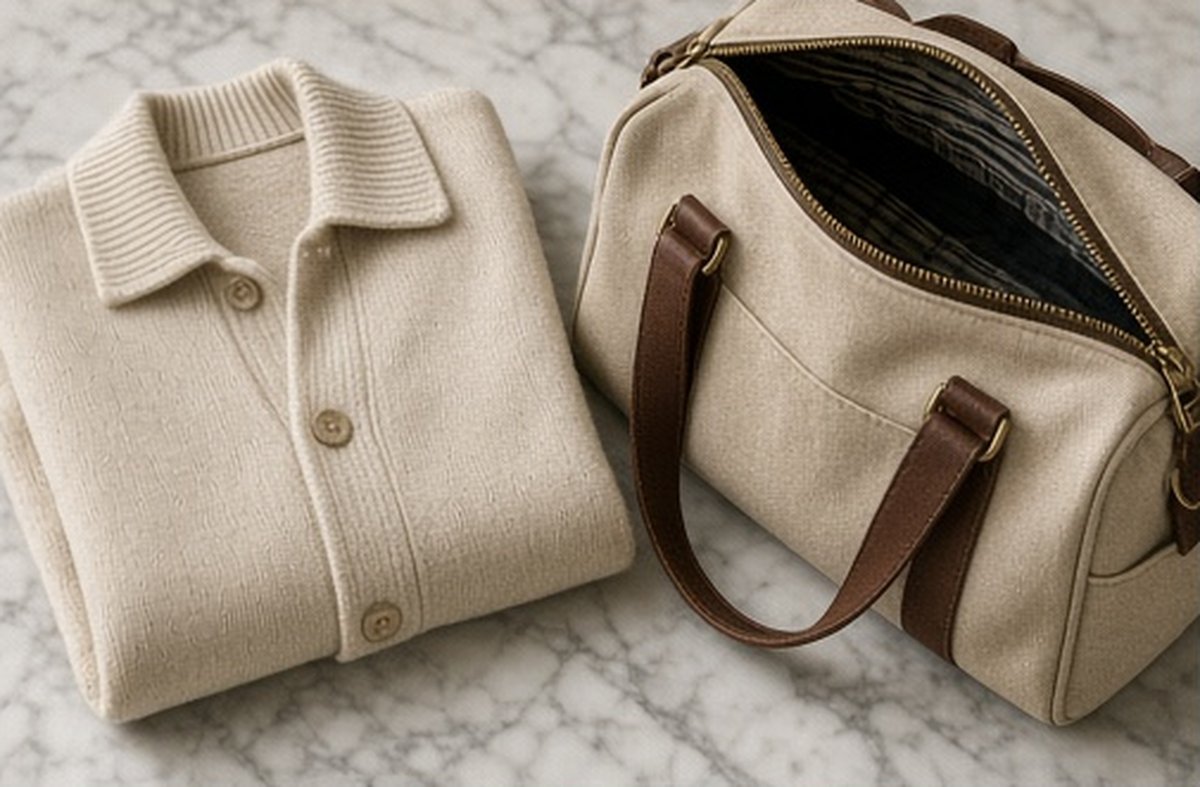
Use an appropriate clean storage space for items awaiting your own care decision. Keep damp garments from sitting compressed against dry ones. Avoid a decorative bag whose purpose is unclear if someone else may reasonably mistake it for a ready-to-wash laundry load.
Leave usable instructions
If another person is helping by agreement, show the actual label and discuss any uncertainty. Do not pass along a universal merino recipe instead. Return the garment to a known place once the care process is finished and it is fully dry.
How should merino enter a shared laundry arrangement?
Start the conversation before clothing is gathered for a wash. Explain which personal items you will look after yourself and ask about the household’s actual arrangement. Keep the request ordinary and practical rather than presenting one garment as more important than everyone else’s belongings. The useful agreement identifies responsibility, not a special status that others must infer from a fibre name or an unfamiliar packing bag.
If someone offers help, distinguish accepting the offer from authorising an assumed process. Show the garment information and confirm what is actually agreed. A good intention does not supply missing instructions, and the presence of a top in a common area can be misunderstood. Clear communication at arrival is usually easier than reconstructing the arrangement after another person has reasonably believed the whole basket was ready for one wash.
Where should clothing awaiting your decision go?
Choose suitable available space and keep ownership recognisable. Ask before claiming a shelf or shared chair, and follow the garment’s handling needs. A separate bag can help identify personal items, but its purpose should be clear to anyone who may handle the room. A decorative container that looks like an ordinary laundry collection does not explain whether its contents are waiting for you or offered for household care.
Keep ready clothing separate from damp or soiled items as appropriate. Do not compress an unresolved garment against the layer reserved for the journey home merely to make storage look tidy. The container is an organising aid, not a treatment or a guarantee of readiness. If the actual condition changes during the stay, reassess the arrangement instead of assuming that the original place remains suitable for every state.
What information does an agreed helper actually need?
Provide the complete item’s care label and clarify an important uncertainty before the process begins. A general merino recipe cannot replace garment-specific guidance. Keep the identity attached where several similar tops are present, and distinguish this item from another person’s clothing. The helper should not have to guess which instruction belongs to which piece or infer a complete routine from a familiar material word.
Discuss only the practical details needed for the agreed task, including any relevant limitation of the available facilities. Do not assume that permission to wash also establishes a drying or finishing method. A complete process can have several stages, and the clothing should remain in an understandable state between them. If an essential detail is unresolved, keep responsibility with the appropriate person rather than passing along a confident improvised shortcut.
How do you avoid losing ownership among similar tops?
Notice an existing identifying feature such as neckline, construction or a familiar label, rather than relying on colour alone. Several dark travel layers can look similar when folded. Keep the chosen place known and use the household’s agreed process if items are moved. Do not search private belongings or take a similar replacement if the top cannot immediately be found; ask through the appropriate shared arrangement.
Avoid permanent marking or improvised attachments solely to solve a temporary organising question. The actual material and owner’s preferences matter. A brief explanation and a known place may be enough. Recognition is useful alongside responsibility, not instead of it: knowing which top is yours still leaves the separate question of who will handle care and what instructions apply before the garment returns to use.
When can the top return to the ready outfit count?
Assess the complete process and actual condition, including appropriate drying, before marking the item ready. Completing one stage or folding the garment neatly does not automatically settle everything needed. Keep unfinished care visible rather than returning the top to the same stack as ready clothing because a household task has ended. The practical state matters more than the visual order of the storage area.
Count the physical garment once. Several planned outfits may all depend on this top, so an unresolved care need affects those versions together. Choose a suitable familiar alternative where departure or another activity cannot depend on an uncertain turnaround. This is not a fixed wear-count rule or a demand to carry duplicates; it is an honest distinction between clothing owned, clothing being cared for and clothing available now.
What should you check before leaving the shared stay?
Collect your own items from the agreed places and account for clothing at each stage of care. Ask about anything still unresolved rather than assuming an absent top is already packed. Keep household textiles separate from your belongings and thank anyone who helped without making them responsible for an arrangement that was never clear. A simple physical check supports the earlier agreement and reduces confusion during a busy departure.
At home, retain useful garment guidance and review the one part that mattered most: clearer responsibility, a better identified place or a more realistic care plan. Shared laundry does not need a complicated travel system. It works when ownership, actual instructions and the state of the garment remain understandable, allowing help to be genuinely useful without turning a well-meant household wash into a clothing problem.
Good shared-laundry arrangements are mostly communication. Keep ownership, responsibility and instructions clear so a well-meant household wash does not become a travel clothing problem.
Which practical check fits the situation?
| Situation | Practical check |
|---|---|
| Responsibility | Agree who handles this actual garment before laundry is gathered. |
| Instructions | Keep the complete care label associated with the right item. |
| Readiness | Finish the relevant process and assess condition before assigning another use. |
Related reading
- Merino Travel Layers When You Share a Coat Rack
- Merino Beneath a Vest: Keep the Arms in the Winter Outfit Plan
- Merino Socks for an Overnight Visit: Keep a Dry Indoor Pair Available
Frequently asked questions
No. It helps keep items distinguishable, but anyone handling the care still needs the garment-specific information.
Not automatically. Assess condition and the garment's own guidance rather than using a fixed schedule based on fibre alone.
Not by itself. Make its purpose and responsibility clear to the people sharing the space, and keep the actual care information available.
Do not assume that. Clarify the relevant stages and item requirements before treating the whole process as agreed.
No. Check ownership through the agreed household arrangement and keep uncertainty visible rather than substituting another person’s clothing.