

This post may contain affiliate links. We may earn a commission if you buy through them, at no extra cost to you. See our Affiliate Disclosure.
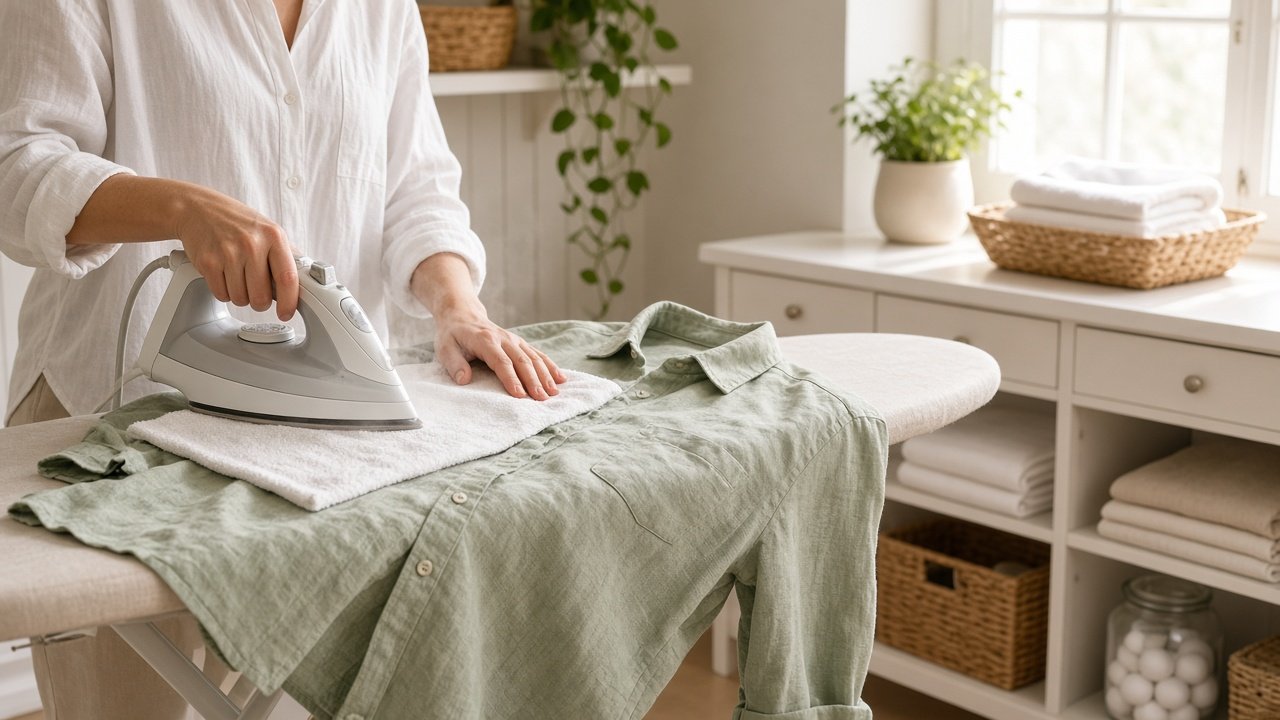
To iron linen clothes, iron them while they are still slightly damp on a hot linen setting, or use a steam iron with a pressing cloth on dry linen. Work in sections, press rather than drag, and hang the piece immediately. Many people also skip the iron and wear the natural crease as part of linen’s look.
Quick answer
Iron linen damp on a hot linen setting, or steam with a cloth. Press in sections, hang straight away, or embrace the crumple if you prefer the lived-in look.
Key takeaways
- Damp linen presses more easily than bone-dry linen.
- Use the linen setting; finish seams on the reverse if they shine.
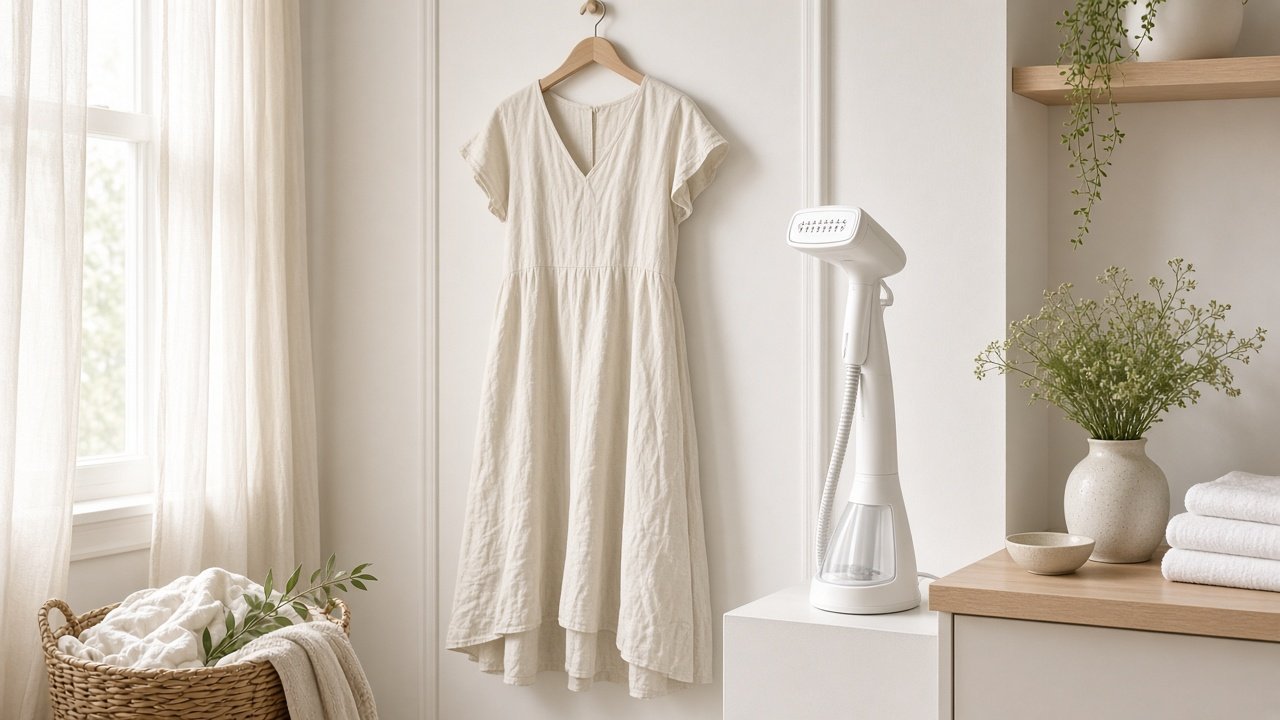
- A steamer works well for dresses and trousers on a hanger.
- Washing and hanging carefully reduces how often you need either.
Pair this with our guide to washing linen clothes and linen trousers tips.
Should you iron linen at all?
Linen creases. That is part of the fibre. Some outfits look better softly crumpled; others (a wedding guest dress, a sharp shirt) look better pressed. There is no rule that linen must be glassy smooth. Decide based on the occasion, then use the lightest method that gets you there.
How do you iron linen step by step?
- Check the care label for heat limits and any “do not iron” trims.
- Start with slightly damp fabric, or mist dry fabric lightly.
- Set the iron to linen (usually high) and turn off heavy steam if the cloth is already wet.
- Press on the reverse for dark colours or delicate weaves; use a pressing cloth on the right side if needed.
- Work from collar or waistband outward. Lift and press; do not scrub the iron around.
- Hang or lay flat immediately so new creases do not set.
Iron, steamer or wear the creases?
| Method | Best for | Watch out for |
|---|---|---|
| Damp ironing | Shirts, trousers, structured dresses | Too dry = hard work; too wet = water spots on some dyes |
| Steamer on a hanger | Floaty dresses, pleats, travel touch-ups | May not crisp a collar the way an iron does |
| Wear the crumple | Weekend linen, beach cover-ups, relaxed trousers | Not ideal when you want a polished look |
| Tumble with a damp cloth (short) | Softening wrinkles before hanging | Heat can shrink some linen; check the label |
How do you reduce ironing in the first place?
- Shake garments out of the wash and hang them shaped on sturdy hangers.
- Smooth seams with your hands while the cloth is damp.
- Fold knit-style linen less tightly; roll soft pieces for travel.
- For travel packing that expects wrinkles, see our one-bag packing list and long-haul outfit guide.
- If you are choosing fabric for summer, our hemp vs linen comparison notes which blends crease less.
Flow Check: not PERFECT LINEN
- What it is: Made-to-order linen from Lithuania; pieces are prewashed before shipping per the brand.
- Who it’s for: People who want linen that arrives softened and ready to wear.
- What to know: Prewashing reduces some first-wash drama; creases will still appear, which is normal for linen. Visit not PERFECT LINEN
More on that label in our not PERFECT LINEN brand spotlight. For outfit ideas once the cloth is ready, try linen dress outfit ideas.
FAQ
Use the linen setting on your iron, usually the hottest. If you are unsure, start cooler with steam and a pressing cloth.
Slightly damp is easiest. Bone-dry linen fights the iron; soaking wet linen can leave marks on some dyes.
Yes. A steamer is excellent for dresses and trousers on a hanger, especially when travelling.
Linen fibres have low elasticity, so creases stay until heat, moisture or washing resets them. It is a feature of the fibre, not always a flaw.
Bottom line
Iron linen damp when you want polish, steam when you want speed, or skip both when the crumple suits the day.