
This post may contain affiliate links. We may earn a commission if you buy through them, at no extra cost to you. See our Affiliate Disclosure.
Knowing how to wash a turtleneck protects the neckband: support the wet knit, avoid hanging heavy water weight, and reshape the collar while damp.
Quick answer
Wash cool on a wool or gentle cycle in a mesh bag — or hand wash — then dry flat and reshape the neck; never hang a soaking turtleneck.
Key takeaways
- Support wet knits.
- Dry flat.
- Reshape the neck damp.
- Skip hot dryers for wool.
More care: hand wash wool, blocking and cashmere vs merino care.
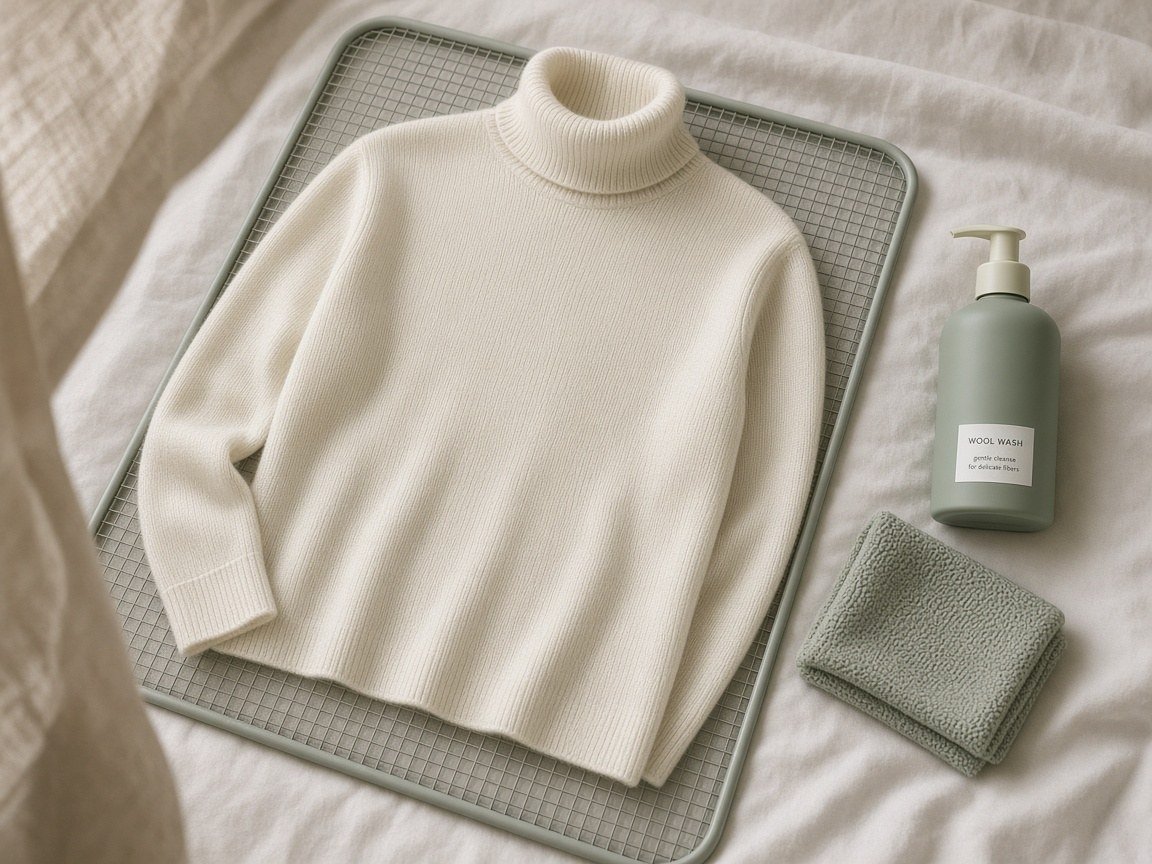
Wool and merino turtlenecks
- Turn inside out.
- Cool water, wool wash.
- Mesh bag if machine washing on wool cycle.
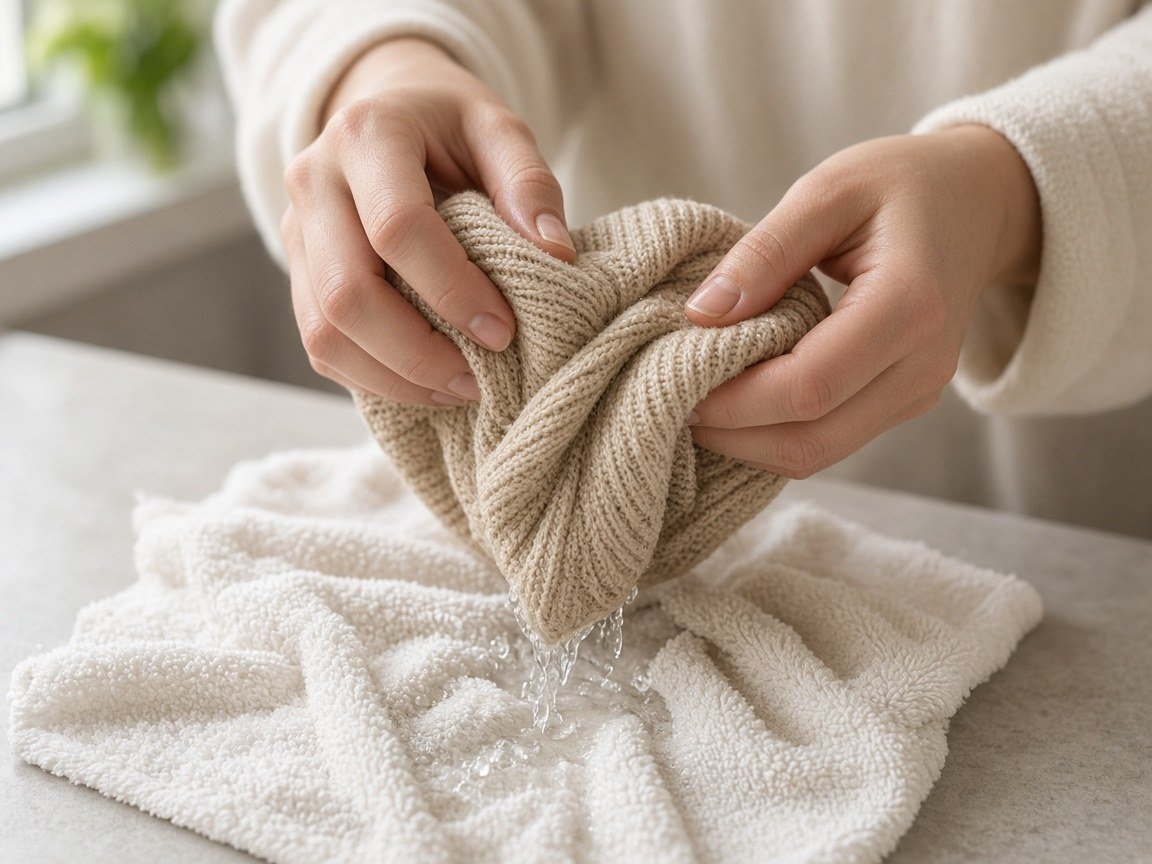
- Press water out; do not wring the neck.
- Dry flat; reshape collar.
Cotton turtlenecks
Cotton often tolerates a gentle machine wash, but necks still stretch if hung wet. Dry flat or on a wide hanger only when nearly dry.
| Fibre | Wash | Dry |
|---|---|---|
| Merino / wool | Cool wool cycle or hand | Flat; reshape neck |
| Cotton | Gentle cool/warm per label | Flat preferred |
| Blends | Follow dominant fibre | Check the care label |
How to fix a stretched neck
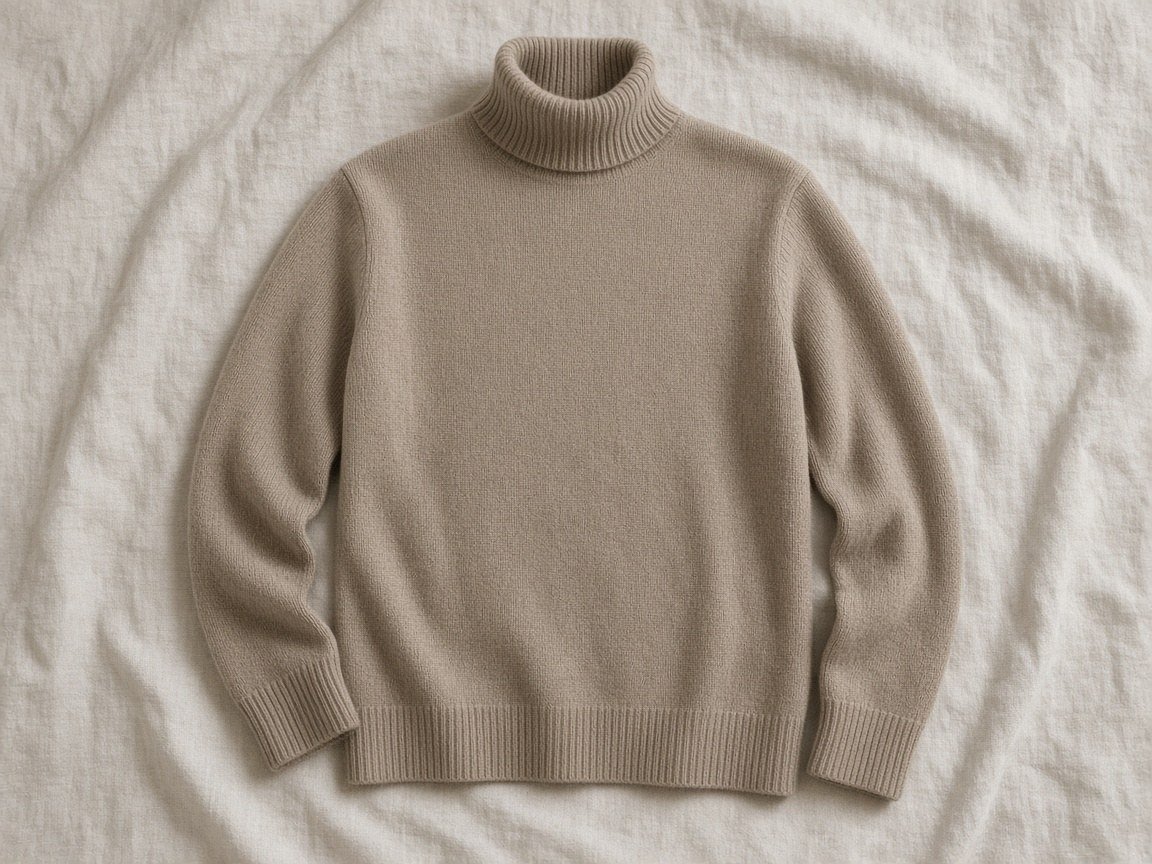
While damp, ease the neckband back into a smaller circle and dry flat. Severe stretch may need a tailor or a new piece.
FAQ
Avoid high heat for wool; cotton may shrink — check the label.
Hanging wet knits pulls the band; dry flat next time.
Hand wash is gentlest; a wool cycle in a mesh bag is a practical middle.
Air between wears; wash when odour or marks appear.
Bottom line
Turtleneck care is mostly about not letting water weight stretch the neck — dry flat every time.