
This post may contain affiliate links. We may earn a commission if you buy through them, at no extra cost to you. See our Affiliate Disclosure.
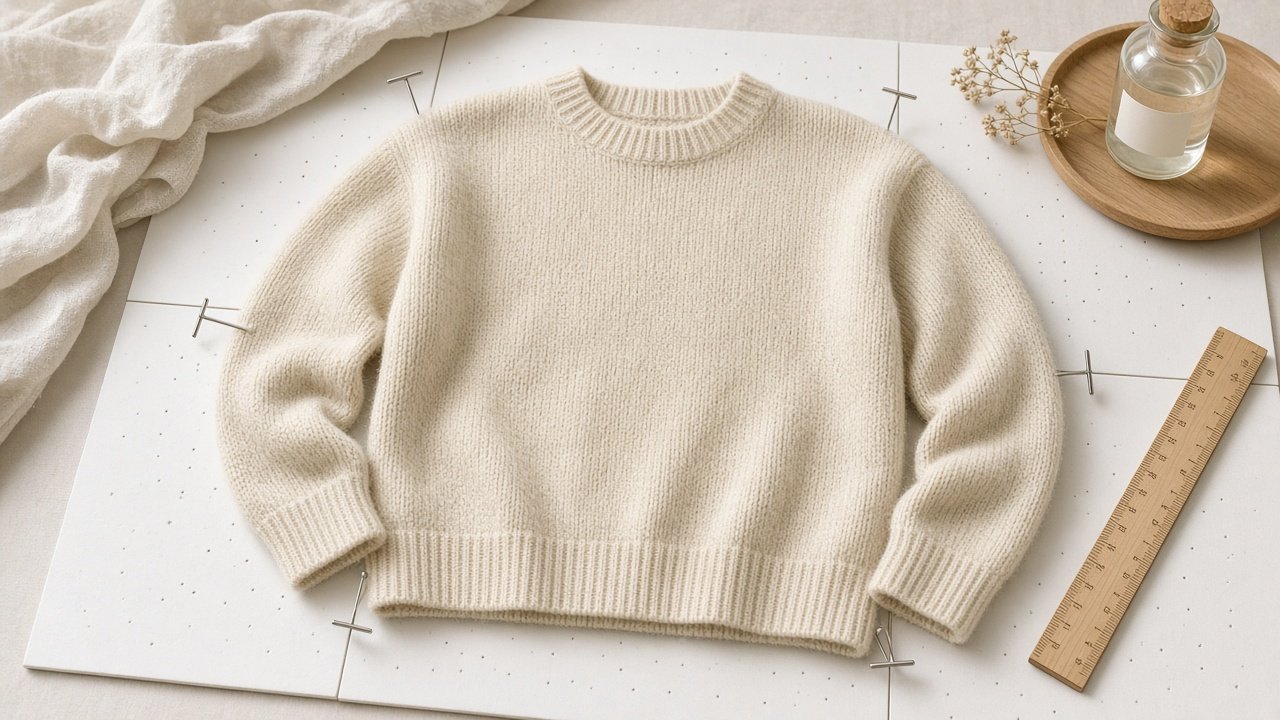
To block a wool sweater, wash or wet it, gently squeeze out water, lay it flat on towels or a mesh rack, and ease it into the shape and measurements you want while it dries. Blocking sets the stitch pattern, evening out uneven edges after washing or knitting.
Quick answer
Wash or thoroughly wet the sweater, press out water without wringing, lay it flat, pin or pat it to the right measurements, and leave it to dry fully before moving it.
Key takeaways
- Blocking is shaping while damp, not stretching aggressively.
- Use rust-proof pins or blocking wires on lace and open knits.
- Most ready-to-wear sweaters only need a gentle flat dry after washing.
- Never hang a wet wool sweater to dry; it will grow.
What does blocking a wool sweater mean?
Blocking means letting damp wool dry in the shape you want. Knitters block finished projects so lace opens and seams sit flat. For a store-bought sweater, a milder version is what you already do when you hand wash a wool sweater and dry it flat to the original size.
When should you block a sweater?
- After washing, if the hem or cuffs look wavy.
- After knitting or repairing a section, so new stitches match the rest.
- When a sweater has grown in the wash and you want to ease it back while damp.
- After de-pilling, if you want the surface to settle again.
How do you block a wool sweater step by step?
- Wash or wet it. Use cool water and a wool wash. Support the garment when you lift it.
- Remove water. Press in the sink, then roll in a towel. Do not wring.
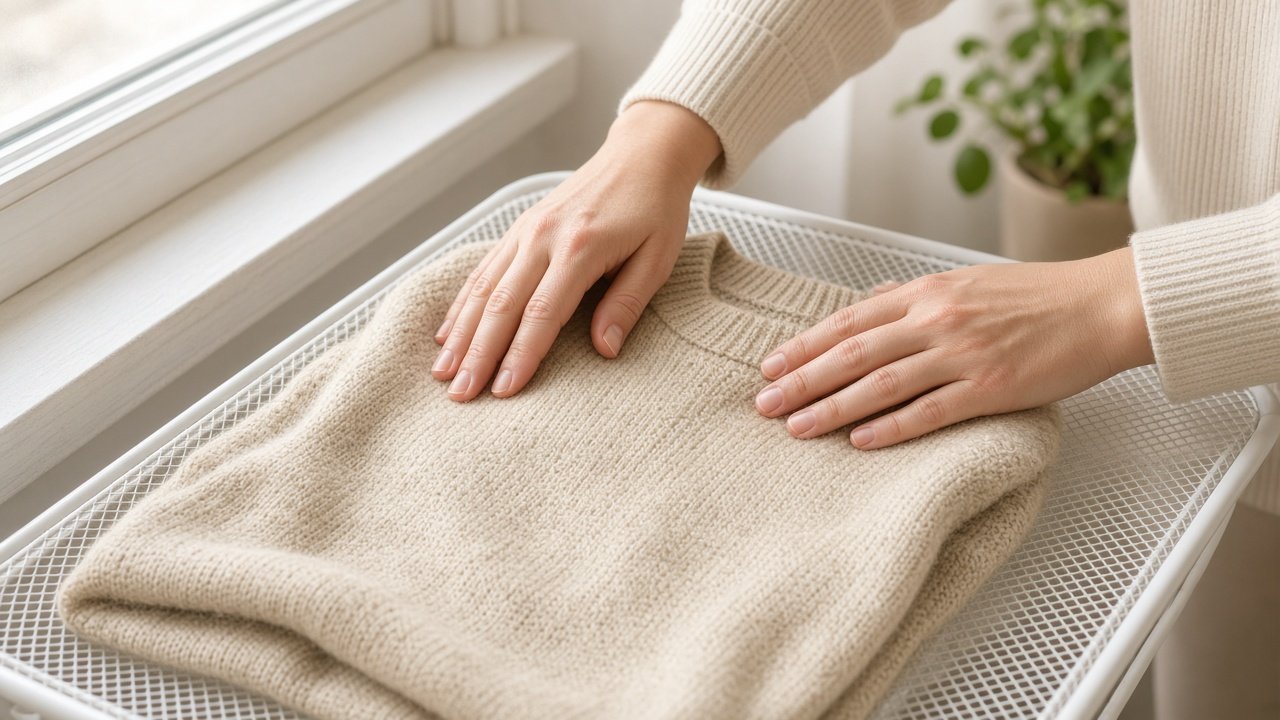
- Lay it flat on dry towels or a mesh rack away from direct heat.
- Shape it. Pat the body, sleeves and neckline into even lines. Match left and right.
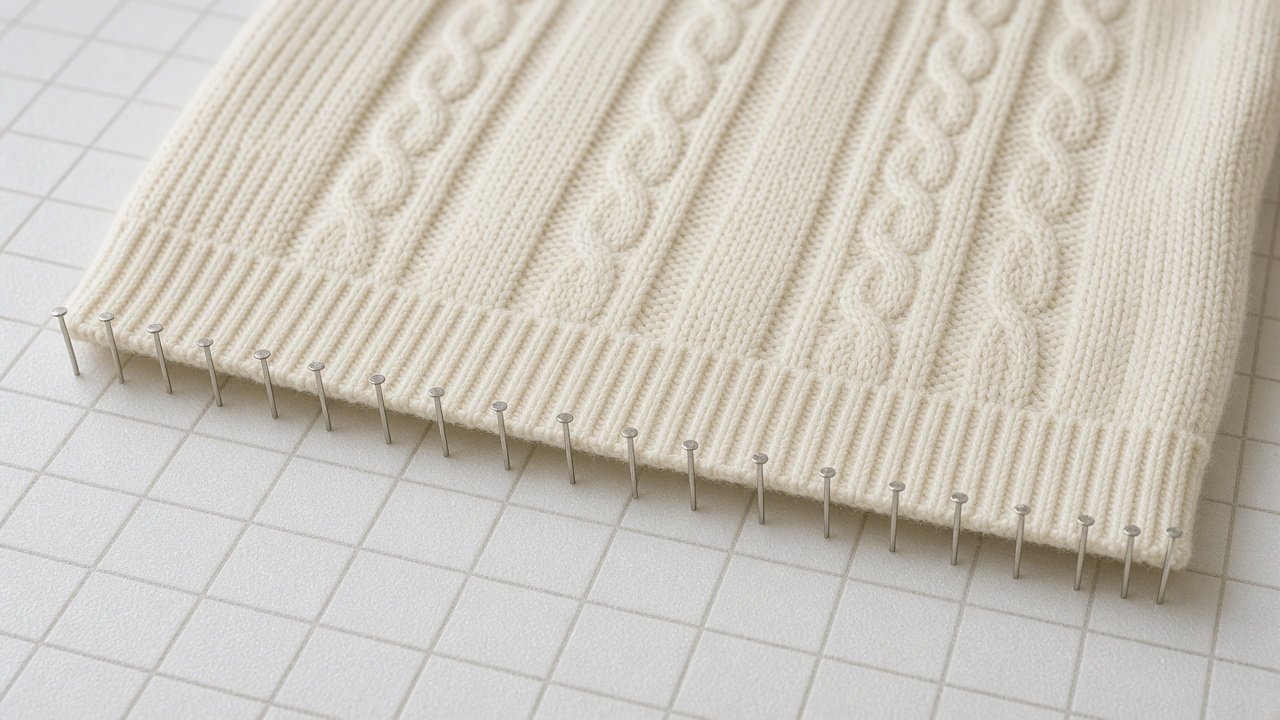
- Pin only if needed. Use rust-proof pins on stubborn edges or lace. Skip pins on delicate ready-to-wear if a gentle pat is enough.
- Dry fully before wearing or folding. Thick knits can take a day or more.
Do you need special tools?
| Tool | Useful for | Skip if |
|---|---|---|
| Towels or a mesh drying rack | Almost every sweater | — |
| Rust-proof T-pins | Lace, scalloped hems, stubborn edges | The sweater is delicate or already the right shape |
| Blocking wires | Long straight edges on hand knits | You only own ready-to-wear basics |
| Measuring tape | Matching sleeve lengths and width | You are only refreshing shape after a wash |
Can you block alpaca, mohair and cotton knits?
Yes, with care. Alpaca and mohair have less memory than springy wool, so shape them gently and avoid heavy stretching; our alpaca vs merino guide explains the fibre differences. Cotton can stretch when wet, so measure as you go. For fluffy fibres, see our mohair washing guide before you pin through a halo.
How do you keep the shape afterwards?
- Dry flat every time, then store folded, not hung.
- Wash less often; air between wears.
- Fold heavy sweaters rather than hanging them from the shoulders.
FAQ
No. Blocking eases a damp knit into shape. Aggressive stretching can distort stitches and weaken yarn.
Yes. Many ready-to-wear sweaters only need to be patted flat to size on a towel or rack.
Often overnight for a light sweater; thick cables can take 24 to 48 hours. Move air around the room, not heat onto the wool.
Only within reason. A little growth can be eased back while damp. A size that is far too large needs altering or living with.
Bottom line
Wet, squeeze, lay flat, shape, wait. That is blocking. Do it after washes that leave a sweater wavy, and your knits will look intentional again.