
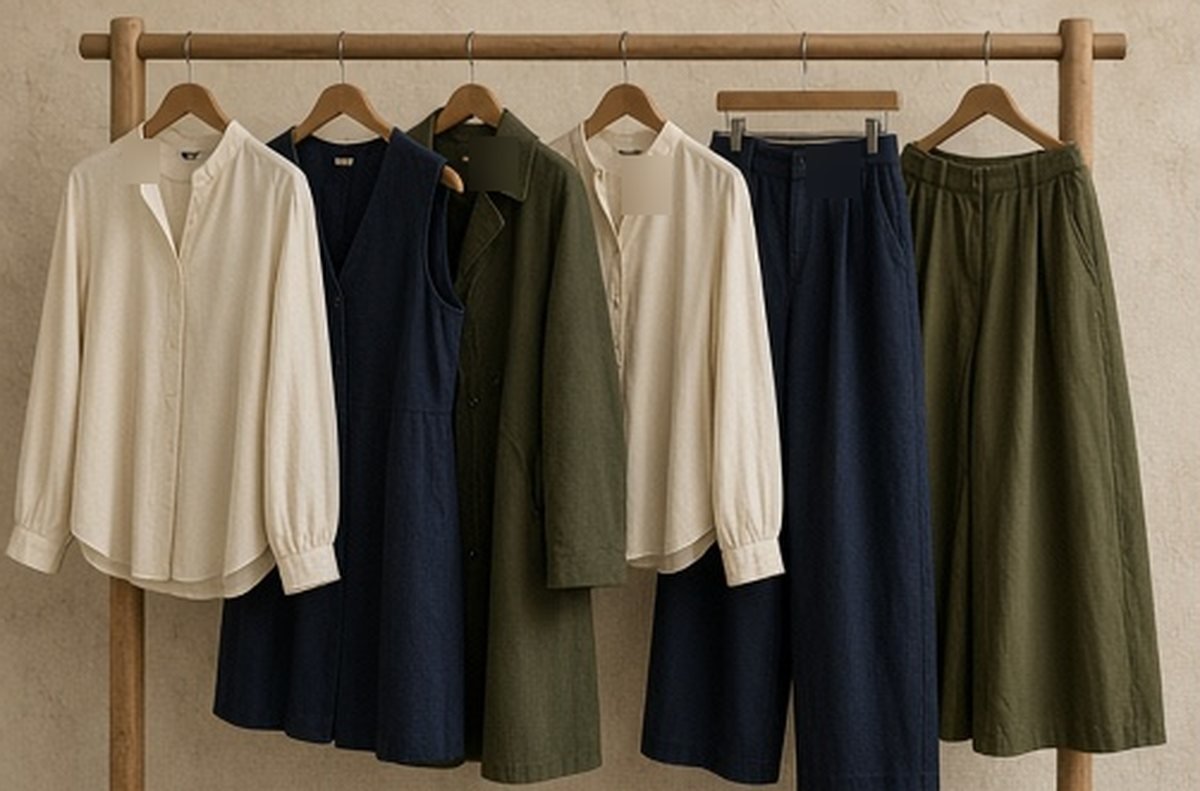
A shirt beneath a sweater can look effortless until the sleeves bunch, the collar twists and the hem needs pulling down every few minutes. Layering problems are often practical rather than aesthetic. The pieces may be individually comfortable but poorly matched when worn together. An outfit test can reveal those interactions before a busy day does.
There is no single correct hem ratio for every body or silhouette. You may like a visible shirt tail, a cropped layer or a long line under a coat. The useful question is whether the combination behaves as you want while sitting, walking and carrying your normal bag. Appearance matters, but it is only one part of the test.
Start with the layer closest to the body
Put on the underlayer and move normally before adding anything else. Check that it fits comfortably on its own. A shirt already pulling across the shoulders will not become less restrictive beneath knitwear. A top that rides up may create an even more awkward fold when another garment holds it in place.
Use the underwear or base layer you will actually wear. Different fabrics and seams can change how clothing slides and settles. If the combination only works over a particular undergarment, note that requirement. A useful outfit needs all its supporting pieces to be available on the day.
Add the middle layer slowly
Notice where the shirt sleeves, shoulder seams and side seams settle inside the knit. Smooth them without tugging hard. If there is considerable bunching at the upper arm or underarm, compare a different sleeve shape or a less bulky underlayer rather than assuming repeated adjustment will solve it.
Check the necklines together. A collar can sit comfortably above one crew neck and feel trapped beneath another. Buttons, plackets and decorative details may create pressure under a close knit. The issue is not whether either piece is good; it is whether their construction works as a pair.

Decide what the visible hem should do
Look at the outfit standing naturally. If you want the underlayer to show, check that the amount is intentional to you and does not interfere with pockets or movement. If you want it hidden, see whether a simple tuck is comfortable rather than trying to force excess fabric into a tight waistband.
Consider the sides and back as well as the front. Curved shirt tails can create a different line from straight hems. An asymmetric result may be exactly what you like, or it may feel distracting. There is no need to adopt a formula that conflicts with your preferences.
Sit down before deciding
Spend a few minutes in a normal chair. Notice what happens at the waist, lower back and front hem. Layers that look smooth while standing can bunch when seated, especially with a belt or a structured waistband. Check whether you can stand again without a major rearrangement.
If the shirt repeatedly pulls out of a tuck, try a different approach: a looser tuck, wearing it untucked or choosing another underlayer. Do not make an ordinary outfit depend on carefully maintained posture. Clothes should accommodate your day rather than require you to remain in a photograph.
Add the coat and bag
The outer layer can change everything. Sleeves that felt comfortable under a cardigan may become restrictive inside a fitted coat. A bag strap can hold one side of a shirt in place while the rest moves. Put on the actual items and walk around before calling the outfit finished.
Check access to pockets, closures and your phone. If reaching an inner pocket requires lifting several layers, decide whether that is acceptable. An attractive layered outfit can still be inconvenient if its everyday functions are buried. Move essentials to a suitable accessible place rather than loading every layer with objects.
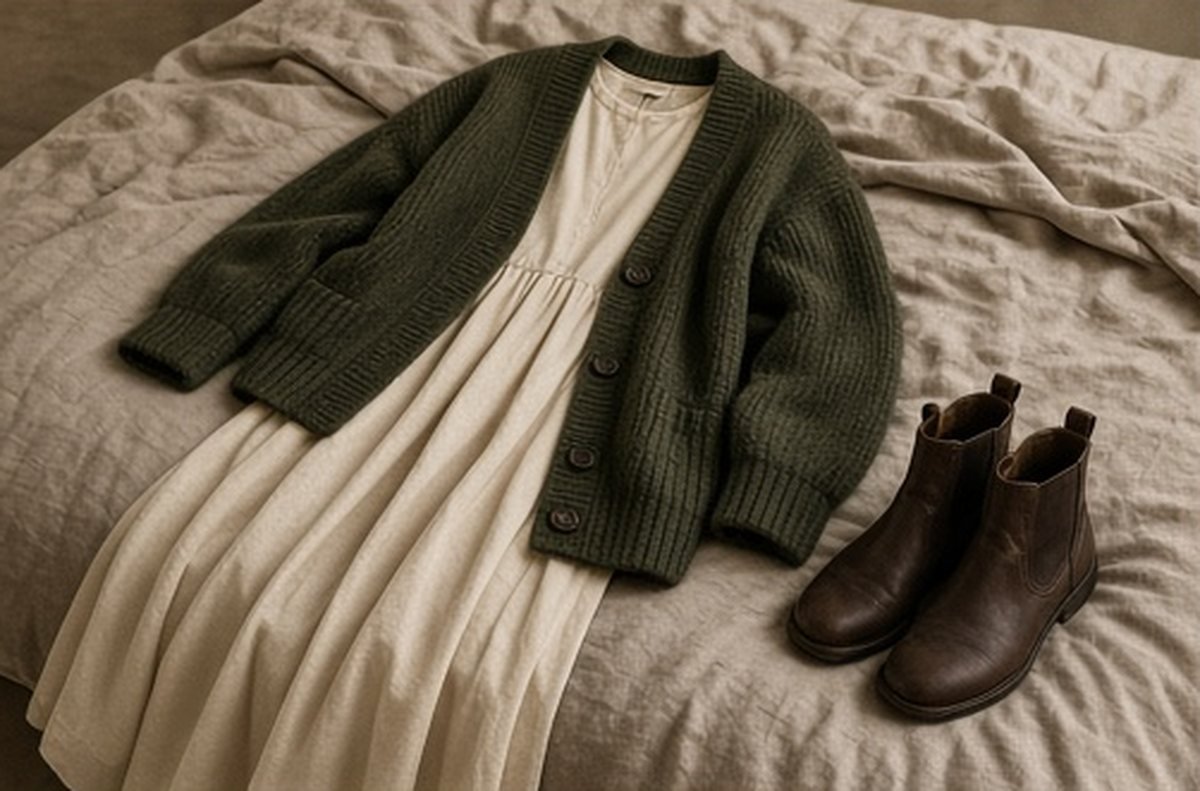
Consider friction and fabric weight
Some surfaces slide easily against each other; others catch. A textured knit over a loose shirt may behave differently from a smooth layer over a fitted top. Try the actual combination rather than predicting the result solely from fibre names. Linen, cotton and wool each appear in many fabric constructions.
Avoid treating greater weight as automatic warmth or better quality. A heavy layer can create bulk without solving the particular temperature problem. Choose the system according to the weather and your activity, and leave enough room for comfortable movement. Appropriate rain protection remains a separate consideration.
Make removal part of the test
If the afternoon will be warmer, take the outer or middle layer off and see what remains. Does the underlayer feel complete and comfortable on its own? Can you carry the removed piece without creating an awkward load? An outfit designed only for the coldest part of the day may be less flexible than it first appears.
Think about where removed layers will wait at work or during travel. A delicate knit may need more careful handling than a robust overshirt. You do not need a specialised storage accessory for every outfit, but a practical place to put clothing helps prevent avoidable stretching or creasing.
Keep one reliable combination
When you find a pairing that works, record the exact pieces and supporting items. A quick photograph can help, but include a note about comfort rather than appearance alone. This becomes a dependable option for mornings when you do not want to experiment.
If a combination fails, identify the interaction rather than rejecting both garments. A shirt may work beautifully under a roomier cardigan, and a close knit may be ideal over a simple base top. Recombining existing pieces can solve more than buying another layer without understanding the problem.
A good layered outfit needs no universal proportion rule. It needs hems that stay where you want them, sleeves that allow movement and a temperature plan that fits the day. When those elements cooperate, the visual result often feels easier too, because you can stop thinking about the clothes and get on with what you are doing.