
This post may contain affiliate links. We may earn a commission if you buy through them, at no extra cost to you. See our Affiliate Disclosure.
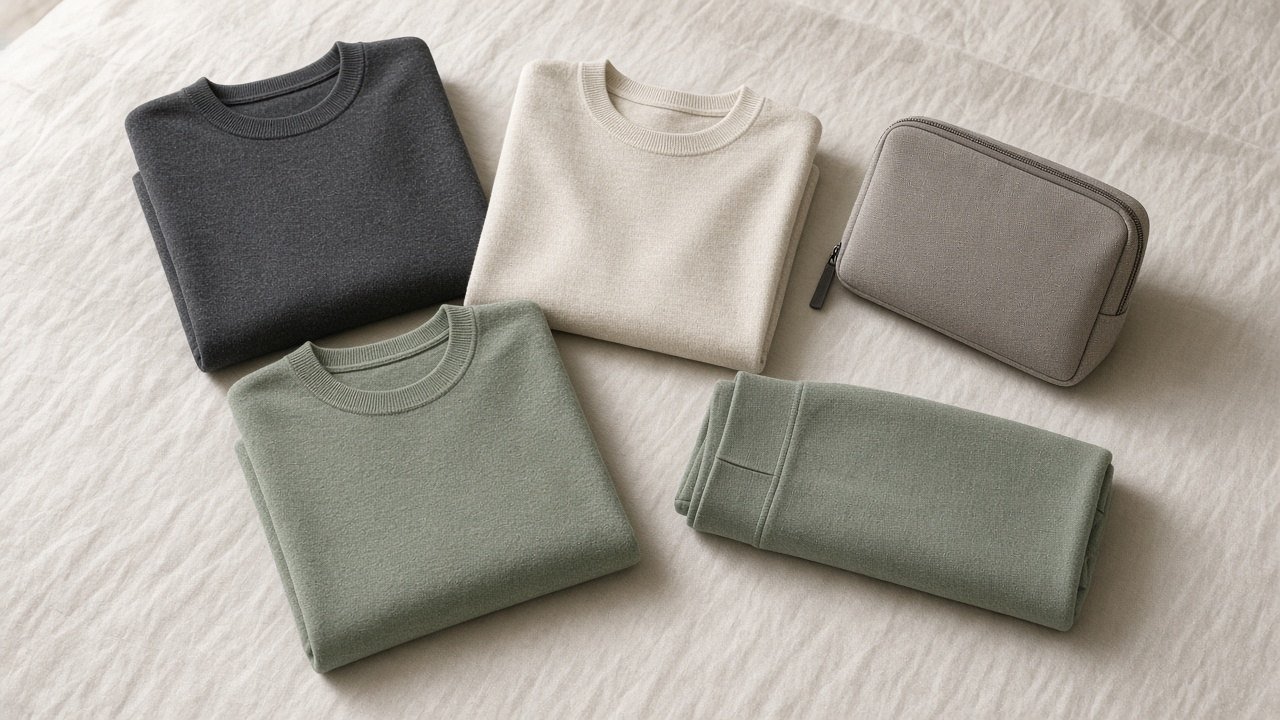
The best merino base layer for travel is a lightweight, fine-micron merino tee or long sleeve (roughly 150 to 200 gsm) that you can wear for several days, sink-wash at night and layer under a jumper or shell. Add one merino-blend legging for cold flights or chilly evenings, and you have the core of a carry-on capsule.
Quick answer
Pick a lightweight merino top in a superfine yarn for next-to-skin comfort, add a midweight merino-blend legging for warmth, and choose plain colours that mix with everything else you pack.
Key takeaways
- Fabric weight (gsm) tells you warmth; micron tells you softness. Lower micron feels less itchy.
- 100% merino feels softest; merino-nylon blends trade a little softness for durability.
- Two tops and one legging cover most 7 to 10 day trips if you can wash once or twice.
- Never tumble dry merino. Air it between wears instead.
This guide is part of our merino travel capsule series, where we look at independent brands making clever, packable basics.
What makes merino a good base layer for travel?
A base layer is the piece that sits against your skin. On a trip it has to do three jobs: stay comfortable through temperature changes, manage sweat on long travel days, and still look acceptable on day three. Merino brands build their whole pitch on those jobs. Unbound Merino, for example, describes its tees as moisture-wicking, temperature-regulating and odour-resistant, which is why it suggests you can wear them several times between washes. We treat those as brand claims, but they match why so many one-bag travellers pack merino in the first place.
How to read gsm and micron on a merino label
Two numbers matter. Gsm (grams per square metre) is fabric weight: lower numbers are thinner and cooler, higher numbers are warmer. Micron is fibre diameter: the finer the fibre, the softer it feels on skin. Brands label weights differently, so use this as a rough guide rather than a rule.
| Weight | Typical use on a trip | Example we checked |
|---|---|---|
| About 150 to 170 gsm | Warm-weather tee, sleeping layer, layering under shirts | wool& Morgan V-Neck Tee: 160 gsm, 78% merino and 22% nylon |
| About 170 to 200 gsm | All-round travel tee or long sleeve for most climates | Unbound Merino Crew Neck T-Shirt: 190 gsm, 100% merino, 17.5 micron |
| About 250 to 300+ gsm | Leggings and warm layers for flights, cold cities and hikes | Unbound Merino Leggings and wool& Summit Legging: both 300 gsm, 68% merino, 22% nylon, 10% spandex |

The merino base layers we would pack
1. A lightweight merino tee
The Unbound Merino Women’s Merino Crew Neck T-Shirt is listed as 100% Woolmark-certified merino jersey at 190 gsm and 17.5 microns, which the brand calls superfine. The label asks for a cool wash, drying flat in the shade and no tumble dryer. It is plain and logo-free, so it works as a base layer on a hike and as a top at dinner. We cover the brand in more depth in our Unbound Merino brand spotlight.
2. A merino long sleeve for cooler days
Unbound’s Women’s Long Sleeve Merino Crew uses the same 190 gsm superfine jersey, so it packs almost as small as the tee. If you only pack one long sleeve, choose a neutral colour you can wear under a cardigan or a rain shell.
3. A durable merino-blend tee
If you are hard on clothes, a blend can last longer. wool&’s Morgan V-Neck Tee is made from the brand’s Signature 160 knit: 78% merino and 22% nylon at 160 gsm. Its listing says machine wash cold and line dry, which is easier than a hand-wash-only routine.
4. A merino-blend legging
For planes, trains and cold evenings, a legging does more than an extra pair of trousers. Both the Unbound Merino Leggings and the wool& Summit Legging list 68% merino, 22% nylon and 10% spandex at 300 gsm. The Summit adds an interior card pocket and a gusset, per wool&. Wear it under a dress, under travel trousers on a cold day, or on its own on a long-haul flight.
How many merino base layers do you need?
- Weekend: one tee or long sleeve, worn twice, plus what you travel in.
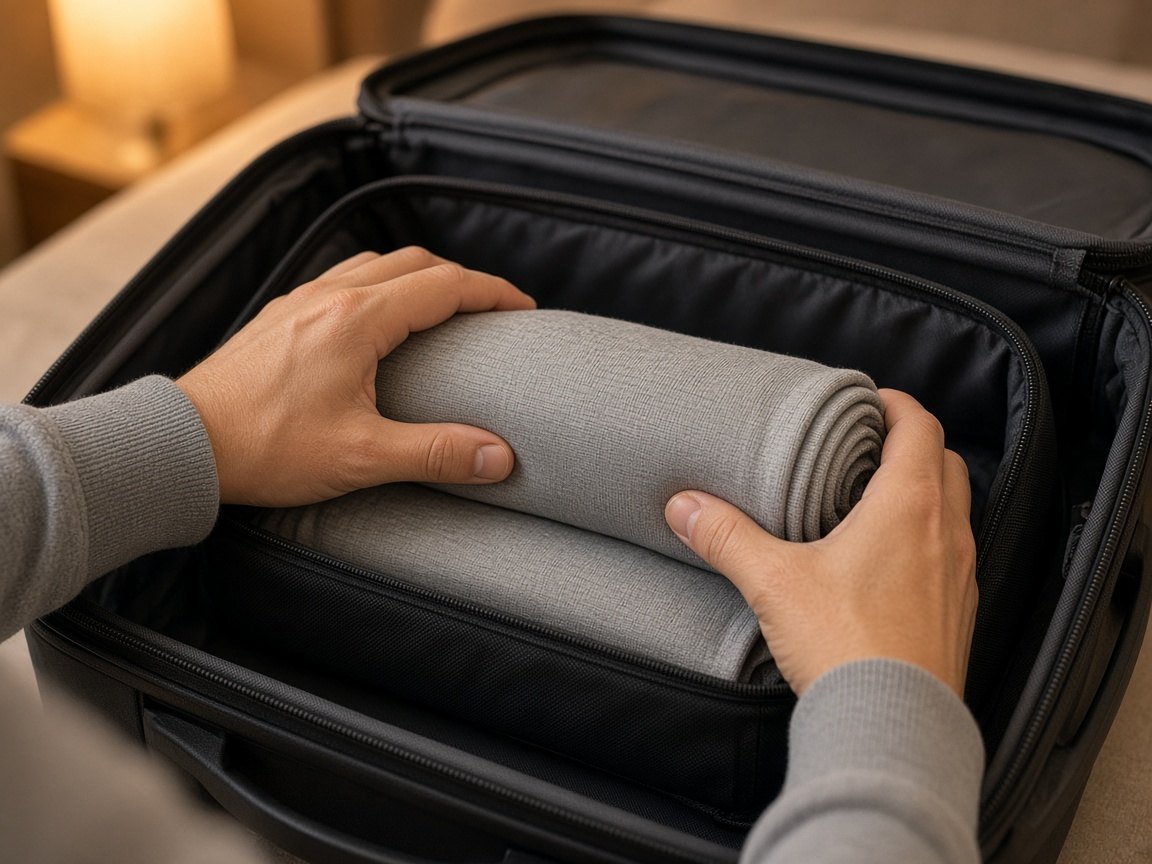
- 7 to 10 days: two tops (one short sleeve, one long sleeve) and one legging. Wash one top mid-trip.
- Two weeks or more: three tops and one legging, with a sink wash every few days.
- Use our guide to washing merino while travelling for the sink-wash method.
Fit and care tips that make base layers last
- Choose a fit that skims rather than squeezes. A base layer that is too tight wears thin faster at the seams.
- Air merino overnight between wears. Washing less often means less friction and fewer holes.
- Lay merino flat to dry and keep it off radiators. Unbound and wool& both say not to tumble dry.
- Rotate tops so the same one is not worn under a backpack strap every day.
Flow Check: Unbound Merino
- What it is: Travel basics in 100% superfine merino and merino blends for women and men.
- Who it’s for: One-bag travellers who want a soft, plain base layer.
- What to know: Product pages list gsm and micron, which makes comparing easy. No tumble dryer. Visit Unbound Merino
Flow Check: wool&
- What it is: Merino and merino-blend dresses, tees and leggings for women.
- Who it’s for: Travellers who want easier care and a bit more durability.
- What to know: Many pieces are 78% merino and 22% nylon, listed as machine wash cold, line dry. Visit wool&
Building the rest of the bag? Our 10-day one-bag packing list shows how these base layers fit with convertible pieces, and our Toad&Co brand spotlight covers non-mulesed merino jumpers for a warmer mid layer.
Looking for a merino dress instead? Read about our wool& Rowena Swing Dress find, or see every brand we have vetted in the brand directory.
FAQ
Lightweight merino, around 150 to 190 gsm, is a popular warm-weather choice because it breathes and handles sweat better than many synthetics. In very hot, humid places a looser fit helps.
For most trips a tee in the 150 to 200 gsm range is the most versatile. Save 250 gsm and heavier for leggings and cold-weather layers.
Not always. 100% merino is usually softer, while blends with nylon tend to resist wear and holes better. Many travellers pack one of each.
Wash less, wash inside out, avoid rough bag straps on thin fabrics and never tumble dry. Small holes often start at friction points, so rotate your tops.
Bottom line
Start with one superfine merino tee and one merino-blend legging. They cover hot days, cold planes and everything in between, and they leave room in your bag for the fun pieces.