
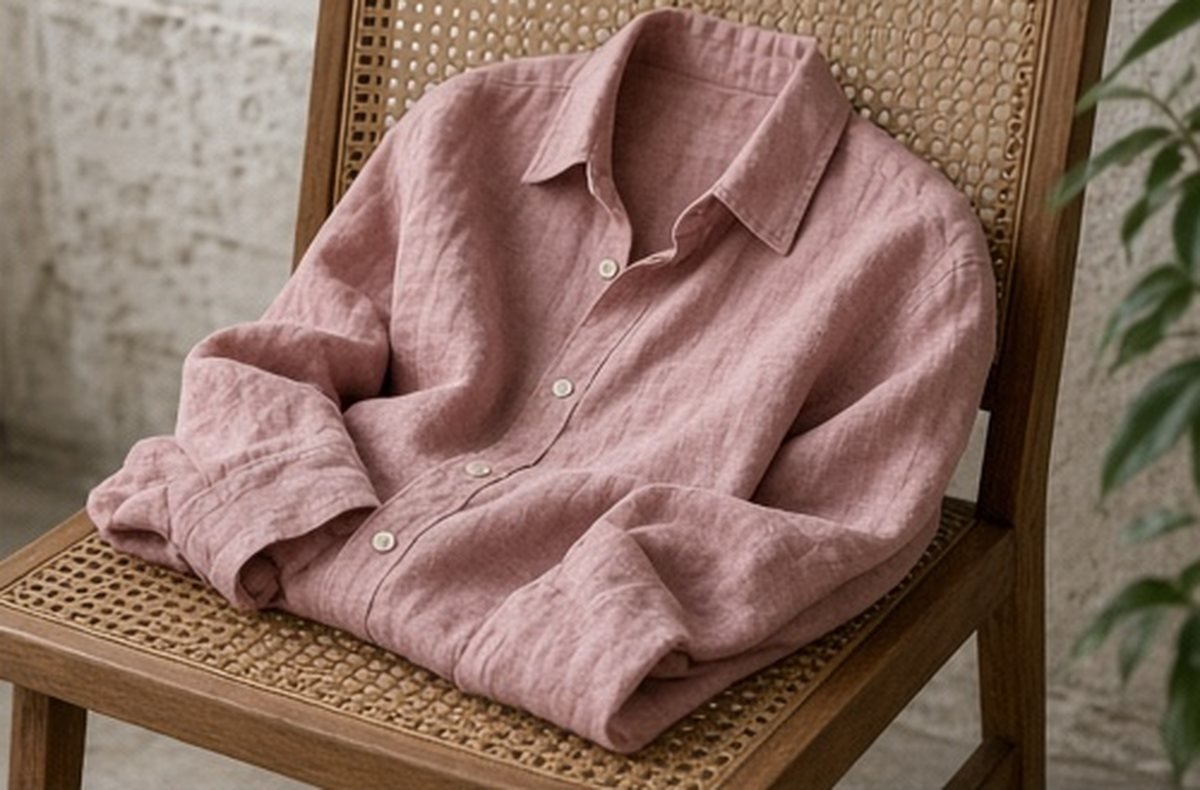
A washed-fabric description can sound like reassurance that all future care has already been accounted for. Read it more carefully. Prewashed, stonewashed and similar terms describe something about the product or process; they do not automatically establish that any later cleaning method is safe or that every dimension will remain unchanged.
Per the brand, MagicLinen's SUMBA oversized shirt is described as made with stonewashed linen. That attributed description is not a zero-shrinkage guarantee in this article. The useful habit is to keep the process language, the exact garment's care requirements and your expectations about fit in separate parts of the decision.
Read the term in its actual context
Look at where the description appears and what else the listing says. Do not expand a short phrase into a detailed account of machinery, finishing or testing that the brand has not supplied. The word washed does not explain every stage of production.
Keep the statement attached to the exact item rather than transferring it across a whole brand. If a process matters to your decision and its meaning remains unclear, ask a specific question. A modest answer grounded in the listing is more useful than a confident story constructed from the familiar sound of the term.
Find the complete care instructions
Read the label and any applicable product guidance before cleaning. The approved process belongs to the whole garment, including its construction and components, not merely the main fibre. Do not choose a temperature or drying method because a washed description appears reassuring.
If two sources seem inconsistent, clarify the issue rather than selecting the more convenient instruction. This is especially important when the item has a tie, lining, trim or unfamiliar construction. A general linen routine can prompt useful questions, but it should not overrule the specific guidance for the piece in front of you.
Do not budget for invented shrinkage
Avoid choosing a size on the assumption that the garment will lose a precise amount or stretch into a preferred fit. Without relevant product evidence, a numerical forecast is speculation. Another linen item's history does not establish the outcome for this one.
Assess the available measurements and fit information as they stand. If a crucial dimension is unclear, ask before relying on it. A purchase that only works after an unverified change is not made more certain by a comforting process word, even if similar fabric has behaved conveniently in your own wardrobe before.
Keep the first fitting separate from care
Follow applicable conditions when checking a newly received garment. Assess the intended outfit and any fit question before assuming that cleaning is a harmless way to resolve uncertainty. Washing or altering an item may affect the available decision route, so establish the conditions directly.
This is not a reason to avoid appropriate care after an item has become part of your wardrobe. It is a reason to keep the stages clear. Fit assessment, acceptance and maintenance are different decisions, and a prewashed description does not merge them into one risk-free experiment.
Use an ordinary reference carefully
If you compare the item with a favourite linen garment, record that reference's condition and history. A piece that has been worn, cared for or altered is not necessarily an unchanged example of its original dimensions. Keep the comparison useful without treating it as a laboratory control.
Choose relevant measurements and the same method where possible. Do not pull the reference into a desired shape or assume its current feel proves how another fabric will develop. The reference can clarify your preferences while leaving the new garment's own information responsible for its specification.
Distinguish texture from a performance guarantee
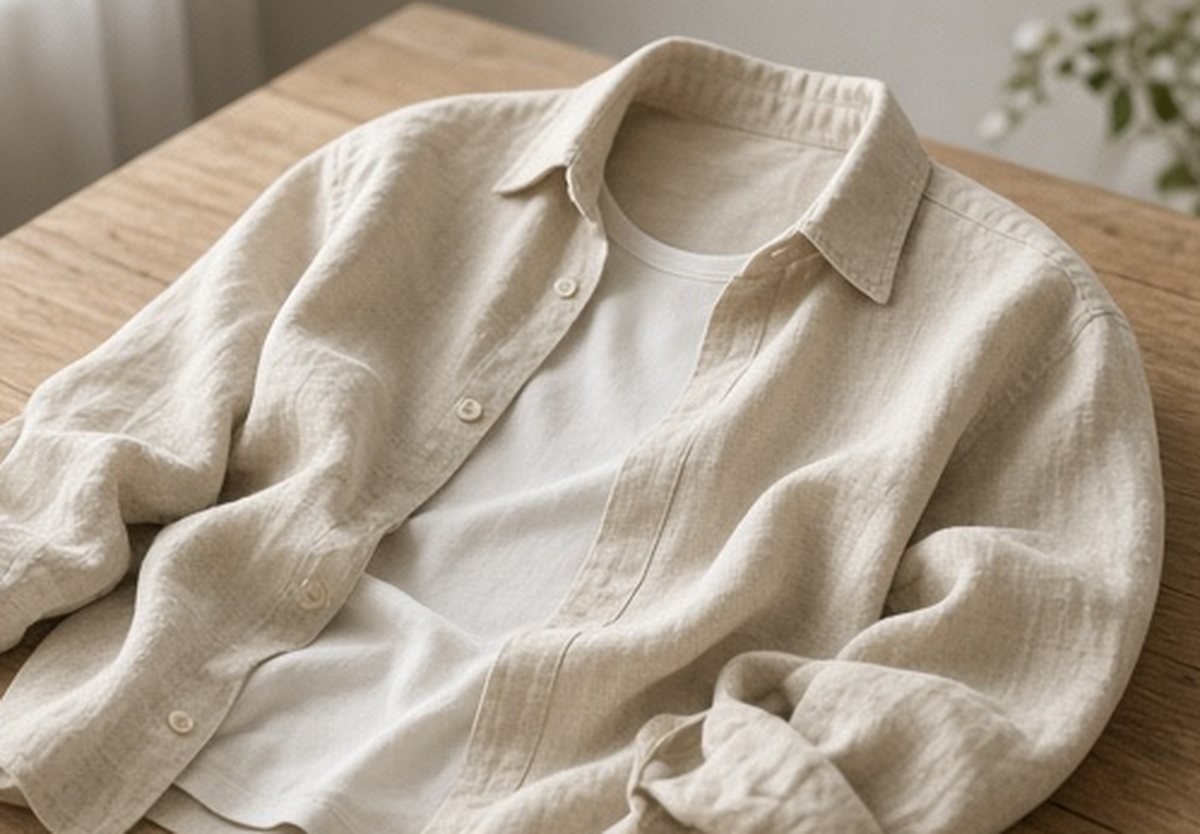
A finishing description may be part of the brand's account of how a garment feels or looks. Read the actual wording without adding claims about strength, lifespan, wrinkle behaviour or maintenance that have not been established. Pleasant texture is not a complete care plan.
Your own tactile preference also matters. A fabric described positively can still be one you do not enjoy wearing. That does not require either rejecting the description or inventing a technical fault. It is enough to recognise the difference between the brand's stated process and the personal experience you want from the finished item.
Reassess the routine after real use
Follow the approved care process and check the garment's condition normally. If something seems unexpected, consult the relevant guidance or an appropriate professional rather than attempting an improvised heat, stretch or chemical remedy. Avoid turning a concern into a larger experiment.
Keep a concise note if there is information worth remembering, such as a label instruction that differs from another piece you own. The aim is a manageable household routine. You do not need to document every wash, but you should not let the broad label linen erase important differences between garments.
Keep any explicit brand assurance distinct from your interpretation of it. If a seller provides more detailed guidance for the exact item, save that information with the care instructions. Do not broaden a limited statement into a promise about every process or every future change in fit.
Let the description do its own job
A stonewashed or prewashed description can remain useful when you do not ask it to promise everything else. It contributes one part of the product account, alongside composition, construction, measurements and care. None of those details should silently replace the others.
The practical conclusion is not to distrust washed linen. It is to avoid inventing certainty. Choose a garment for the information and fit you can establish, then care for the complete item as directed. That approach supports a comfortable wardrobe without requiring a process term to guarantee an unchanged shape under every future condition.