
By Sarah J. · January 15, 2026
Two cardigans form a useful rotation when their actual states are clear, not when they share one increasingly crowded chair. Distinguish ready pieces from garments waiting for care or another decision, use suitable support, and return each item to the active rotation only when the relevant attention is complete.
Key takeaways
- Name the current condition.
- Support the garment appropriately.
- Finish the care decision.
Give each cardigan a status
After wearing, check for marks, dampness and anything requiring attention. Do not use a fixed number of wears as a substitute for looking at the garment. Note which piece is ready for tomorrow and which one still needs a care decision.
Use appropriate support
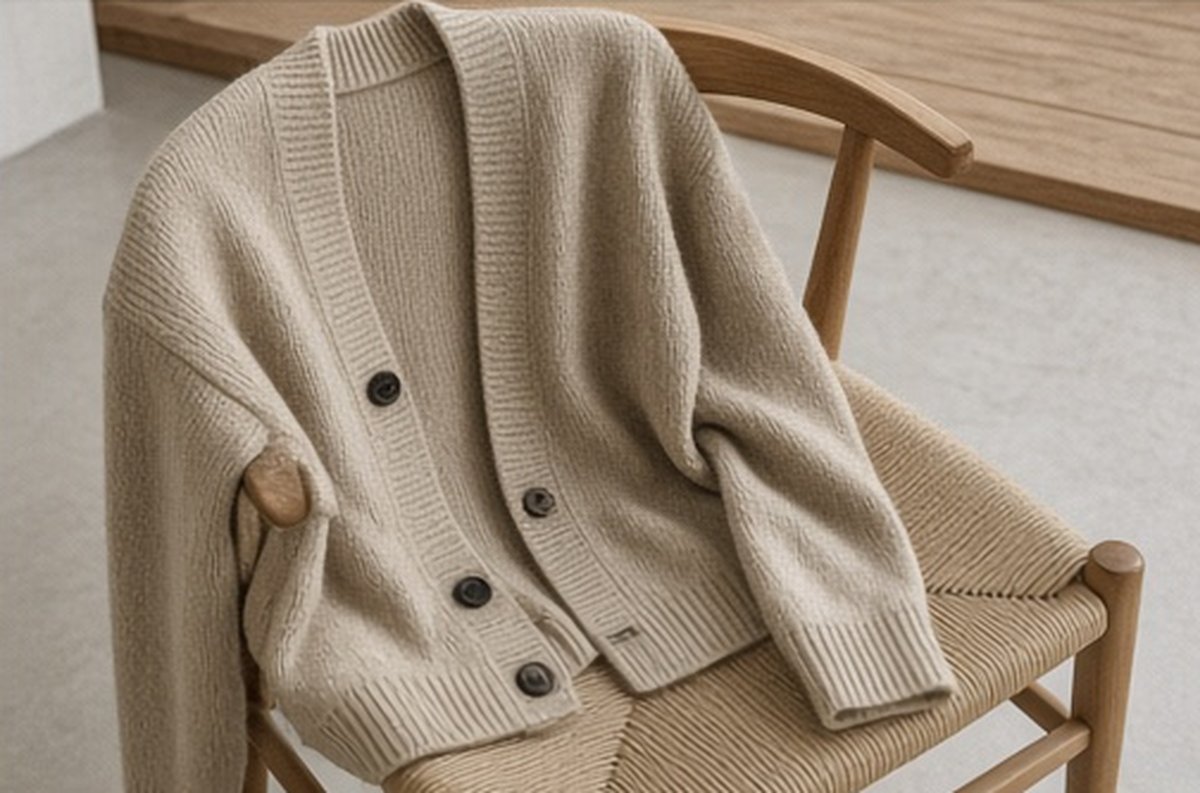
A clean dry space matters more than a decorative arrangement. Follow the garment's own guidance and avoid stretching shoulders over a narrow chair back. Keep the clothing away from damp outerwear, food and household tasks that could undo the effort to keep it ready.
Return it to the rotation
Once any required attention is complete and the garment is fully dry, put it back in its known place. If the small system keeps overflowing, reduce the number left out rather than buying more storage before understanding what accumulates there.
How do two cardigans become a practical winter rotation?
Identify the actual garments and the roles you use them for, then assess their current condition after wearing. Keep ownership, styling options and readiness as separate ideas. Two pieces can offer useful alternatives, but neither becomes ready merely because the other was worn yesterday. A rotation is a modest decision system about real clothing, not an automatic schedule that makes every item suitable after a fixed interval.
Start with the existing space and routine rather than buying a new rack to make the idea look complete. A chair may be part of an appropriate arrangement only if it remains available and suits the garments. Do not let the label rotation turn a growing pile into a system on paper while the actual condition of each piece becomes harder to recognise.
Which states should remain distinct after wearing?
Ready, waiting for appropriate care and waiting for clarification are useful descriptions where they match the actual garment. A temporary airing arrangement can be part of a process, but it is not a universal final answer to cleanliness or readiness. Keep known marks, dampness or other relevant needs visible instead of describing every neatly placed cardigan as available for tomorrow.
Use a recognisable identity with the state if the pieces look similar. A brief note or a known appropriate place can be enough without a detailed wear log. Do not impose a fixed number of wears as a substitute for assessment. The useful distinction is what this particular garment needs now, not whether it has met an arbitrary count that seems reassuring because another cardigan is waiting beside it.
What makes support suitable rather than merely convenient?
Read the garment’s handling guidance and use a clean dry arrangement appropriate to its construction. A narrow chair back or small hook is not automatically suitable for every knit. Keep the physical piece supported as needed without forcing it into a decorative display. Permission to use a space and suitability for the material are separate questions, especially where a chair is shared or needed for another household task.
Keep the arrangement clear of damp outerwear, food and incompatible objects. A place that was suitable at first can change as the day continues, so notice when the surrounding task expands. If the cardigan needs moving, make the new location deliberate. A rotation should reduce searching and uncertainty, not depend on remembering several temporary resting places or assume that every empty surface belongs to clothing storage.
How should a care decision connect to returning the item?
Follow the complete garment’s instructions and clarify any uncertainty about an appropriate process. Do not copy a broad routine from another fibre, cardigan or household textile just because the two pieces form a rotation. They may need attention at different times or in different ways. Worn in alternation does not make them one care unit or establish a guaranteed turnaround that your actual conditions have not confirmed.
Return the piece to its known ready place only when the relevant process and condition support that state. Keep fully dry and appropriately cared-for clothing distinct from something still waiting. Ending an intended airing period or finishing one stage of a task does not automatically complete every requirement. A clear endpoint prevents the same unresolved item from moving back and forth between the chair and wardrobe without a real decision.
What should you do if the chair keeps accumulating garments?
Look at what is actually collecting there: ready layers, care questions, unrelated accessories or pieces without another suitable place. The solution depends on the cause, not simply the size of a new organiser. Reduce the number left out where that helps and assign one appropriate next action to waiting items. Do not call a larger mixed pile a more flexible rotation merely because several colours or silhouettes are represented.
Keep shared furniture usable and respect the household arrangement. A chair is not automatically a complete care system or permanent storage area. If the existing method repeatedly obscures condition, change that specific part rather than adding another chair or buying containers before understanding the problem. The useful routine should remain small enough to repeat without becoming another organising project that requires constant maintenance to look successful.
How do you choose tomorrow’s layer honestly?
Choose from pieces actually ready and appropriate for the outfit, conditions and activity. Do not count a garment waiting for care as a fallback simply because you own two cardigans. If only one is ready, plan around that reality or use another suitable familiar layer. The rotation offers options through actual availability, not a promise that alternating two items automatically eliminates every care interruption.
After ordinary use, update only the relevant state and keep the next step visible. Review whether the arrangement makes clothing easier to find and assess, not whether it resembles a perfect display. A useful two-cardigan rotation can be very modest: known pieces, suitable support and clear condition. Those details make tomorrow’s choice easier without invented washing rules, a fixed rest schedule or the expectation that every chair in the home must become part of the wardrobe.
A useful rotation is a modest decision system, not a display. Keeping each cardigan's condition clear makes choosing tomorrow's layer easier without inventing automatic care rules.
Which practical check fits the situation?
| Situation | Practical check |
|---|---|
| Current state | Assess each garment rather than applying a fixed wear schedule. |
| Support | Use suitable clean dry space and keep shared furniture usable. |
| Return to use | Complete relevant attention before marking the piece ready. |
Related reading
- A Winter Cardigan at the Sink: Keep Cuffs Out of the Task
- A Winter Cardigan at a Desk: Check Elbows and Keyboard Reach
- How to Choose a Winter Scarf That Actually Stays Put
Frequently asked questions
Not universally. Assess the actual condition and follow the piece's own care instructions when cleaning is necessary.
No. Existing suitable space and clear separation may be enough without a new organiser or rack.
No. Assess the actual condition and follow the complete garment’s guidance.
No. Keep it within an appropriate process rather than treating it as a universal replacement for needed care.
Not automatically. Identify what is accumulating and its next action before expanding the system.