
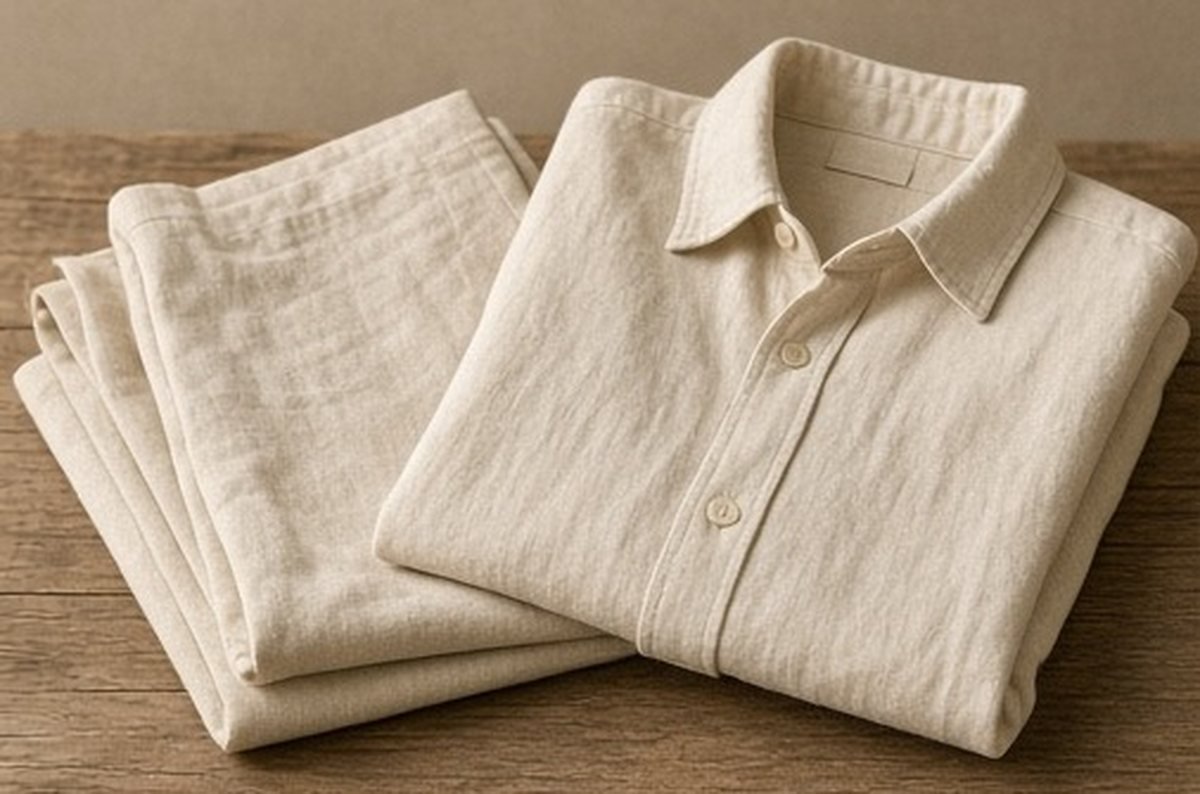
A linen dress can look relaxed in a photograph and still feel restrictive when you sit down, lift a bag or reach for a shelf. The problem is not necessarily linen itself. Fit depends on the cut, the fabric, the lining and the space left for movement. Learning to check those details is more useful than searching for a universally flattering shape.
Start with a dress you already enjoy wearing. Measure it laid flat without stretching it, and note which parts make it comfortable. Those numbers provide a reference for online size charts. Your body measurements still matter, but garment measurements reveal how much room a particular design allows. Do not assume the same letter size means the same fit across different brands.
Begin at the shoulder
On a conventional set-in sleeve, the shoulder seam gives an early clue to fit. Compare it with your reference dress and the intended design. A deliberately dropped shoulder is not automatically too large, and a fitted shoulder is not automatically restrictive. What matters is whether the sleeve and upper bodice allow the movement you need.
Reach forward as if holding a steering wheel, then lift each arm. Watch for pulling across the upper back and pressure at the sleeve seam. If the neckline climbs sharply whenever you move, the upper body may not have enough room. A larger size can help in some designs, but it can also introduce excess volume elsewhere. Assess the whole dress.
Check the armhole with your usual layers
A low armhole can expose more than you expect, while a tight one can make even a loose dress uncomfortable. Try the dress with the underwear or camisole you would actually wear. For sleeveless styles, check the side view in daylight. For sleeves, bend your elbows and bring your arms together in front.
If you plan to layer a thin top underneath in cooler weather, test that combination too. Do not assume a roomy skirt means a roomy bodice. Adding fabric around the torso will not solve a badly positioned armhole, and a cardigan will not make a pinching sleeve more comfortable. Upper-body fit deserves attention before accessories or styling.
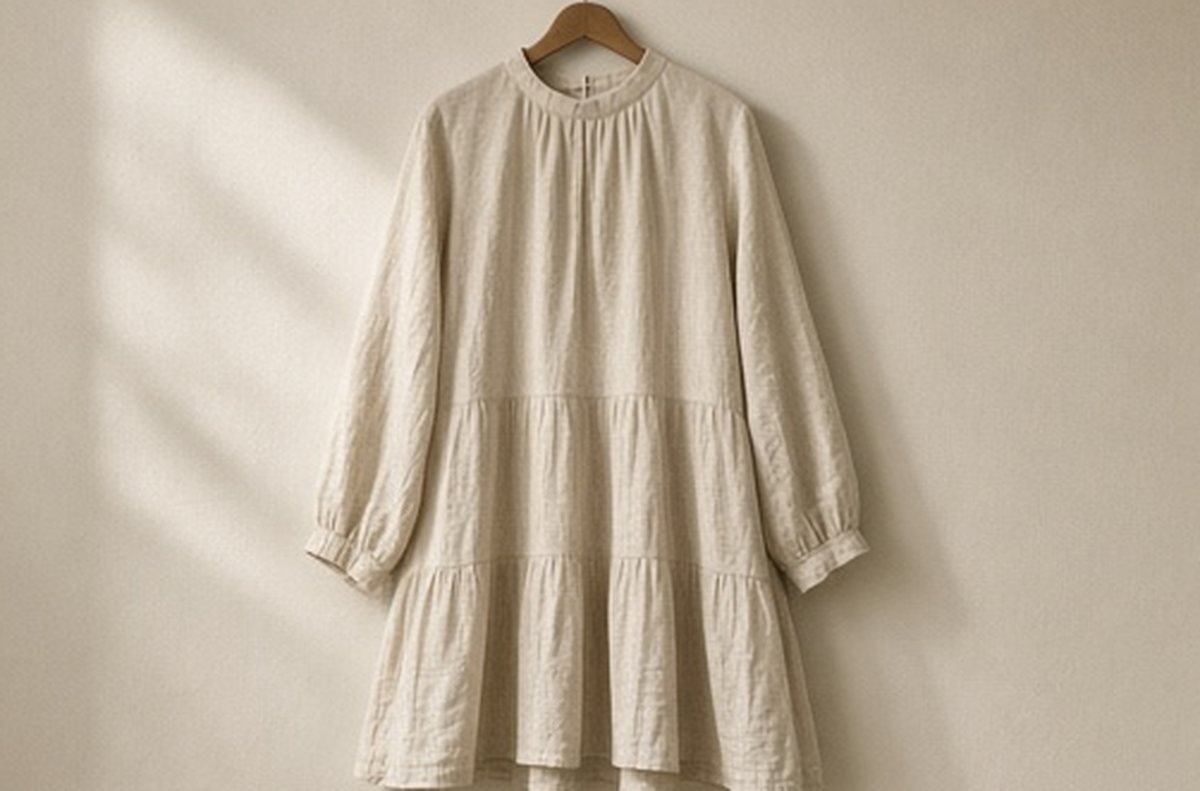
Leave room to sit and breathe
Take a seat rather than judging only in front of a mirror. A straight dress may fit while standing but pull across the hips or thighs when seated. Buttons can reveal strain before the fabric feels obviously tight. Check whether you can cross your legs, lean forward and stand again without rearranging the garment.
A waist seam should sit where the design intends, but your comfort is the deciding factor. If a belt is included, try the dress with and without it. A loose silhouette cinched hard at the waist can create unnecessary bunching. Conversely, a shaped dress cannot always be made comfortable by removing its belt; the underlying seams still determine its room.
Look at opacity, not just colour
Light colours and open weaves may reveal underwear or pocket bags. Hold the fabric against daylight and inspect it while wearing the intended underlayers. A lined dress can behave differently from an unlined one: the lining might reduce transparency but also restrict movement or change the feel against your skin. Read the lining composition separately.
If you would need to buy a slip to wear the dress comfortably, include that requirement in your decision. Consider whether you want another layer on warm days and whether it will show at the neckline or hem. There is nothing wrong with a slip, but discovering the need after removing the return tags creates an avoidable problem.
Understand what brand labels do not tell you
Per the brand, Chillinen's website lists both linen and cotton dress styles. That range is a useful reminder not to infer fibre content from a brand name or a soft, natural-looking photograph. Check the individual product listing and the sewn-in label; a collection can include different fibres and blends.
Per the brand, MagicLinen's website offers linen wear as well as home textiles. This tells you where to begin browsing, not whether a particular dress will fit your shoulders or suit your care routine. Neither brand mention here is a hands-on fit assessment. Verify current garment measurements, construction details and return conditions on the exact listing before ordering.
Identify realistic alterations
Shortening a straightforward hem may be simpler than changing a fitted shoulder or moving an armhole. Pockets, tiers, embroidery and curved hems can complicate even an apparently small change. Before assuming a bargain is easy to alter, ask a skilled alteration professional what the job would involve.
Do not count on letting a dress out unless there is enough seam allowance and the construction permits it. Online photographs rarely show this reliably. Taking a dress in can also affect pocket placement and the balance of the skirt. A repairable or alterable garment is valuable, but that does not mean every fit problem has an inexpensive solution.
Make a keep-or-return decision
Keep tags attached during an indoor try-on and follow the seller's return rules. Repeat your movement checks with the shoes and layers you expect to use. Ask whether the dress works without constant adjusting, special posture or an extra purchase you do not want to make. Those are practical tests, not criticisms of your body.
A useful linen dress needs neither a perfect waist nor a dramatic styling trick. It needs enough room where you move, a fabric and lining you like, and care requirements you can maintain. When those elements line up, the dress earns its place through ordinary wear rather than through the promise of a photograph.
Brand sources
Official sites consulted for the limited brand descriptions above: Chillinen and MagicLinen. Product ranges can change. No prices, historical availability claims or independently verified certification claims are made here.