
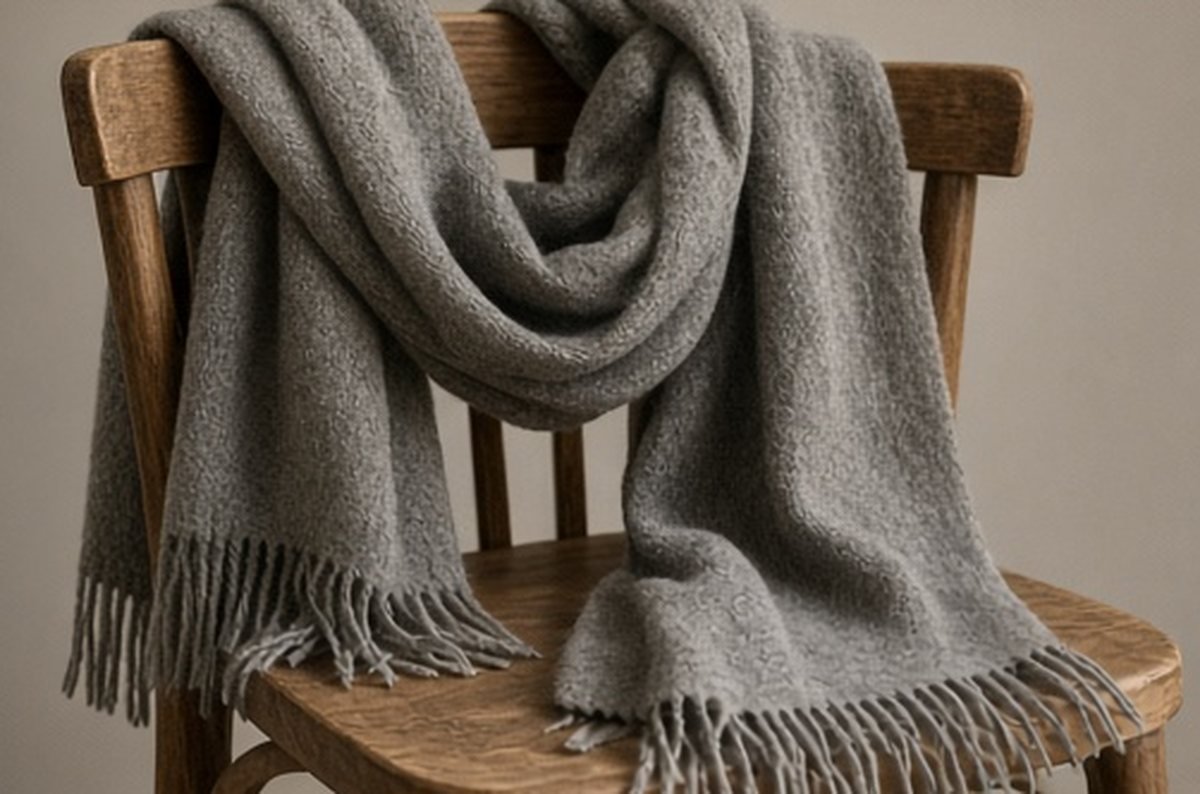
A sweater worn for a few hours may not need immediate washing, but putting it straight back among clean clothes can make the next decision harder. Leave it on a chair instead and a small collection soon becomes an unhelpful landscape of sleeves. A designated between-wears space gives knitwear somewhere useful to wait.
The system does not need a new storage product. A clear shelf, a suitable drying surface or another clean, accessible area can work, provided it fits the garment's care needs. The goal is to separate three states: ready to wear, airing or being assessed, and needing cleaning or repair. Ambiguity is what creates the pile.
Inspect before assigning a place
Check the collar, cuffs, underarms and front for marks or odour. A sweater that is visibly dirty belongs in the appropriate cleaning process, not in an airing queue that postpones the decision indefinitely. If there is a small repair needed, note it while you can still find the problem.
Be attentive to moisture. Clothing worn during exertion or beneath a coat may feel dry on the outside while retaining dampness elsewhere. Give it space before folding it away. Airing is a way to let a garment dry and assess its condition; it is not a substitute for removing dirt.
Follow the construction, not a universal storage rule
Read the care label and consider the weight and shape of the knit. Heavy or easily distorted garments may need supported flat handling rather than hanging by the shoulders. A light, robust layer can behave differently, but do not assume every item called a cardigan will tolerate the same approach.
If you use a drying surface, make sure it is clean and suitable for the garment. Avoid rough edges, colour transfer and contact with substances that could mark the fabric. Keep the arrangement away from pets, food preparation and places where it could create a trip or snag hazard.
Give the garment room
Do not stack several worn sweaters together and call it airing. Separate them enough for the fabric to dry, following the label's handling requirements. If your available space is limited, rotate pieces through a small area rather than building a dense pile that never gets assessed.
Keep knitwear away from direct heat sources unless the manufacturer's instructions specifically support the method. Do not drape it over a heater or improvise a high-heat shortcut. Localised heat can affect fabric and create household risks. A patient, supported drying arrangement is a better default than rushing.
Use a clear decision point
Once the garment has aired and dried, inspect it again. Decide whether it is ready for another wear or needs cleaning. Do not set a fixed number of wears that overrides its condition. Activity, weather, layers and personal comfort all change the answer.
If the sweater passes your check, move it to a defined ready-to-rewear area. That can be a separate shelf section or a small visible stack. There is no need to merge it immediately with freshly washed garments if keeping them distinct helps you remember which is which.
Fold without making a new maintenance task
Use a simple fold that supports the garment and fits your space. Avoid tugging sleeves into alignment or compressing decorative features unnecessarily. The aim is to prevent distortion and make the piece easy to retrieve, not to reproduce a shop display at home.
Keep the stack shallow enough that you can see what is there. If getting one sweater out means disturbing seven others, the system is likely to collapse on a busy morning. A limited active rotation can make this easier without requiring you to reduce your entire collection.
Separate repairs from ordinary rewear
A loose thread, opening seam or developing hole should have its own next action. Leaving the item in the rewear pile can lead to accidentally using it before the problem is stabilised. On the other hand, putting every imperfect garment into a distant bag may mean it is never repaired.
Use a small visible repair queue and write the task down. For uncertain damage, arrange an assessment before cutting or pulling threads. Knits vary in construction, and a repair technique suitable for one may not be suitable for another. A clear diagnosis protects both the garment and your time.
Keep long-term storage separate
The between-wears zone is not a place to leave clothes for months. Before extended storage, clean and dry garments according to their care requirements and inspect them for signs of damage or pest activity. Follow appropriate local pest-management advice if you notice a problem.
Do not assume fragrance sachets or a particular wood automatically protect textiles. Keep the storage area clean, monitor it and choose suitable protective arrangements. The best system is one you can inspect rather than one that hides every garment until the next season.
Include the household in the system
If someone else does laundry or tidies the room, explain what the zones mean. A sweater on a dedicated shelf should not look like an abandoned item to be swept into the wash. Equally, a garment needing cleaning should be easy to identify without relying on one person's memory.
For shared spaces, keep the arrangement modest. A single supported airing area and a small rewear shelf may be enough. The system should reduce household friction rather than reserve every available surface for clothes. Adjust it when seasons or laundry routines change.
Review after a fortnight
Look at what has accumulated. If sweaters repeatedly remain in limbo, the decision point may be unclear or the rotation too large. If everything moves smoothly back into use, resist the temptation to make the system more elaborate. Successful maintenance is often pleasantly boring.
A waiting zone works when it helps you wear a garment again confidently, wash it when needed and catch damage early. It should not become a reason to avoid cleaning or another collection of storage accessories. Give the sweater a clear place and a clear next step, and the chair can return to being a chair.