
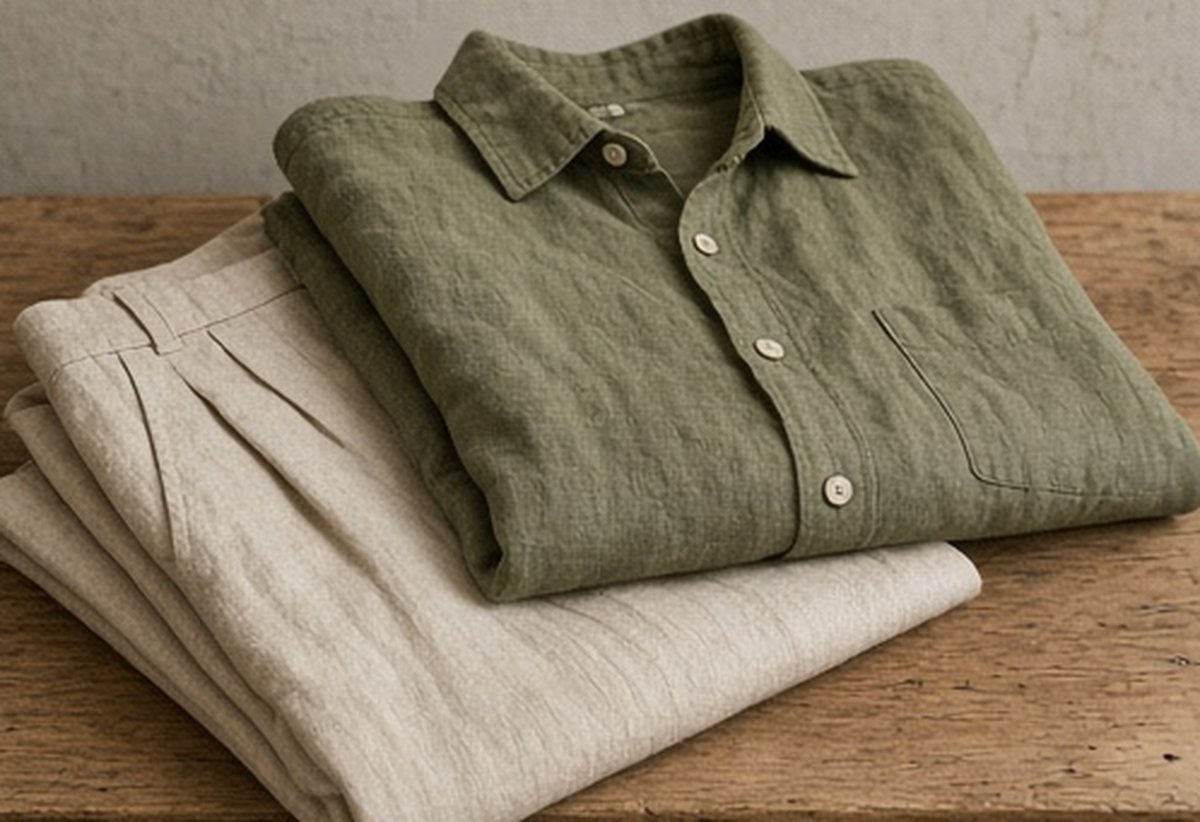
Putting linen away can feel like a simple folding task until the next season arrives and a favourite shirt still has a marked collar or loose button. Storage does not solve those problems; it merely hides them for a while. A short inspection before packing makes the return to use easier and reduces the temptation to replace clothing unnecessarily.
Begin with the garments you genuinely expect to wear again. You do not need to empty the whole wardrobe at once. Work through a small group, keeping cleaning, repair and storage decisions distinct. A manageable routine is more useful than an ambitious afternoon that leaves every surface covered.
Decide what actually needs storing
Some linen pieces may remain useful with autumn layers. Try them in realistic outfits before assuming the season requires everything to disappear. A shirt worn beneath a cardigan or trousers suited to indoor days may deserve to stay in the active rotation.
Do not force year-round use either. Climate, activities and comfort differ. The aim is a clear role for each garment, not proving that every summer piece can work through winter. Store what is genuinely out of rotation and keep accessible what you still use.
Inspect in ordinary daylight
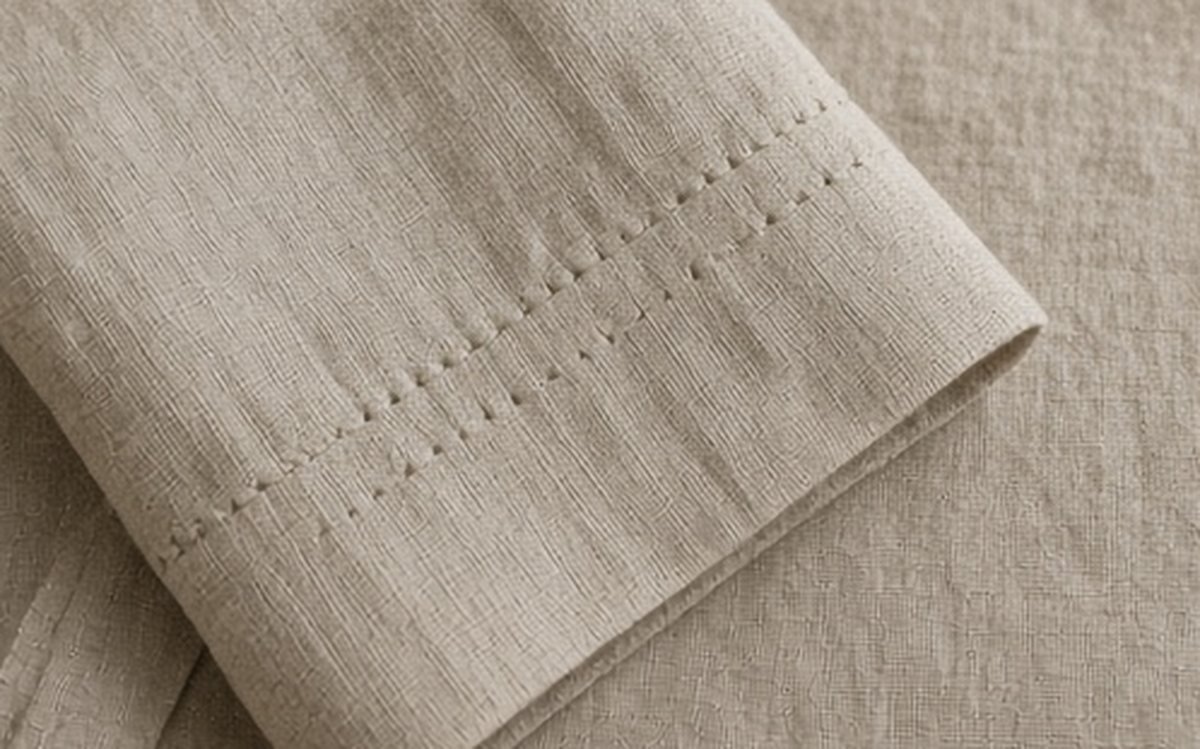
Check collars, cuffs, underarms, hems, pockets and fastenings. A garment can look acceptable at a glance while carrying residue or a small opening seam. Examine both sides where practical without pulling at weak fabric.
Make factual notes: mark at neckline, button loose or hem needs attention. Avoid assuming every issue is simple. If damage or a stain is uncertain, seek appropriate guidance before treating it aggressively. Storage is not a deadline that makes an unsuitable method safer.
Follow the individual care label
Linen garments can differ in dyes, finishes, lining and trim. Use the instructions for the particular piece rather than copying a process from another shirt. A blend may also have requirements not suggested by the main fibre name.
If the label is fading, preserve a readable photograph while possible. Keep it linked to the garment with a simple description. Future care decisions become easier when the original information remains available rather than depending on memory or a general linen-care rule.
Clean before long-term storage
Address dirt and residue through an appropriate cleaning process. Airing can help moisture dissipate, but it does not remove accumulated soil or a visible mark. Fragrance is not a substitute for cleaning and can introduce another substance into the fabric.
For a valuable, delicate or uncertain piece, consult a suitable professional. Do not apply a chain of improvised treatments because one online remedy failed. Preserving the garment's options matters more than achieving a quick result before closing the storage box.
Allow complete drying
Check seams, waistbands, pockets and doubled areas rather than judging only the broad fabric surface. A garment that feels mostly dry may still contain moisture elsewhere. Follow the label's drying directions and give it sufficient time.
Do not seal damp textiles away or use concentrated heat as an improvised shortcut. Keep clothing away from unsuitable heaters and surfaces. A patient drying step is less effort than discovering a preventable problem when the box is opened later.

Resolve the repair queue
Choose whether each repair will happen now, receive a professional assessment or remain a clearly recorded next action. A loose button can be easy to forget once folded inside a sleeve. Keep repair-needed items distinct from ready-to-store clothing.
Prioritise jobs that will return useful garments to service. Avoid creating a hidden bag of indefinite projects without a plan. If you decide a piece will not be used again, investigate an appropriate reuse route and describe its condition honestly rather than storing it by default.
Fold for the garment and space
Use a clean, suitable storage arrangement that supports the piece without unnecessary compression. Avoid pulling seams into alignment or forcing garments around rough edges. Consider any structured or decorative elements that should not be crushed.
Ordinary folding creases may occur, but aggressive compression can make retrieval less convenient. Do not buy an elaborate storage system before understanding the available space and actual quantity. A clear, inspectable arrangement often works better than a complicated solution you cannot maintain.
Keep information visible
Label the storage location in a way that makes the contents easy to identify. A short inventory can help prevent duplicate purchases during the off-season. Include a note about any unresolved task rather than relying on a memory that may fade over months.
Keep useful accessories and detachable components associated with the right garment. A belt or spare button becomes less helpful when separated into an unidentifiable collection. Simple identification can save attention when you return the clothes to rotation.
Inspect the storage environment
Choose a clean, dry, suitable place and monitor it rather than assuming a container guarantees protection. Follow relevant guidance if you notice pest activity or environmental problems. Fragrance sachets and decorative materials should not be treated as universal textile protection.
Before the next season, open the storage with enough time to assess condition and prepare garments appropriately. Do not wait until the morning of a trip or event. A short lead-in allows washing, finishing or repairs without an emergency replacement purchase.
The best seasonal linen routine is not a perfect stack. It is a clear handover from one period of use to the next: clean, fully dry, appropriately stored and honest about maintenance. When those steps are complete, the clothes you already like have a much better chance of becoming the clothes you reach for again.