
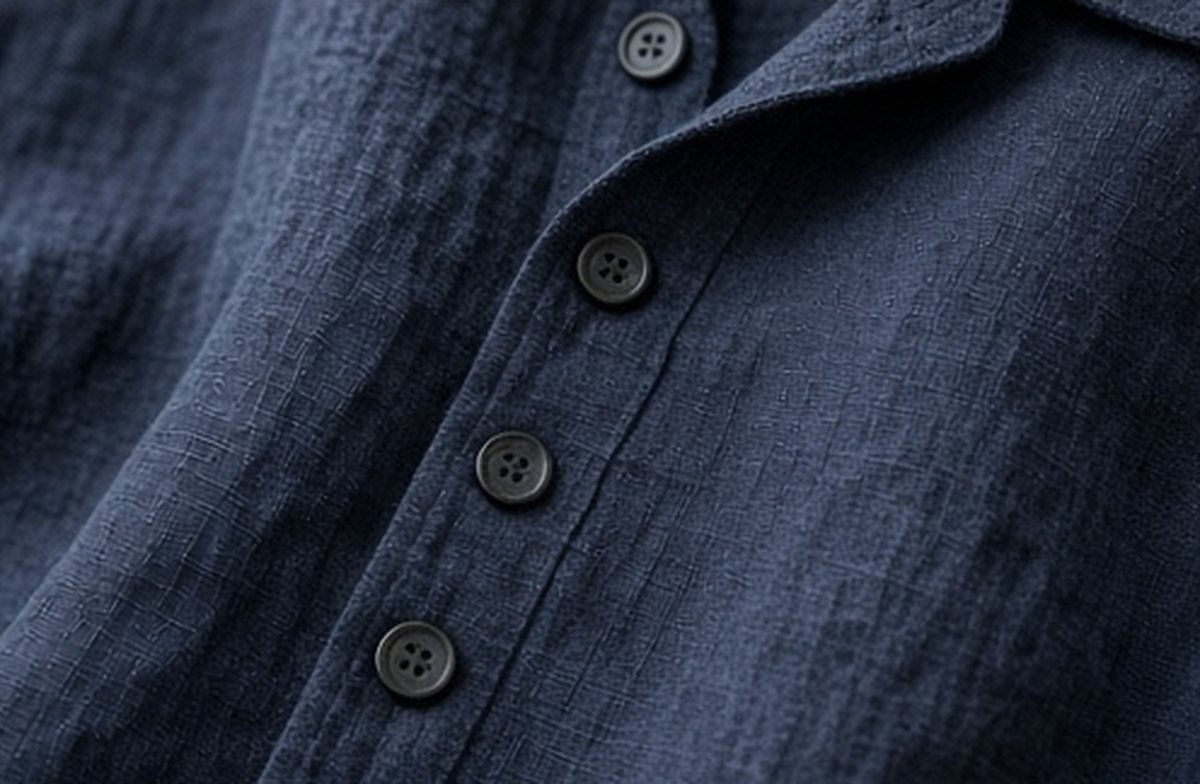
A travel outfit can look simple while asking a great deal of the person wearing it. Small buttons, an awkward back fastening or a tie that must be arranged repeatedly may matter more than the number of pieces in the capsule. Clothing becomes more useful when its closures match the wearer's own comfort, dexterity and routine.
This is a practical clothing checklist, not medical advice or a claim that one fastening is accessible to everyone. Needs differ, and they can change from day to day. Start with actions you find comfortable already, then evaluate the exact garment rather than assuming that a particular closure type is always easy.
Describe the action, not the category
Instead of writing easy zip or simple button, describe what happens. You may need to line up two parts, reach behind your back, pinch a small component or hold fabric steady with one hand. The same named fastening can involve different actions depending on its size and position.
Use a garment you already own as a reference. Identify what makes it manageable: visibility, reach, a generous opening or a fastening you can operate without discomfort. These observations create a more useful shopping brief than a general preference for travel-friendly clothing, which may mean something different to the seller.
Consider where you will change
Think about the actual setting: a compact room, a shared bathroom or a space without a useful seat. You do not need to rehearse an unsafe or cramped situation to identify the requirements. Consider whether the outfit can be put on and removed in an ordinary sequence without needing an arrangement you cannot count on.
A style that works with a full-length mirror and unhurried time may feel different during an early departure. Conversely, a familiar fastening may be entirely suitable because you already manage it comfortably. The aim is not to eliminate every closure but to avoid introducing unnecessary work into the journey.
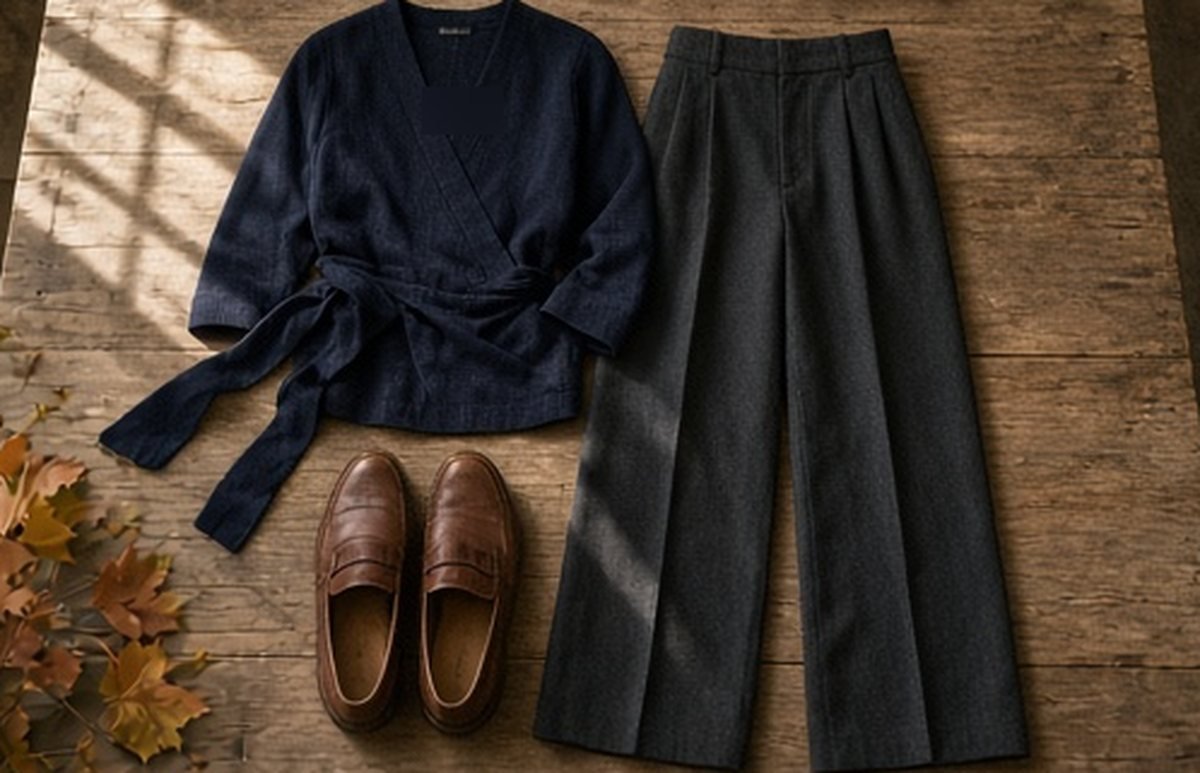
Check the complete opening
A visible fastening does not tell you how far the garment opens. Look for photographs or product information that explains the entry point and construction. If the answer matters to your decision and remains unclear, ask the seller before ordering rather than assuming that a similar-looking style will operate the same way.
Pull-on clothing also needs assessment. Check whether the opening and cut allow comfortable dressing without force. An elastic section is not proof that every part of the garment stretches or that it will suit every movement. Keep body measurements, garment measurements and the process of getting dressed as distinct questions.
Test with the intended layers
Fastenings can become harder to reach when another layer is in place. A cardigan may cover a side closure, a long sleeve may interfere with a cuff or a belt may add a second operation. Put the whole intended outfit into the comparison, using pieces you already own where possible.
During a careful indoor fitting, follow the retailer's conditions and avoid forcing anything. If you need repeated adjustment or an uncomfortable reach, stop and reassess. Do not assume a difficult action will become easy merely because the garment is attractive or marketed as multifunctional. Familiarity and a suitable design are not the same thing.
Notice repeated operations
Some closures are handled only while dressing; others must be managed throughout the day. Think about bathroom visits, temperature changes and taking off an outer layer. A small inconvenience repeated many times can have a greater effect on the day than a more involved fastening used only once.
Write the sequence in plain language if that helps: remove outer layer, undo belt, open waistband, reverse. You may discover that an outfit has more operations than it appeared to have. Simplifying one of those steps with clothing you already own can be more useful than buying an entirely different capsule.

Separate assistance from assumptions
If you normally prefer help with a particular fastening, plan around that honestly and with the other person's agreement. Do not assume a travel companion will always be available at the moment you need them. Equally, there is no requirement to choose independent dressing as the only valid arrangement.
For gifts, ask the wearer what they like managing rather than choosing on their behalf from appearance alone. Avoid treating a person's needs as a visible characteristic you can infer. A straightforward preference for a larger opening or a familiar fastening is enough information to guide the clothing decision.
Ask before altering a closure
An alteration may be possible, but it is not automatically simple or appropriate. Changing a fastening can affect fit, fabric support and how the garment opens. If a modification is essential, discuss it with a qualified alterations professional before purchasing, with the wearer's needs clearly described.
Do not remove components or experiment with a garment you may return. Check return conditions first, and keep the original construction intact while deciding. The cost and practicality of a necessary alteration belong in the overall decision, not as an optimistic task deferred until after the purchase is irreversible.
Pack the familiar option first
For an important trip, give priority to outfits whose dressing sequence you already understand. A new multifunctional piece may be appealing, but an unfamiliar arrangement can add avoidable decisions. Learn any intended variations at home and keep only the versions that are genuinely comfortable for you.
After the journey, record the specific closure features that worked. Reach, opening size, handling and frequency of adjustment are practical information for the next purchase. A successful travel outfit is not merely one that packs small. It is one that lets you get dressed and continue the day without unnecessary difficulty.