

By Sarah J. · November 17, 2025
A shirt waiting for one button decision may need a smaller next step than a complete wardrobe rethink. Inspect the fastening, identify a suitable replacement or repair question, and decide whether the shirt still has a real outfit job before buying supplies or declaring it ready to wear.
Key takeaways
- Inspect the button and opening together.
- Keep useful original components.
- Check the shirt still fits its intended job.
- Agree on function and appearance before repair.
What does the one button decision actually involve?
Start by naming the unresolved issue. Is a button missing, cracked, loose or simply visually different from the remaining set? Those are different repair briefs. A shirt that lacks one component may still have a sound buttonhole and suitable fit, while a repeatedly stressed closure can point to another problem. Do not order a matching-looking object before understanding what has stopped the shirt being used.
Keep the shirt intact while you inspect it, and set any loose pieces somewhere safe and identifiable. A photograph of an undamaged matching button can be useful for comparison without removing it. Small components should be stored appropriately away from children and pets. The aim is to preserve information, not to turn a straightforward repair decision into a larger disassembly project before the cause is understood.
How do you inspect the buttonhole before choosing a replacement?
Look at the opening and surrounding fabric in good light. Notice fraying, stretched stitching or a tear without pulling against it to test strength. A new button cannot repair a damaged opening simply by being larger. If the buttonhole needs work, ask someone experienced to assess the fabric and intended fastening before enlarging it or cutting away loose threads.
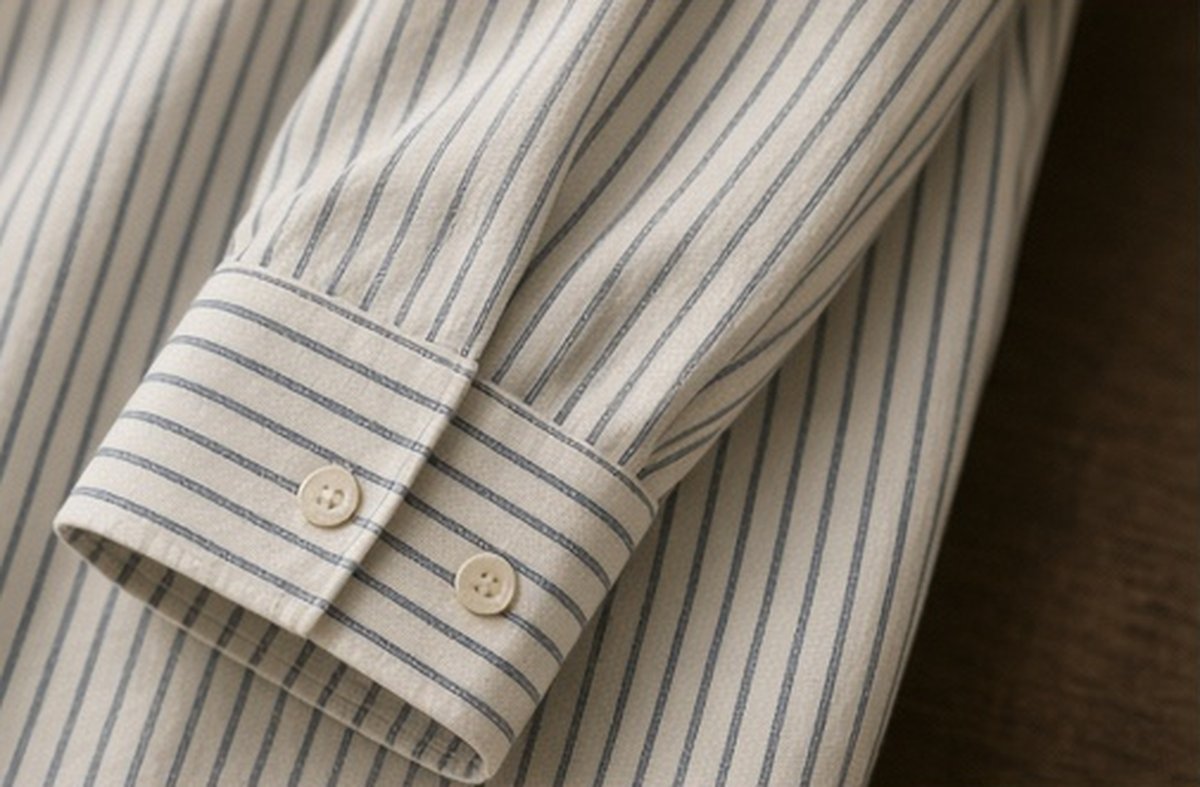
Compare the candidate replacement with the original construction where possible. Diameter, thickness and the space beneath a button affect how it works, as does the attachment method. A similar colour is not enough to establish suitability. Do not force a thick component through a narrow opening because it is the closest shade in a sewing tin; that can change the problem from a missing part into strained cloth.
Should the replacement button match exactly?
Decide whether you want a close match or a deliberate visible difference. Neither choice is automatically more responsible or stylish. Consider where the button sits and whether the result will bother you during ordinary wear. A functional contrast you genuinely like can be better than leaving a useful shirt unworn indefinitely while searching for an exact component that may not be available.
If a full set change is being considered, treat that as a separate choice rather than the automatic answer to one missing part. It requires more work and may alter the shirt’s appearance. Keep any useful originals identified for future needs. If someone else owns the shirt, agree on the visual result before sewing; an attractive repair idea is not permission to change another person’s clothing without asking.
How do you check whether the shirt still fits?
Before investing in the repair, try the shirt appropriately and assess the whole garment without straining an unsecured area. Notice shoulder room, sleeve length and the relationship with the trousers, skirt or winter knit you intend to wear. A small missing component can be the obvious barrier while a changed fit or unused styling plan is the reason the shirt has remained in the wardrobe.
Do not expect a new button to create extra room at a close fastening or change the shirt’s proportions. If there is repeated pulling, ask whether a fit assessment or another use is needed. Keep the question practical: once repaired, would you choose this shirt with an outfit you actually wear? An honest answer prevents supplies and effort being spent on a theoretical future wardrobe rather than a useful existing piece.
What should you ask if someone else will do the repair?
Bring the shirt and any candidate components together. Explain what you observed and the result you would like, including whether an exact visual match matters. Ask about the suitability of the replacement and whether the surrounding fabric needs attention. A photograph may help begin the conversation, but it cannot always establish the construction or the condition of a buttonhole from a distance.
Agree on the proposed work before it starts. If the repairer recommends something different, ask how it affects function and appearance rather than assuming the most invisible option is always best. Keep any relevant care instructions available. The useful outcome is a fastening that works on a shirt you want to wear, not merely a new component attached where the old one used to be.
How can a spare-button packet become a useful record?
If the shirt still has a labelled spare packet, keep that connection intact while comparing the component. Note which garment it belongs to and any useful difference between the spare and the original fastening. Do not assume that everything supplied with a shirt is the same size or intended for the same position; some designs use different components at the cuff or collar.
After the repair, keep remaining useful pieces with clear information rather than pouring them into an anonymous mixed tin. A small note can identify the shirt without requiring another person to remember its colour or the season it was bought. This is particularly helpful if several similar shirts share a wardrobe. The purpose is to make the next repair decision easier, not to turn every component into a new collection to maintain.
How do you bring the shirt back into use after repair?
Follow any advice given about the finished work and check normal fastening gently. Do not repeatedly pull on the new button as a strength demonstration. Try the planned outfit again, including the winter layer if that was part of the brief. Check that the fastening is accessible and that another garment does not press uncomfortably against it when you sit or reach.
Then give the shirt an actual next wearing opportunity instead of returning it to an indefinite repair pile. If it no longer suits you, keep its condition and repair information clear before passing it on. Repair is useful because it supports continued use, not because every shirt must remain in the same wardrobe forever. Completing the small decision should leave a clear next step rather than another box of uncertain components.
Which practical check fits the situation?
| Situation | Practical check |
|---|---|
| Missing button, sound opening | Compare a suitable replacement before attaching it. |
| Damaged buttonhole | Seek assessment of the fabric and opening first. |
| Repeated pulling at the closure | Check fit as well as the component. |
Related reading
- Find of the Week: With Nothing Underneath’s Boyfriend Shirt
- Find of the Week: Asket’s Permanent T-Shirt Approach
- Find of the Week: Foehn’s Keats Merino T-Shirt
Frequently asked questions
No. Compare dimensions, thickness and attachment construction as well as appearance, and ask for advice if suitability is unclear.
Not automatically. The opening and surrounding fabric need assessment; changing component size can create new strain instead of repairing the fault.
No. A single suitable component may be enough if you like the result. Changing the set is a separate practical and visual decision.
Do not trim automatically. Inspect the fastening and fabric so that removing a thread does not reduce useful repair options.
Keep the repair and fit questions separate. A replacement button does not establish that the rest of the garment will become comfortable.