
This post may contain affiliate links. We may earn a commission if you buy through them, at no extra cost to you. See our Affiliate Disclosure.
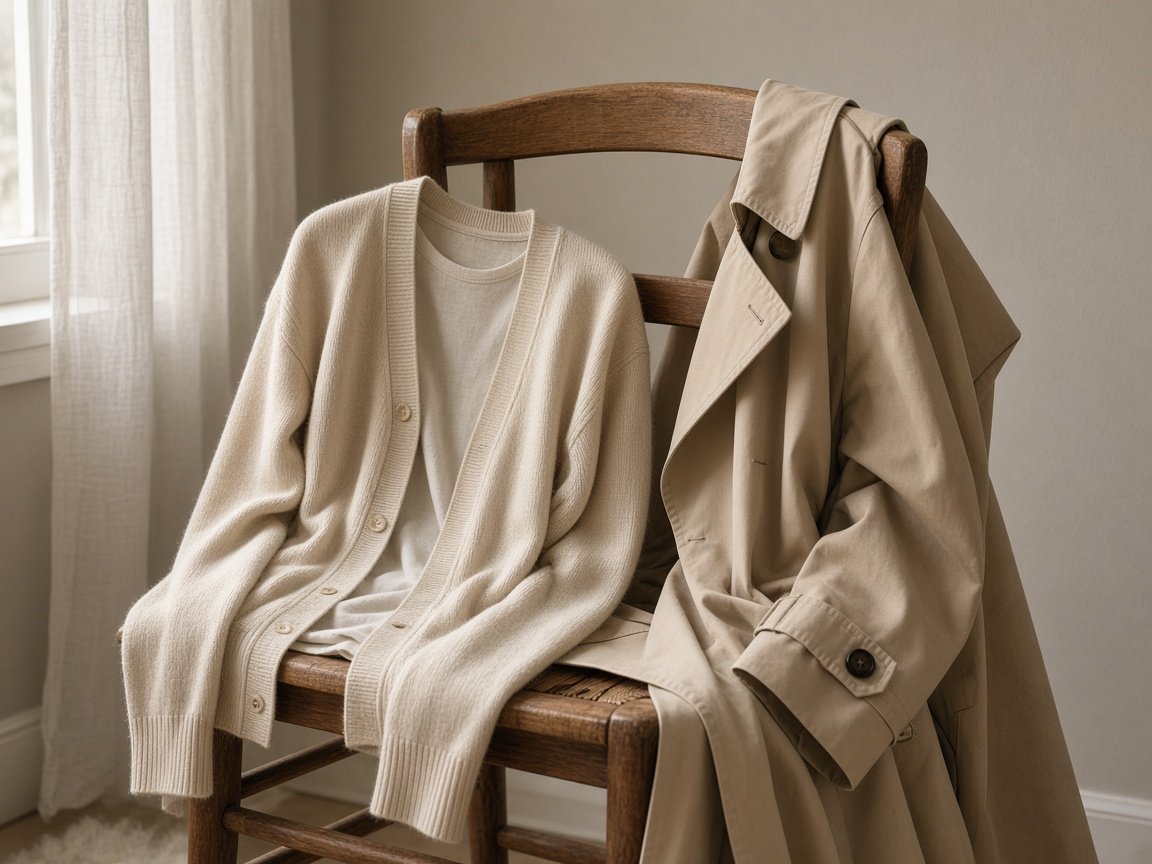
Learning how to layer knitwear for early autumn means thin stacks you can peel: a fine base, a light mid layer, then a shell — not three heavy sweaters.
Quick answer
Start with a fine tee or merino base, add a cardigan or light sweater, and keep a packable shell for wind. Remove layers before you overheat.
Key takeaways
- Fine gauges beat chunky stacks in August heat spikes.
- Open cardigans vent better than crew necks.
- Merino bases handle temperature swings.
- Pack layers you will actually remove.
See travel cardigan, cotton vs merino and merino hoodie.
What does an early-autumn knit stack look like?
| Layer | Example | Why |
|---|---|---|
| Base | Fine merino or cotton tee | Next-to-skin comfort |
| Mid | Cardigan or light crew | Easy to remove indoors |
| Outer | Light shell or linen blazer | Wind and evening chill |
How do you avoid overheating?
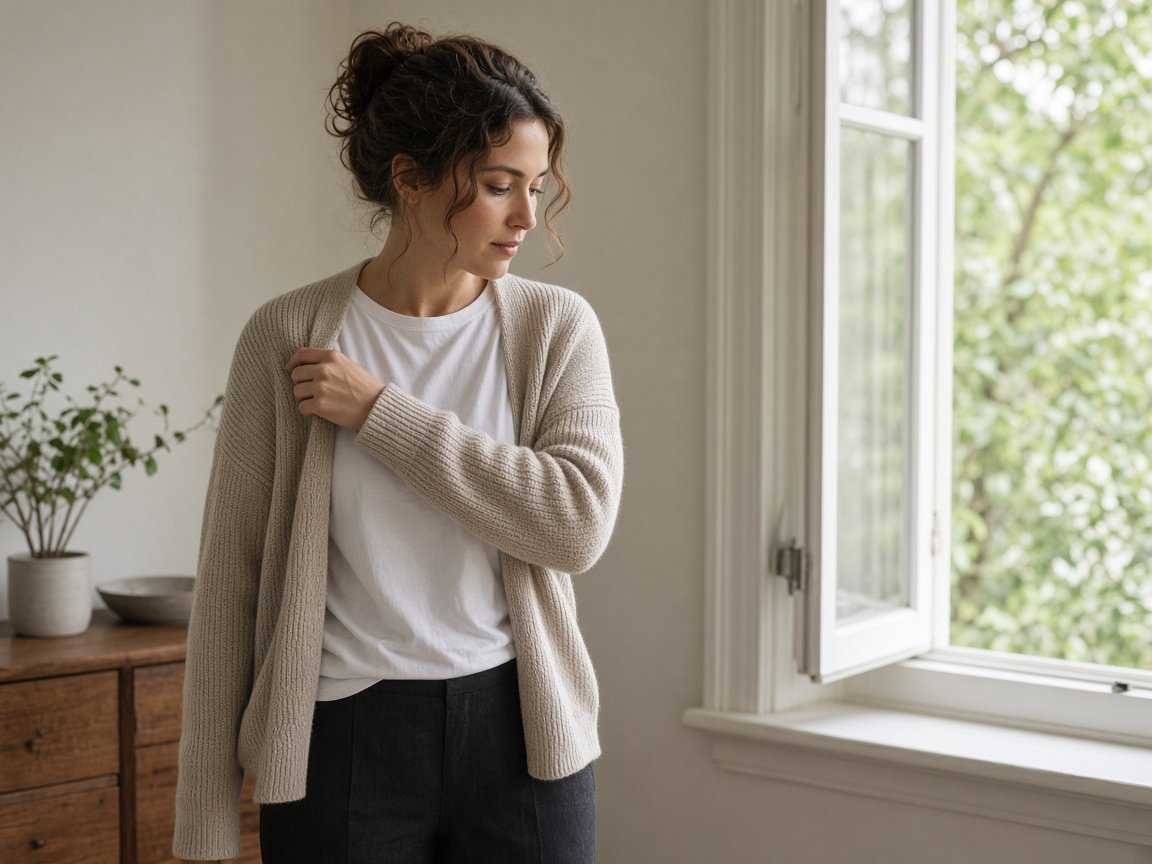
- Choose open fronts for cafes and trains.
- Roll sleeves before you sweat.
- Carry the mid layer instead of wearing it in midday sun.
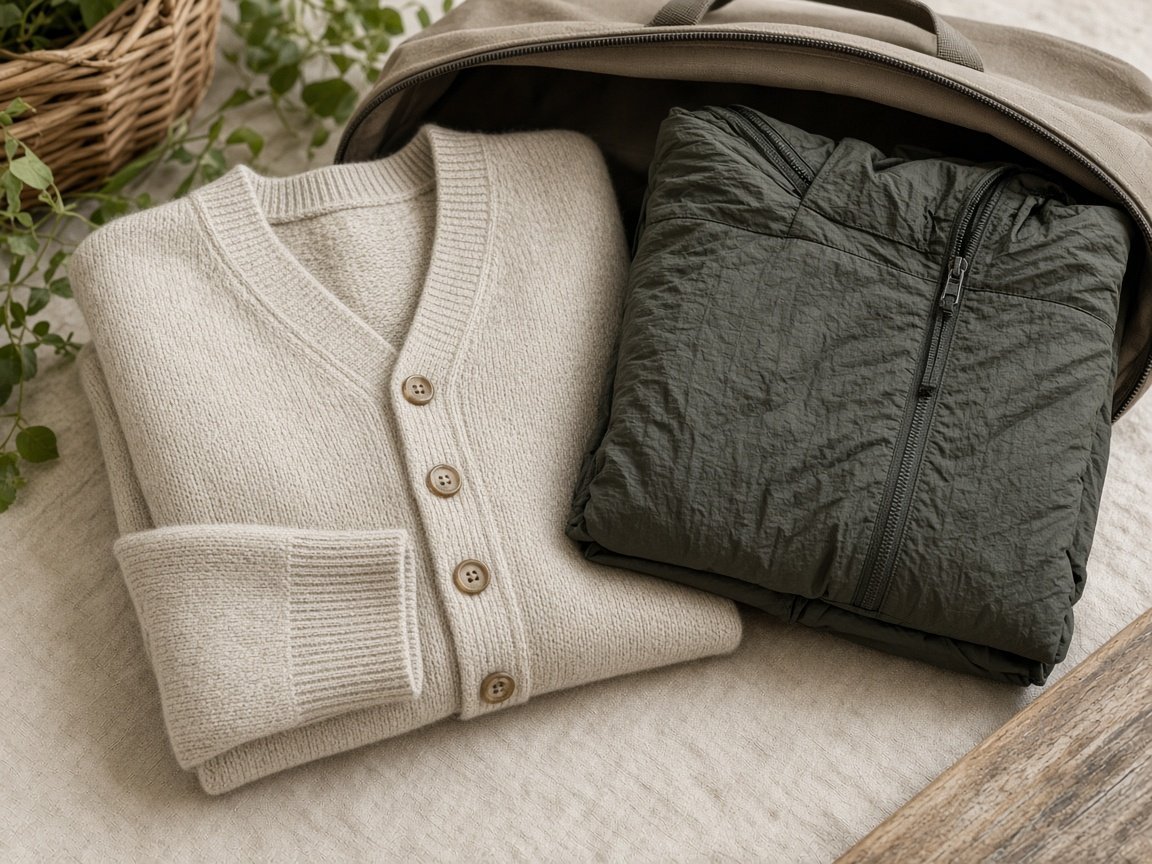
- Use folding tips so extras stay neat in the bag.
Which fibres for transitional weather?
Merino manages moisture on humid days that turn cool. Cotton is soft but can feel clammy. Alpaca is warmer — save it for later autumn; see alpaca vs merino.
FAQ
Usually a base, one mid layer and a shell cover most days.
Only if the coat has room. Fine cardigans usually layer cleaner.
When evenings are consistently cold and you have laundry access or extra bag space.
Yes as a mid layer shirt under a knit; see linen blazer ideas.
Bottom line
Thin, removable layers beat one heavy sweater in early autumn. Pack what you can peel.