

A repaired garment can carry useful knowledge that disappears when it changes owners. The next person may see a neat seam without knowing what was altered, or find a replacement button without knowing whether it matches the original. A short repair history can preserve that context without turning the item into a technical dossier.
The aim is honest information, not a guarantee of quality or lifespan. Record only what you know, identify any uncertainty and let the recipient assess current condition. A repair note is most useful when it supports future care or a conversation with a professional rather than trying to prove that the garment is perfect.
Identify the garment clearly
Use a description that remains understandable outside your wardrobe: navy lined jacket with a particular label, for example. Include the labelled size and any useful style identifier if known. Avoid referring only to a personal nickname or the shelf where you stored it.
A photograph can help connect the note to the item, but it should not be the only identifier. Keep private details out of the frame and ensure the relevant garment is visible. The record should be easy for another person to understand without access to your order history or memory of the original purchase.
Separate repair from alteration
Describe whether work addressed damage, changed fit or added decoration. These are different kinds of change. A shortened hem is not necessarily a repair, and a decorative patch does not automatically explain the condition of the fabric beneath it.
Use ordinary language if you do not know the technical term. Changed sleeve length or repaired opening in lining can be enough. Do not invent a professional-sounding description to make the work seem more authoritative. A clear limited statement is more useful than a confident term that may mislead the next person about what happened.
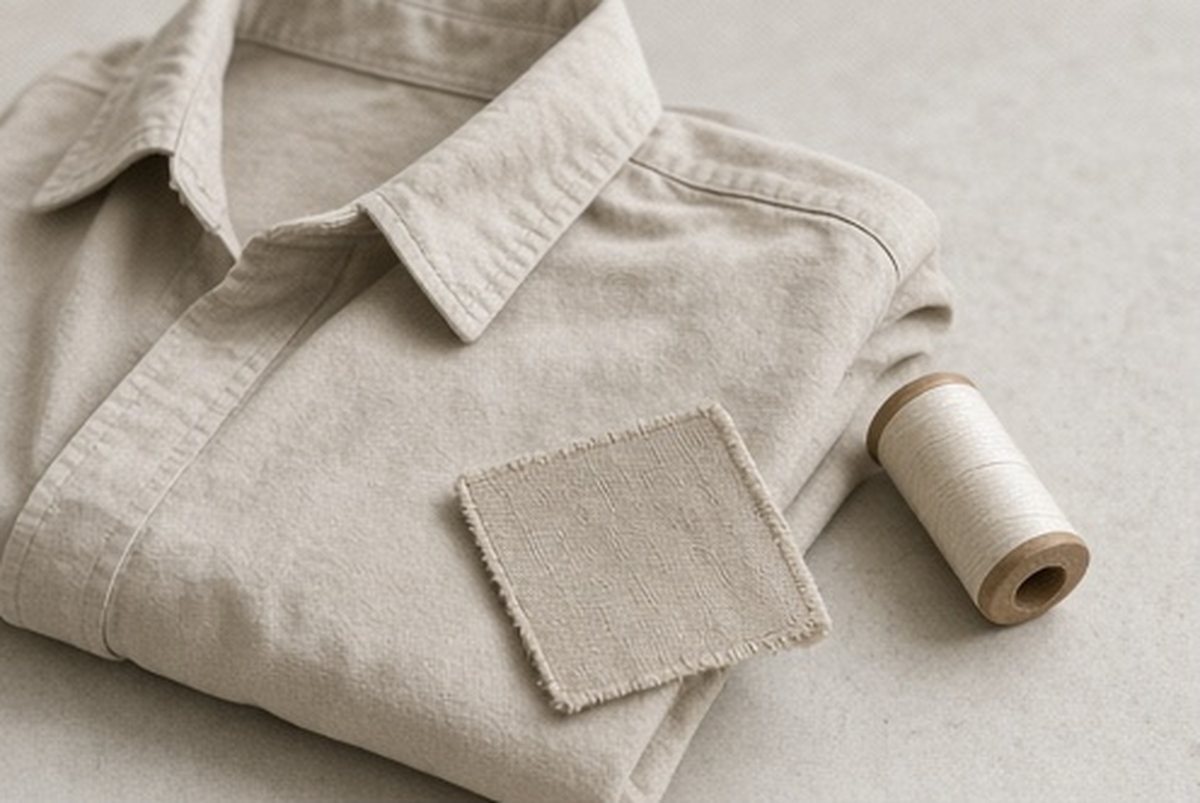
State what you actually know
Include an approximate or exact date only when you can support it, and distinguish the two. If you know who carried out the work in a relevant professional capacity, you can record that fact without sharing unnecessary personal contact information. Do not label a home repair as professional work.
If the garment was already repaired when you acquired it, say that the earlier history is unknown. Describe what is visible rather than reconstructing a story. A lack of provenance does not make the item unusable, but uncertainty should not disappear merely because the garment is being offered with good intentions.
Identify replaced components accurately
Note any button, zip part, lining section or patch that was replaced, where known. State whether an original spare was used or a different component selected. A similar-looking part should not be described as identical unless you know that it is.
If an original spare remains, include it securely labelled where appropriate. Keep small parts contained and do not leave sharp tools in pockets. The note should explain the connection between component and garment so the next person does not inherit an unidentified envelope of repair possibilities.
Preserve relevant care guidance
Keep the garment's actual composition and care information available. If a repair professional supplied specific advice related to the work, record it accurately and identify its source. Do not turn a remembered suggestion into a universal instruction for every garment made from the same fibre.
If the work introduced another material or changed a component, note what is known rather than assuming the old routine is automatically unchanged. Seek appropriate clarification where care remains uncertain. The record is useful because it preserves questions as well as answers; it should not conceal a maintenance issue behind a tidy repair photograph.
Describe current condition separately
A repair completed in the past does not establish the garment's condition now. Assess the actual item before giving, selling or donating it through the appropriate arrangement. Record visible remaining issues and do not assume a previous successful repair means every area is ready for another wearer.
Avoid claiming the garment is stronger than new or will last a particular number of years without evidence. The recipient needs an honest description and the opportunity to decide. A repair history supports that decision but cannot substitute for it or remove ordinary uncertainty about future use.
Keep the note proportionate and private
A few clear lines are often enough. Remove unrelated invoices, addresses, payment details or other personal information before including records. If a receipt is useful evidence of work, share only the relevant information through an appropriate arrangement rather than passing on an entire personal transaction history.
Do not make the recipient maintain a complicated record as a condition of accepting the garment. The note should reduce their work. They can keep, simplify or update it according to their needs. Its purpose is to make useful information available, not to control how someone else manages their wardrobe.
Use the history for the next appropriate step
The note can help a later repair professional understand an existing alteration or identify a replaced component. It may also explain why a measurement differs from an original listing. Keep the language factual so the information remains useful even if the garment's role changes.
A repaired item does not need an embellished story to be worth wearing. Clear identification, known work, honest condition and relevant care can be enough. Passing on that information respects both the effort already invested and the next person's right to choose how the garment fits into their life.