
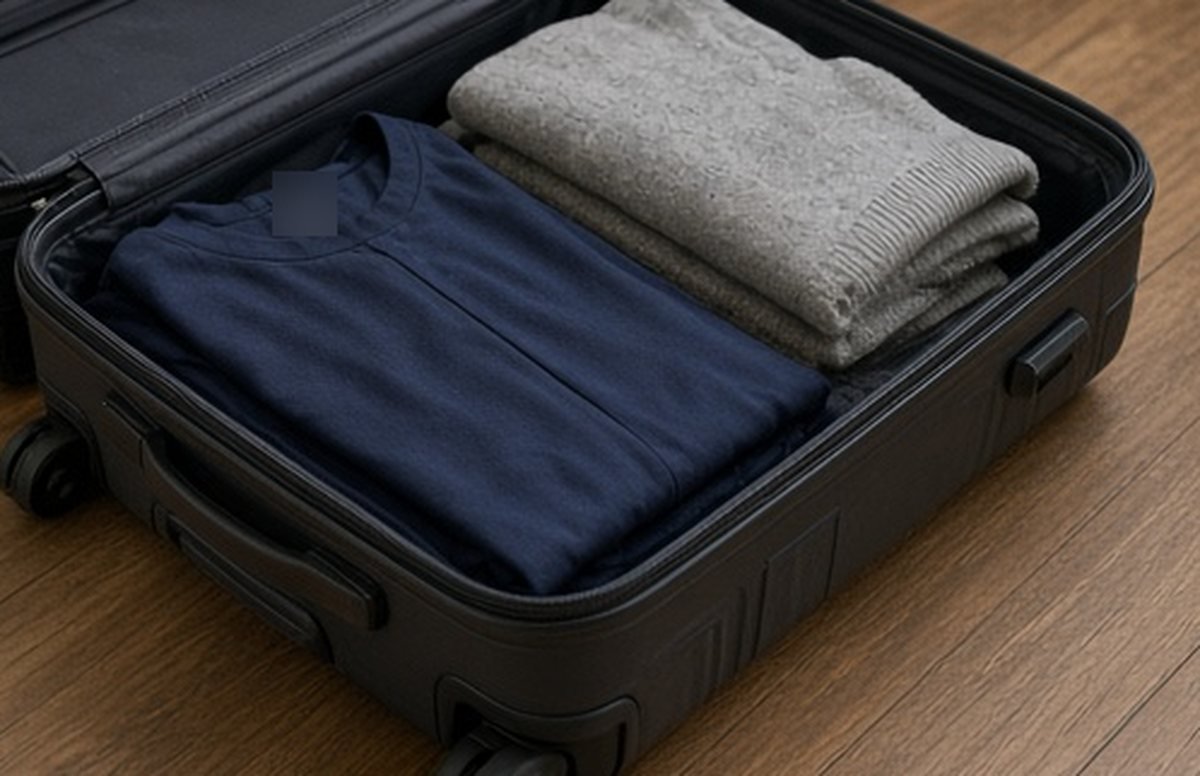
In a small hotel room, separating shirts from trousers can be less useful than separating clean clothing from pieces you have already worn. The real question each morning is not which drawer holds the tops. It is what is ready to wear, what needs attention and what must stay away from the rest of the bag.
A wear-status system can work with a suitcase, a few hangers and a temporary laundry container. It does not require special organisers or a wardrobe large enough to display every outfit. Adapt the arrangement to the room's facilities, the garment care labels and the other people sharing the space.
Check the space before unpacking
Look for suitable dry storage, usable hangers and a surface where the suitcase can remain accessible. Do not assume every drawer or decorative rail is intended for clothing. Check surfaces before putting garments on them, and keep belongings clear of heaters, wet bathroom areas and routes through the room.
If a space seems unsuitable, leave clean clothes protected in the luggage rather than forcing a full unpack. The aim is to reduce decisions and accidental mixing, not to follow a particular travel ritual. A half-open suitcase with clearly separated contents may work better than a crowded unfamiliar cupboard.
Define three ordinary states
Use simple categories: clean and ready, worn but still suitable to wear, and needs cleaning or other attention. These are personal working judgments, not guarantees of hygiene or a way to avoid necessary washing. Visible soil, dampness, the garment's use and your own comfort all belong in the decision.
Keep the wording practical enough that you can apply it at the end of a tiring day. If an item needs a stain assessed or a button repaired, do not return it silently to the clean pile. Put it with the attention-needed pieces, with a brief reminder if the problem is easy to overlook.

Keep clean clothing easy to reach
Arrange the clean supply so that retrieving one item does not disturb everything else. Fold or hang according to the garment's construction and care needs. Avoid suspending a heavy knit from an unsuitable hanger merely to make the room look orderly; protected folding may be the more appropriate option.
Set aside any complete outfit needed early the next morning. Include the small essentials rather than laying out only the visible pieces. If the room is shared, this can make an early departure quieter and simpler. Do not use a clean outfit as a convenient surface for bags or recently worn accessories.
Give worn-but-usable pieces a boundary
Choose one appropriate place for clothing that is dry and suitable to wear again. It might be a separate part of the luggage or a suitable hanging space, depending on the garment. The important distinction is that you know it has been worn and can reassess it before the next use.
Do not treat airing as a substitute for cleaning whenever cleaning is needed. Nor should a fabric's reputation decide the status automatically. A wool top, cotton shirt and linen dress all need a real assessment of their condition. If the room is too cramped for safe airing, simplify the number of pieces in rotation.
Contain the attention-needed pile
Use a suitable container for dry laundry so it does not migrate into the clean supply. Keep damp clothing separate for the shortest practical time and attend to it appropriately; a sealed bag is not a long-term drying arrangement. Follow care instructions and the accommodation's rules about laundry and hanging garments.
If different pieces need incompatible care, separate them before the laundry trip rather than trusting yourself to remember every label at a crowded machine. Empty pockets and check for items needing specialist attention. A simple status system is most useful when it preserves the information needed for the next step.
Reset at one reliable moment
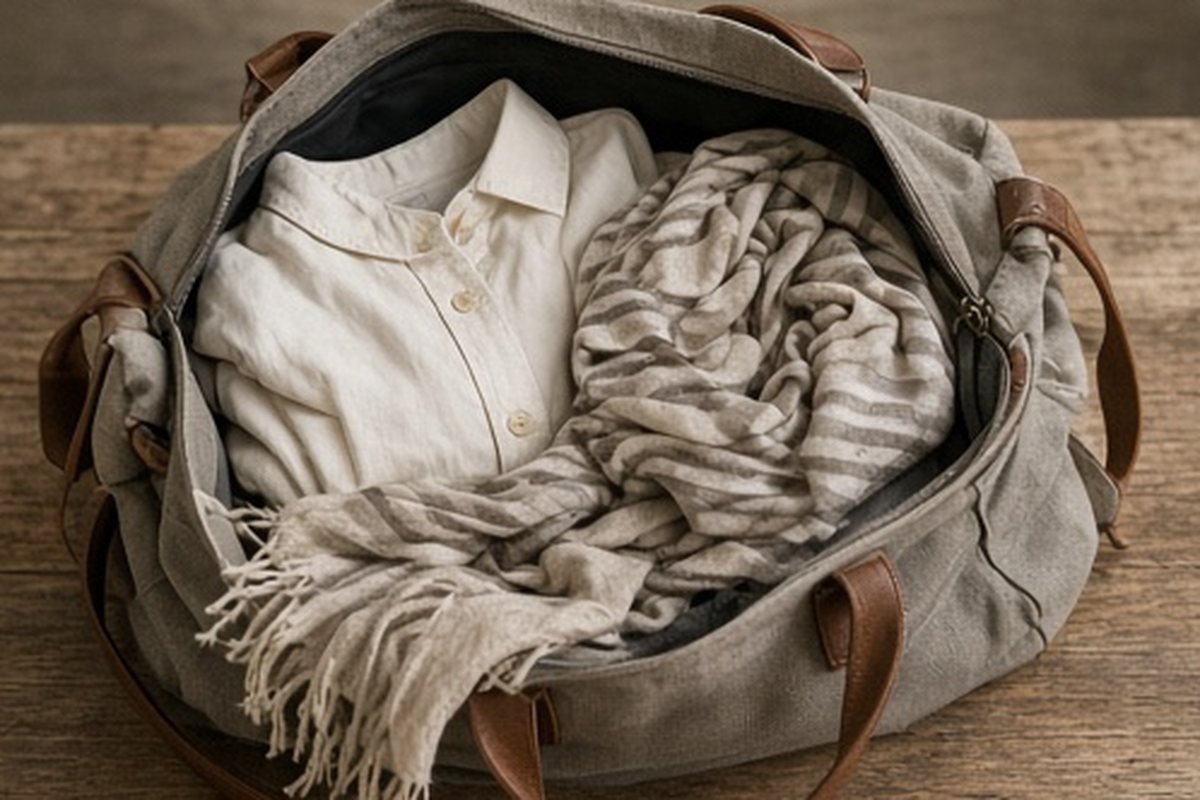
Choose a moment you can actually remember: after changing for the evening or before checking the next day's route. Return each piece to its current status, not the place where it started the trip. This prevents a clean-looking stack from gradually becoming a mixture whose contents you no longer trust.
Keep the reset short. You do not need to refold every garment or create a photographic display. Notice exceptions, restore the boundaries and identify the next usable outfit. If the arrangement takes too long, reduce the number of storage places. Three clearly understood zones are usually more useful than many elaborate subdivisions.
Repack in the reverse order
Before checkout, assess clothing again rather than sweeping each zone straight into the suitcase. Check bathroom hooks, wardrobe shelves and under suitable luggage stands for forgotten items. Keep wet or soiled belongings from contacting the dry supply, and leave any borrowed hotel equipment where it belongs.
Pack the clothes you may need during the onward journey where you can reach them. Do not bury a necessary layer beneath laundry because it fitted there on arrival. Wear status and access requirements are both changing information. A successful packing arrangement reflects the actual state of your clothing that morning.
Take the useful habit home
After the trip, unpack the attention-needed pieces promptly and give them a real next step. Clean garments can return to ordinary storage, while worn-but-usable pieces need an honest reassessment rather than automatic placement among freshly laundered clothes. Check the suitcase and organisers before storing them too.
Keep whichever part of the system reduced confusion. It might be a dedicated dry-laundry bag, a simple note about a repair or a separate place for tomorrow's outfit. The goal is not to manage clothing as a hotel project. It is to know what you can wear without having to inspect every item each morning.