

A fabric swatch can be useful when a screen leaves an important material question unanswered. It is less useful when it becomes a tiny stand-in for the whole garment. Decide what you want to learn before requesting or paying for a sample, and keep the limits of that sample visible.
Not every seller offers swatches, and an available sample may not answer every question about every product. Establish the actual service first. This guide does not assume a universal sample policy or suggest destructive testing. It is a way to make a modest material inquiry more precise without mistaking a small piece of fabric for a complete fitting.
Write one primary question
Choose the uncertainty that matters most: perhaps the colour in your own light, the feel of the surface or its relationship to another fabric you already own. A clear question helps you decide whether a swatch is relevant at all.
Avoid a broad request to know whether the garment will be good. Quality, fit, construction and suitability involve more than a small sample can establish. The sample should contribute evidence to one part of the decision, not receive responsibility for every concern that remains about a product you have not seen or tried.
Confirm what the sample represents
Ask which fabric, colour and product version the swatch corresponds to. Do not assume a sample from a familiar collection is identical to every item with a similar name. If the exact correspondence matters, keep the seller's answer with the sample information.
A sample can be useful even when it does not represent every detail of the finished item, provided that limitation is understood. The problem is not that a small piece has boundaries. It is forgetting those boundaries later and treating an earlier general impression as proof about a different material or garment.
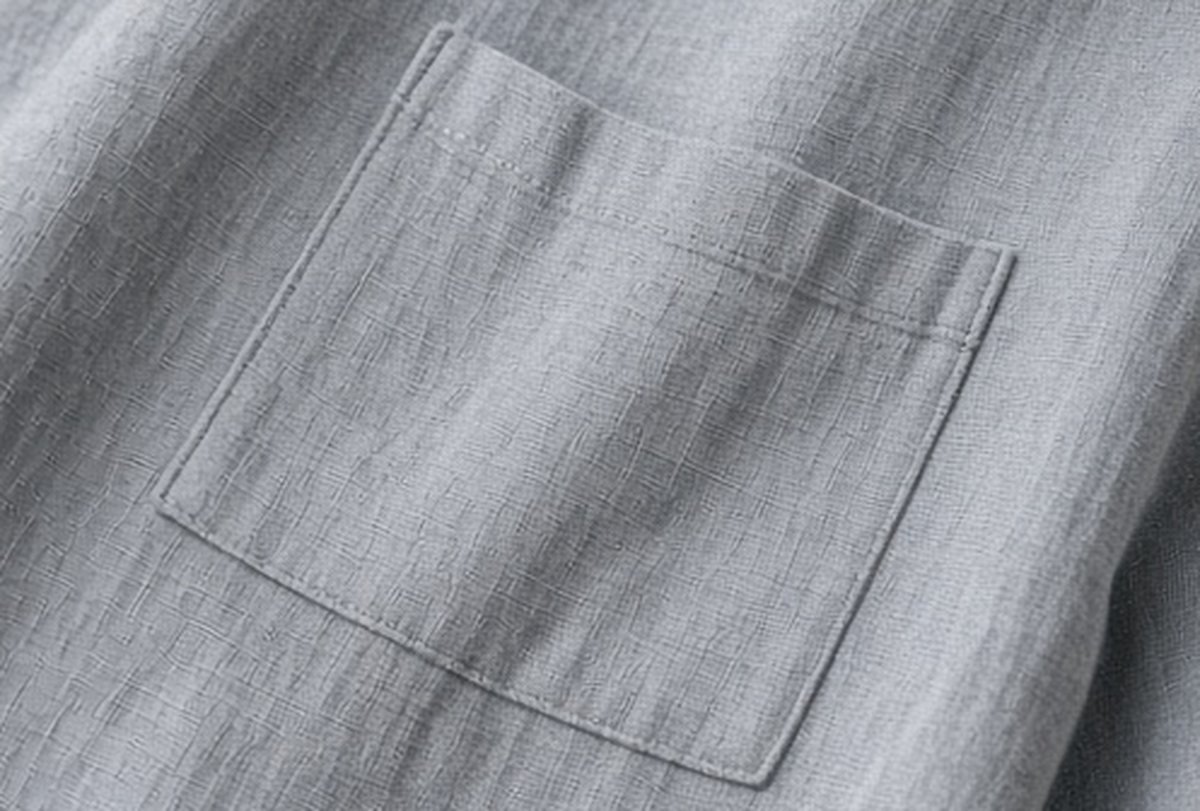
Label it before comparisons multiply
Keep the relevant identification with the swatch: source, fabric description and colour name where supplied. Do not rely on remembering which small square came from which listing after several samples arrive. Avoid adding an unverified fibre percentage or process detail to your own label.
If the sample is too small for a secure physical label, use a suitable separate record or container without damaging it. A clear connection between material and information is more useful than a visually tidy arrangement that mixes the pieces and leaves you guessing about the product each one represents.
Look under appropriate ordinary light
For a colour question, compare the sample in the settings relevant to your own use without claiming a universal match across every light. Keep the screen image as a separate reference rather than assuming it is the definitive colour against which the material must be judged.
Place it near the existing garment if that relationship is what matters. A small comparison can reveal a preference without proving the complete outfit will work. Texture, scale, garment shape and the amount of each colour visible can change the overall impression once the fabrics become full pieces of clothing.
Handle it without inventing a test
Touch the sample appropriately to assess your own response to its surface. Do not stretch, scrape, heat or chemically treat it as an improvised performance experiment. A general editorial guide cannot turn a household test into reliable evidence about durability or specialist suitability.
If a property matters for health, safety or a demanding activity, seek the relevant product information or professional advice. A pleasant tactile impression is useful personal evidence, but it does not establish every characteristic of the material or how you will experience the complete garment after a whole day.
Keep fit and construction separate
A swatch cannot show the entire pattern, seam placement, lining arrangement or relationship between garment and body. Read the actual dimensions and construction details independently. A fabric you like may still be used in a cut that does not meet your brief.
Nor should a sample's softness be treated as proof that every seam, closure or edge will feel the same. Those are features of the finished piece. Use the sample to refine the material question while leaving the garment-level questions open until the relevant evidence or an appropriate fitting is available.
Ask before any care experiment
Do not assume the sample may be washed or otherwise treated, especially if it is borrowed or subject to conditions. Establish permission and appropriate guidance first. Even where treatment is allowed, a small sample does not reproduce every component and construction detail of the finished garment.
Keep any observation modest and do not turn it into a guaranteed prediction about later dimensions or appearance. The complete item's label remains important. A sample exercise should not become a reason to override care instructions because a small unseamed piece appeared to tolerate a process once.
Before keeping a sample indefinitely, decide whether the observation is worth retaining. A labelled note may be enough if the material is no longer relevant. Follow any return conditions, and do not let unidentified samples become a collection that creates more uncertainty than the original screen image.
Use the answer to make a clearer decision
Return to the original question. If the sample helped, record the actual observation: a preferred colour relationship or a surface you personally enjoy. If it did not, identify what remains unknown rather than requesting more samples without a specific purpose.
A swatch is most valuable when its job is narrow and understood. It can reduce one kind of uncertainty while leaving fit, construction and complete-item care for their own evidence. That separation supports a slower, more considered clothing decision without asking a small piece of fabric to promise the entire experience of wearing a garment.