
A shirt under a crew-neck knit is a familiar outfit formula, yet it can feel surprisingly unfinished when the visible edges have not been chosen. The collar may sit differently after you move, the cuffs may compete and the shirt hem may appear only by accident. Decide which parts are meant to show.
This is a styling exercise with clothes you already own, not a universal rule about correct proportions. Use the actual shirt and knit, following their care and handling needs. The useful outcome is a comfortable arrangement that survives ordinary movement, whether it looks crisp, relaxed or deliberately somewhere between those descriptions.
Start with the collar alone
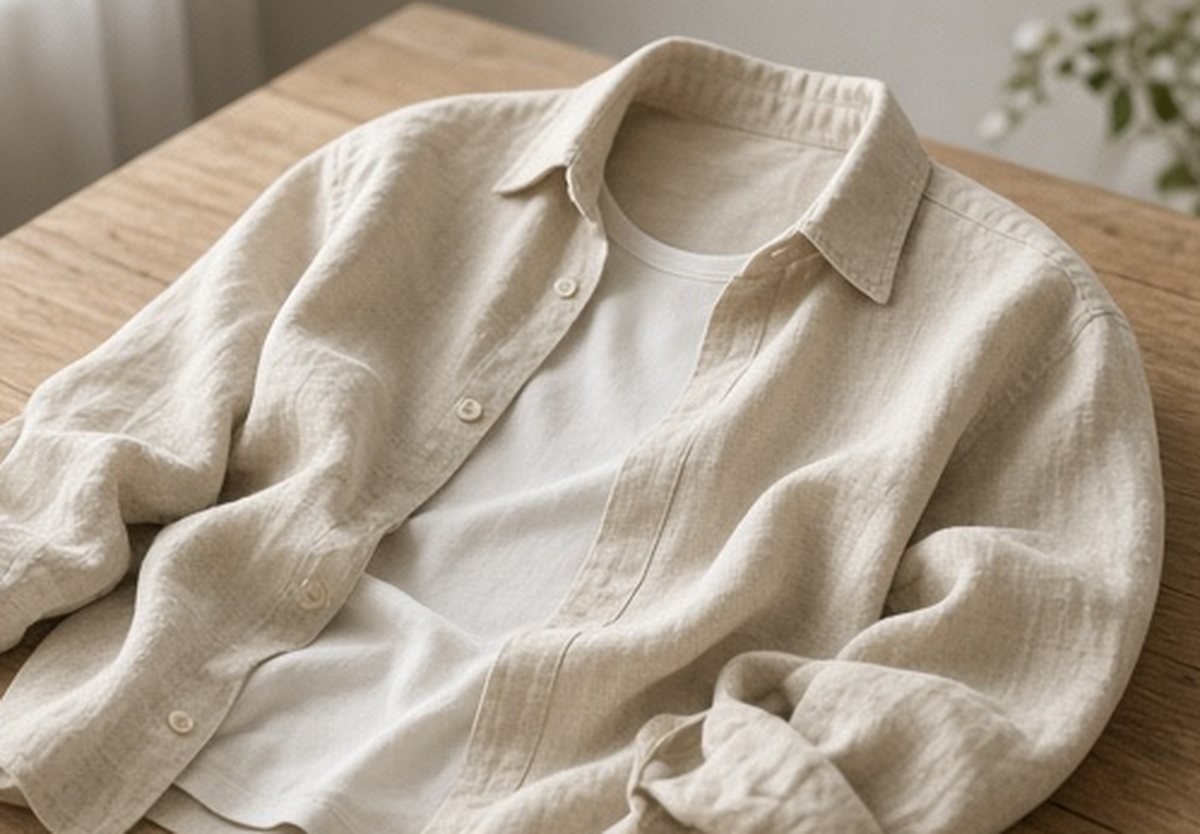
Put the shirt on comfortably and add the knit without adjusting every other edge at once. Look at how the neckline and collar sit together. Decide whether the collar points are intended to remain visible or whether you prefer a quieter arrangement.
Do not force a collar under tension to imitate a photograph. If the neckline relationship feels awkward, try another existing shirt or knit before assuming you need a new accessory to hold it in place. The actual shapes may simply suit different combinations, and that is useful information rather than a failure to style creatively.
Check comfort around the neck
Assess whether the combined arrangement feels comfortable in normal positions. A shirt that is fine alone may feel different under another neckline. Do not treat an attractive front view as a reason to tolerate a restriction or repeatedly tug at the layers.
Keep fastening choices appropriate to your comfort and the garment's design. You do not need to close a button purely because the outfit formula seems traditional. If a different arrangement changes the visible collar in a way you prefer, that can become the intended version rather than a compromise to apologise for.
Give the shoulders room
Reach gently and notice whether the shirt and knit move comfortably together. A fitted outer layer can change how the shirt sits through the shoulders or upper arms. Avoid assuming that two individually suitable garments will automatically work when worn in this order.
If you find yourself constantly pulling the shirt into place, consider a different existing pairing. A thinner or differently shaped shirt may be worth trying, but do not claim that one fabric type always solves the issue. The exact construction, dimensions and your own preferences matter more than a broad material stereotype.
Choose what happens at the cuffs
Decide whether shirt cuffs show, sit beneath the knit sleeves or remain part of a deliberate folded arrangement. Use the garment's design without forcing a tight roll or stretching the outer sleeve. The choice should be comfortable for ordinary hand movement.
Check it after reaching for a bag or sitting down. If the cuffs keep emerging unpredictably, choose a version you can repeat rather than correcting them all day. Visible cuffs can be a pleasant detail, but hiding them can also be the simpler answer. The formula does not require every possible shirt edge to appear.
Set the hem relationship
Try the shirt tucked or untucked only as appropriate to the garments and your preference. Look at the whole outfit with the actual bottom half, not just the top in isolation. A shirt hem can be deliberately visible without needing one universally correct amount to show.
Move normally and reassess. If a tucked arrangement pulls awkwardly or an untucked hem becomes inconvenient, another combination may work better. Do not assume the problem must be your body or that a familiar outfit formula should behave identically for everyone. The garments' particular lengths and shapes are part of the result.
Add the coat and bag
Complete the real outfit with outerwear and the bag you expect to use. Check sleeves, closures and access without overloading or forcing the layers. The collar arrangement should remain comfortable when the coat is added, not only when the knit is the outermost piece.
If the combination becomes cumbersome, simplify it rather than adding more styling rules. Perhaps the shirt works better with a different coat, or the knit belongs in another outfit. A useful wardrobe includes specific successful pairings instead of requiring every layer to work in every possible sequence.
Plan the warmer-room version
Decide what happens if the knit comes off. The shirt should still form an outfit you are comfortable wearing, and the removed layer needs an appropriate temporary place. Do not rely on a tight underlayer arrangement that only feels acceptable while permanently concealed.
Follow the knit's care and handling guidance when storing it. Check that the actual bag or available space can accommodate it appropriately. An outfit that changes with the room needs a practical transition, not simply an appealing image of the fully layered version at the start of the day.
You can simplify the visual choice by adjusting one edge at a time. Settle the collar first, then cuffs, then hem, checking comfort between changes. This makes it easier to identify which decision improves the outfit instead of changing several relationships and losing track of what actually helped.
Record one repeatable arrangement
Note the exact shirt, knit, bottom half and visible-edge choices that worked. A quick personal reference is enough. You do not need a formula for all collars or every crew neck; you need a reliable combination you can put on without a long adjustment session.
The small decision about visible edges makes a familiar outfit more intentional. Collar, cuffs and hem can each have a clear role while comfort remains the priority. When the arrangement still works after normal movement and the addition of outerwear, the outfit becomes a repeatable part of the wardrobe rather than a pose that needs constant maintenance.