
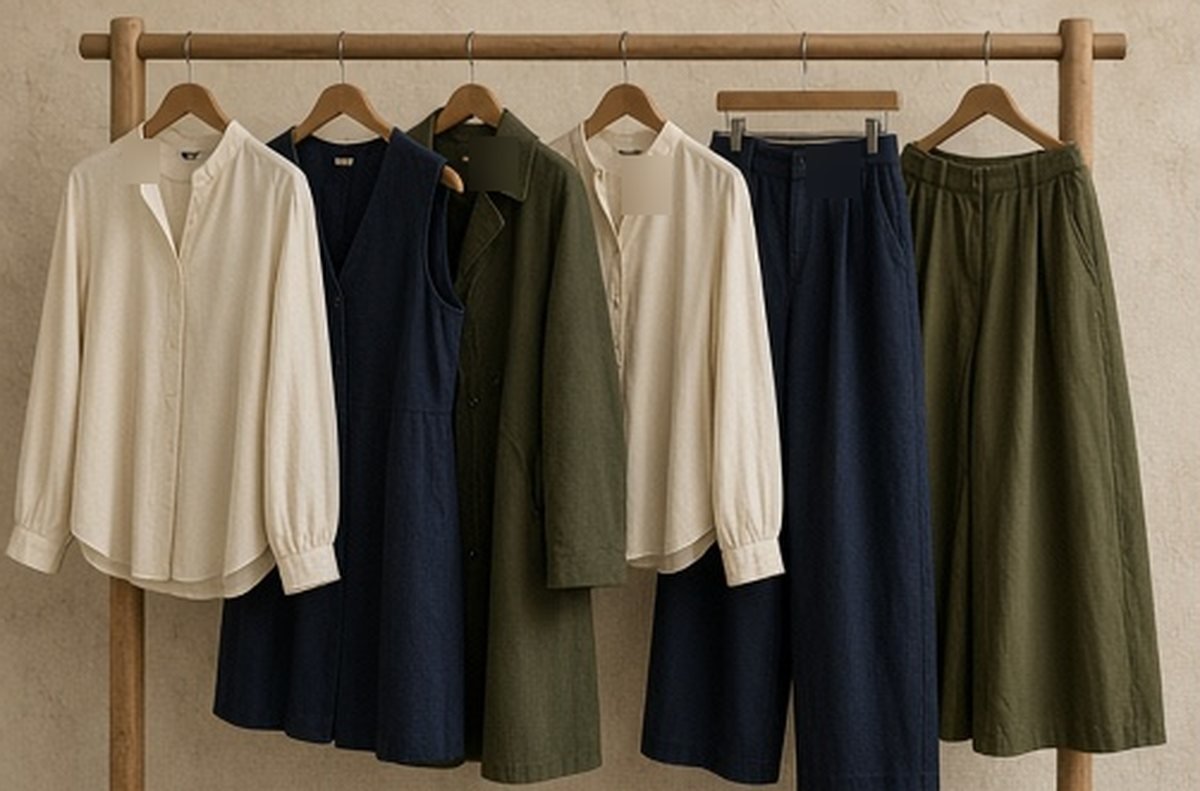
Working partly at home and partly in an office can make it feel as though you need two wardrobes. One promises comfort; the other needs to look appropriate in shared spaces. In reality, a few shared anchors may cover both, provided you do not pretend the activities and temperature conditions are identical.
Begin with the week you actually have. Count office days, home days and any occasions with different requirements. Include the commute and time after work. A useful system supports those activities rather than arranging clothes around an abstract division between professional and casual.
Identify the common ground
List pieces already comfortable and suitable in both settings. These might include simple trousers, a familiar top or a cardigan. Choose according to fit and workplace expectations, not because a product description calls them elevated basics. The garments need to work in your environment.
Do not force every item into both roles. An office jacket may remain office-specific, while a favourite relaxed layer stays at home. Sharing some anchors can reduce duplication without requiring complete interchangeability. Clear exceptions are more realistic than a universal capsule rule.
Test the seated hours
Sit at the desk where you work at home and use the normal chair if possible. Check waist pressure, sleeves at the keyboard and whether a top needs constant adjusting. Comfort while standing in a mirror does not establish comfort through hours of ordinary work.
Repeat the assessment with the layers used for the office. A belt, tucked shirt or jacket can change how the same trousers feel. If an outfit only works in a highly maintained posture, it is not a reliable long-day option. Choose clothes that accommodate the task rather than distract from it.
Build a home version first
Use one comfortable bottom, one top and a removable layer. Include appropriate footwear for your needs rather than treating bare feet or slippers as universal. Consider temperature changes through the day and whether you move between rooms, go outside or handle household tasks.
If video calls matter, check the neckline and shoulders in the actual camera position. That does not mean only the visible half deserves thought. A complete comfortable outfit can support movement and unexpected errands without requiring a change whenever you leave the desk.
Make the office version deliberately
Keep an anchor and change only what the setting requires. Perhaps the same trousers work with another top and a jacket. Perhaps the top transfers but the bottom does not. Try the complete outfit with shoes and a bag rather than assuming matching colours settle the matter.
Follow the workplace's expectations where relevant. A relaxed fabric may be accepted in one office and unsuitable in another. The point is not to redefine the dress code but to find overlap within the requirements you actually need to meet.
Plan the commute separately
Walking, cycling and public transport add movement and weather considerations. Check hems, pocket access and layers under outerwear. A suitable office outfit can still be uncomfortable during the journey. Test the system with your normal bag, not merely the jacket on its own.
If changing one item on arrival is useful, include the carrying and storage plan. That can be a sensible compromise rather than evidence of failure. The simpler option is whichever arrangement creates less daily friction, not necessarily the one with the fewest theoretical garments.
Keep cleaning needs visible
Home-working clothes are not automatically clean because they stayed indoors. Office clothes are not automatically dirty after a short wear. Inspect actual condition, follow care labels and decide what is ready for another use. Avoid fixed wear counts that override comfort or visible soil.
A shared anchor may be needed more often than before, so make sure the rotation allows cleaning and drying. If one pair of trousers becomes the bottleneck, another existing option may solve it. Do not make the whole week depend on one piece being permanently available.
Use the right storage boundary
Keep ready-to-wear clothes distinct from items needing cleaning or repair. A small accessible area for assessed rewear pieces can prevent the familiar chair pile. The arrangement need not be elaborate; it simply needs a clear meaning for anyone involved in laundry or tidying.
Store office-specific components together if that helps departure mornings. A work bag, appropriate shoes and a familiar layer can form a small launch point. This often saves more attention than buying another top while leaving the rest of the morning system unresolved.
Diagnose repeated outfit failures
For a fortnight, note why a combination did not work: temperature, tightness, ironing, footwear or an unsuitable layer. Those causes call for different solutions. A recurring fabric-care issue is not necessarily a colour-palette problem, and uncomfortable shoes are not fixed by another jacket.
Try recombining existing pieces before adding stock. If a purchase is genuinely needed, describe the job and measurements clearly. The evidence from your week provides a stronger brief than a general desire for more polished home-office clothing.
Keep two reliable defaults
Record one complete home outfit and one complete office outfit that you enjoy. Photographs can help, but include notes about comfort and weather. These become dependable choices when time is short, while leaving room for variety on days you want it.
A hybrid wardrobe does not require all clothes to become multifunctional heroes. It needs a few useful overlaps, sensible exceptions and enough maintenance capacity to keep the rotation working. When those elements align, home and office dressing can share resources without pretending the two days are the same.