
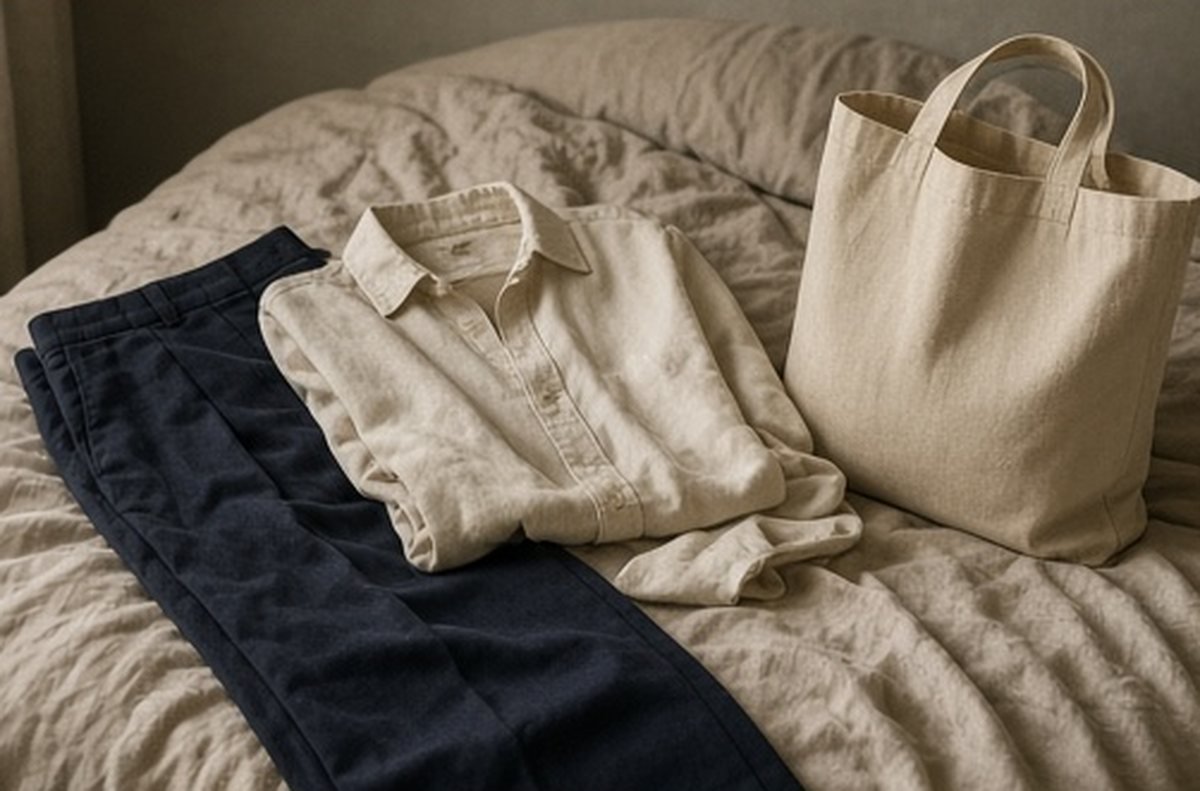
Performance trousers promise a convenient bridge between movement and everyday dressing. For someone commuting, sitting through meetings and walking home, that sounds useful. But comfort on the move and suitability at a desk are not exactly the same test. A pair can stretch beautifully and still have pockets, fabric sheen or a waistband that make it wrong for your working day.
Start with the workplace rather than the product category. Dress expectations vary widely, even within one industry. Consider the meetings, client contact and practical tasks in your actual week. A relaxed office may welcome a jogger-inspired silhouette; another setting may require a more conventional trouser. Neither situation is solved by a generic promise of versatility.
Identify the hardest part of the day
Write down when your current trousers become uncomfortable: cycling, climbing stairs, sitting, bending to reach equipment or standing for long periods. The answer tells you what to test. Do not assume you need the most technical option if your main problem is an incorrectly fitted waistband.
Include the return journey and anything after work. If you carry a laptop bag, wear a coat or walk for groceries, test the outfit with those items. Clothes need to operate as a system. An individually comfortable pair can become awkward once a bulky layer, loaded pocket or unsuitable shoe is added.
Give the chair test enough time
Sit normally for several minutes, then lean forward and stand up. Check whether the closure presses into your abdomen, the waistband rolls or the back pulls downward. A quick changing-room squat can miss the sustained pressure that becomes noticeable during a long meeting.
Try the trousers with your normal underwear and belt, if you use one. Assess both the standing and seated fit without holding your posture unnaturally. If you must continually reposition the waistband, that is relevant information. Stretch should support a suitable cut, not become a reason to accept a fit that is uncomfortable at rest.
Look at the surface in ordinary light
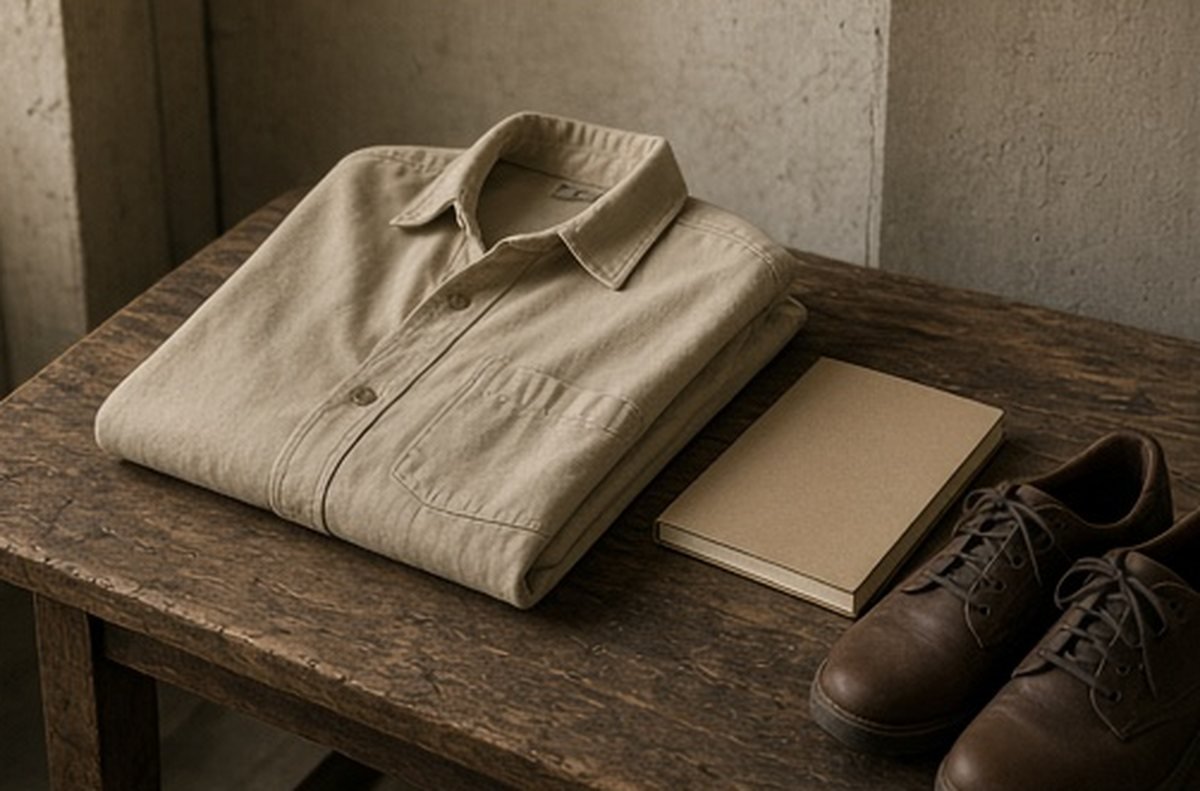
A fabric may appear matte in studio photographs and shinier in daylight or office lighting. Check the colour and texture with the shirts, knitwear and jackets you intend to use. You do not need a universally formal fabric; you need one that feels appropriate in your own environment.
Notice whether pocket outlines, tucked shirt hems or underwear show through. Dark colour alone does not guarantee opacity, especially where fabric stretches across the body. Try bending and sitting as well as standing. If online information is limited, acknowledge that uncertainty before ordering and read the return conditions carefully.
Load only the pockets you use
Place your usual phone, keys or work pass in the intended pockets. Walk, sit and reach for them again. A neat silhouette can change once the pockets hold real objects, and a secure closure is useful only if it remains accessible and comfortable.
If carrying everything in trouser pockets distorts the fit, consider using a bag or reducing the load rather than assuming a larger size is the answer. Check rear pockets against the office chair too. A bulky item behind the hip can create pressure even when the rest of the garment fits well.
Separate fabric information from enthusiasm
Per the brand, State of Matter's official website presents performance clothing and describes using recycled materials. Its homepage also highlights a Triton Jogger. These are the brand's descriptions, not independent confirmation that every item has the same recycled content, fabric behaviour or workplace suitability.
Read the exact garment's fibre percentages and care details. A recycled-material claim does not by itself establish the full environmental impact, and words such as breathable or comfortable do not guarantee your experience. This guide does not repeat comparative superlatives as facts and is not a hands-on test of the brand's trousers.
Check heat, movement and layering
If you commute actively, think about what happens when you arrive indoors. A trouser that feels comfortable outside may be warm in a heated office. Compare fabric weight and construction with an existing pair whose behaviour you already understand. Product names alone are not enough to predict temperature comfort.
Test the trousers beneath your coat and with any base layer you expect to use in cold weather. Check for restricted movement at the knees, seat and waist. Adding stretch to one layer does not automatically make the entire outfit flexible. The combined fit matters.
Read care as part of the specification
Before buying, decide whether the washing and drying instructions fit your weekly routine. Technical fabrics and finishes can have particular requirements, so do not assume the settings used for ordinary cotton trousers are appropriate. Follow the sewn-in label and any relevant manufacturer guidance.
Consider what happens after a spill or a rainy commute. If you only own one suitable work pair, a long drying time could become a practical problem. A manageable rotation can be more useful than expecting one supposedly all-purpose garment to remain available every day. Versatility should reduce fragility in your routine, not create it.
Compare with the simplest alternative
Try improving the outfit you already own before ordering a replacement: adjust a belt, arrange a minor repair or check whether a different existing pair solves the problem. If an alteration might help, obtain a realistic quote. Do not treat new technology as the only route to comfort.
If a purchase still makes sense, use a written brief: required movement, preferred measurements, pocket needs, acceptable care and the workplace outfits it must join. Reject features that do not serve those requirements. A clear brief makes it easier to compare options without chasing whichever product description sounds most advanced.
A successful commute-to-desk trouser disappears into the day. You can move, sit, carry essentials and attend the occasions you actually have without continually adjusting it. That ordinary reliability is a stronger definition of performance than an ambitious label.
Brand source
Brand descriptions are per State of Matter's official website. Verify current garment-level materials and specifications separately; no independent environmental comparison or performance test is claimed.