
This post may contain affiliate links. We may earn a commission if you buy through them, at no extra cost to you. See our Affiliate Disclosure.
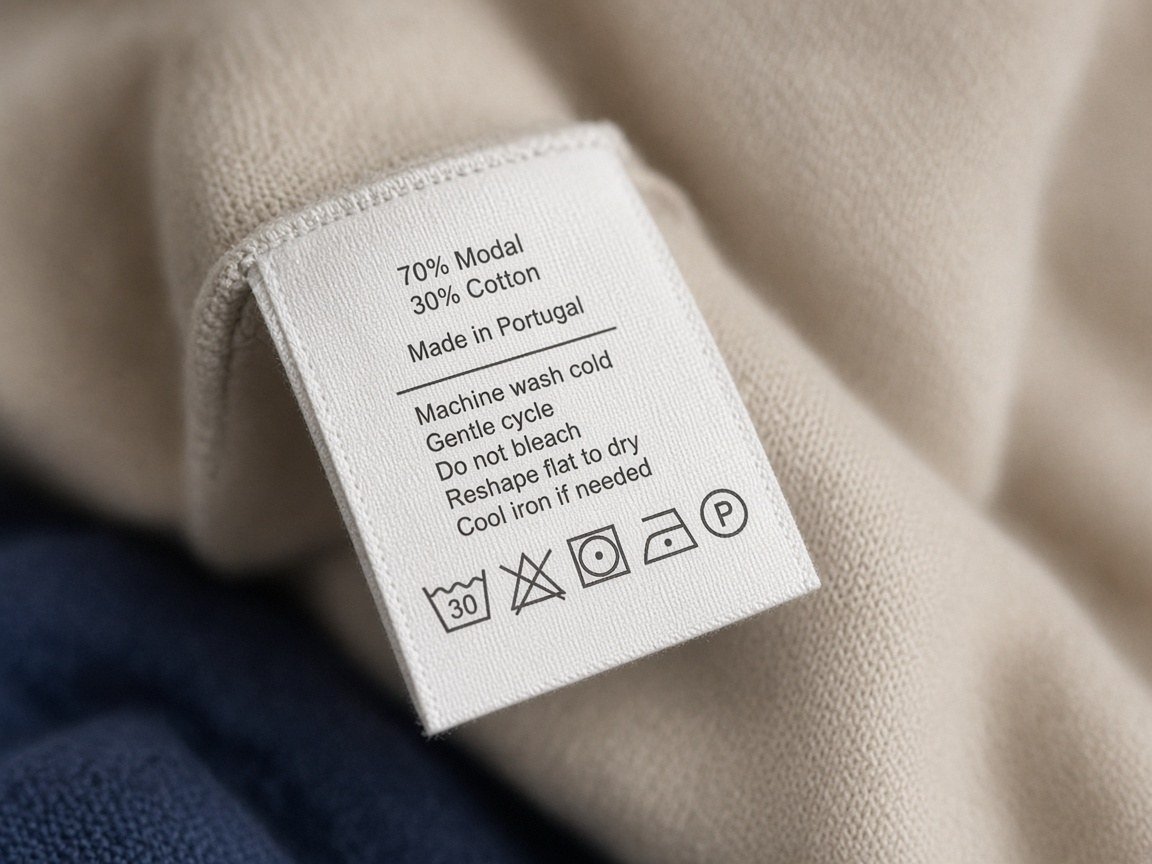
Learning how to read a fabric label is the fastest way to judge care, comfort and honesty before you buy — in a shop or a thrift aisle.
Quick answer
Read fibre percentages first, then care symbols, then origin. Labels do not prove sustainability alone, but they stop you guessing in the wash.
Key takeaways
- Fibre % predicts feel and care.
- Care symbols beat memory.
- Origin is one clue, not the whole story.
- Missing labels are a red flag for thrift buys.
Useful with secondhand basics, pre-consumer waste and fibre guides like hemp vs linen.
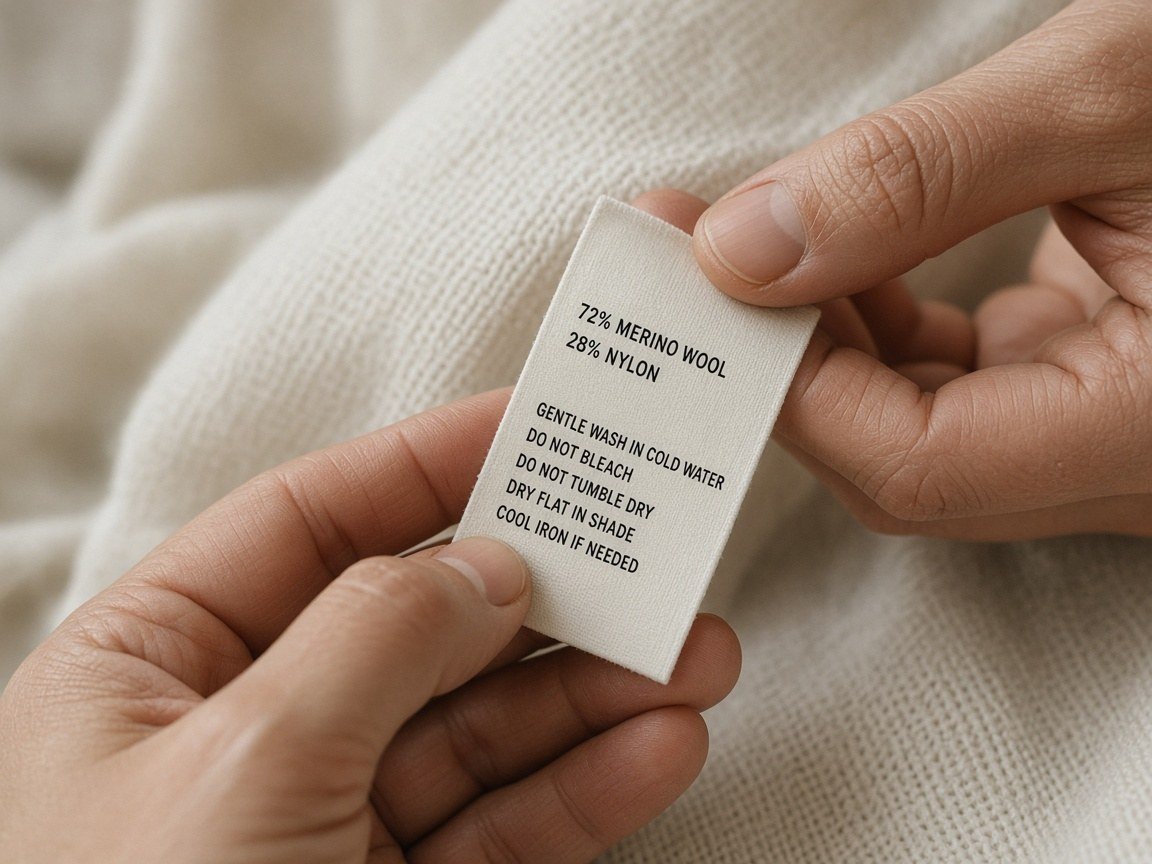
What do fibre percentages tell you?
The dominant fibre drives hand feel and wash needs. A 98% cotton / 2% elastane tee stretches; an 80% merino / 20% nylon sock lasts longer at the heel.
How do you decode care symbols?
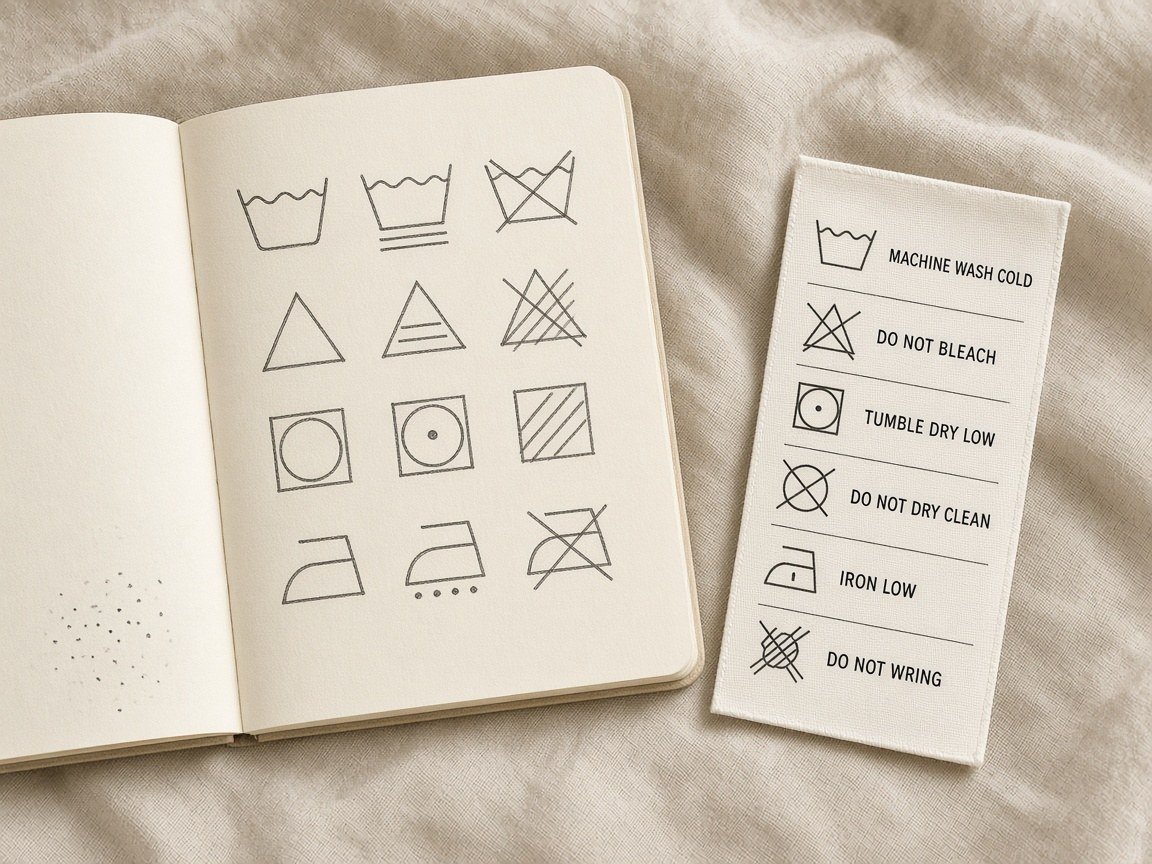
| Symbol family | Usually means | Watch for |
|---|---|---|
| Tub with numbers | Max wash temperature | Hot washes on wool |
| Triangle | Bleach guidance | Skip bleach on wool and silk |
| Square with circle | Tumble dry rules | Many wools say no |
| Iron dots | Iron heat | Linen likes steam; synthetics often do not |
What labels cannot tell you
- Living wages or factory conditions.
- Whether deadstock claims are verified.
- Exact dye chemistry beyond legal requirements.
- How the cloth will pill after twenty washes.
FAQ
Not always — blends can improve durability and stretch.
In thrift, that is risky. Guess fibre carefully or skip.
No. It is one data point. Judge cloth and construction too.
Nice when present, but look for certifications and brand pages as well.
Bottom line
Fibre, care, origin — read them in that order. Labels will not tell the whole ethics story, but they stop laundry disasters.