
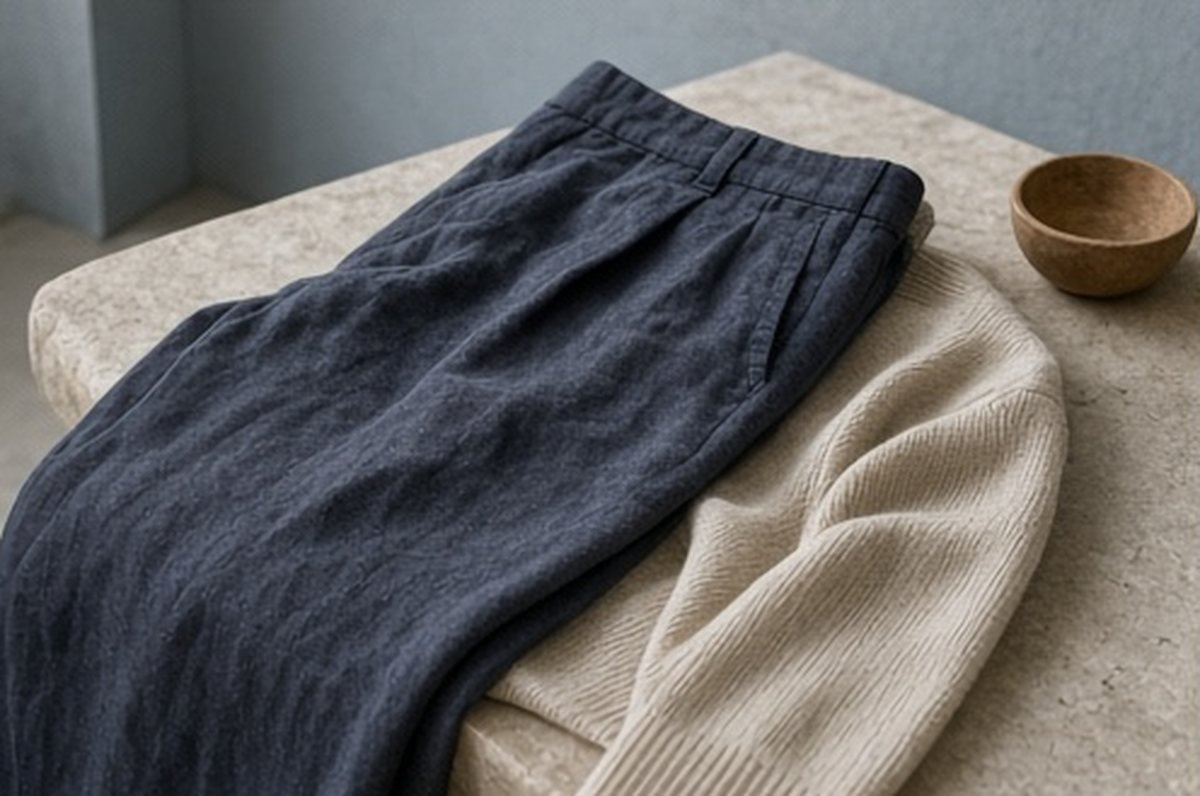
Straight-leg trousers can look like a simple wardrobe answer, but the word straight does not explain every relationship between garment and wearer. It commonly describes part of the leg shape, not a universal promise about the waistband, rise, thigh or hem on every body. Use the term to begin the comparison rather than end it.
Per the brand, Toad&Co lists a Mission Ridge Straight Chino in its collection. This article uses that named product as a starting point for reading trouser information. It does not independently test the garment or infer composition, stretch, exact dimensions or care from the name. Check those details for the selected item directly.
Define the trouser's actual job
Choose the setting and the companion pieces before deciding that a familiar silhouette is the answer. A casual office outfit, a long seated journey and an easy weekend combination may place different demands on the same pair. You need not ask one trouser to cover every setting.
Write the practical requirements in ordinary language: comfortable sitting, a preferred waistband position or a hem that works with particular shoes. Those requirements make the product information easier to read. A broad style category is useful, but it cannot substitute for knowing what you want the complete outfit to do.
Read beyond the silhouette word
Look for the actual fit description and measurements, including any stated rise or available lengths. Do not assume the waistband sits at your preferred position because the leg is described as straight. Different parts of a garment contribute separate fit information.
If a crucial detail is missing, ask rather than measuring a styled photograph. Model images can show an outfit idea without supplying every dimension you need. Keep the question specific so the answer can help: which measurement, which landmark and which version of the item are you trying to understand?
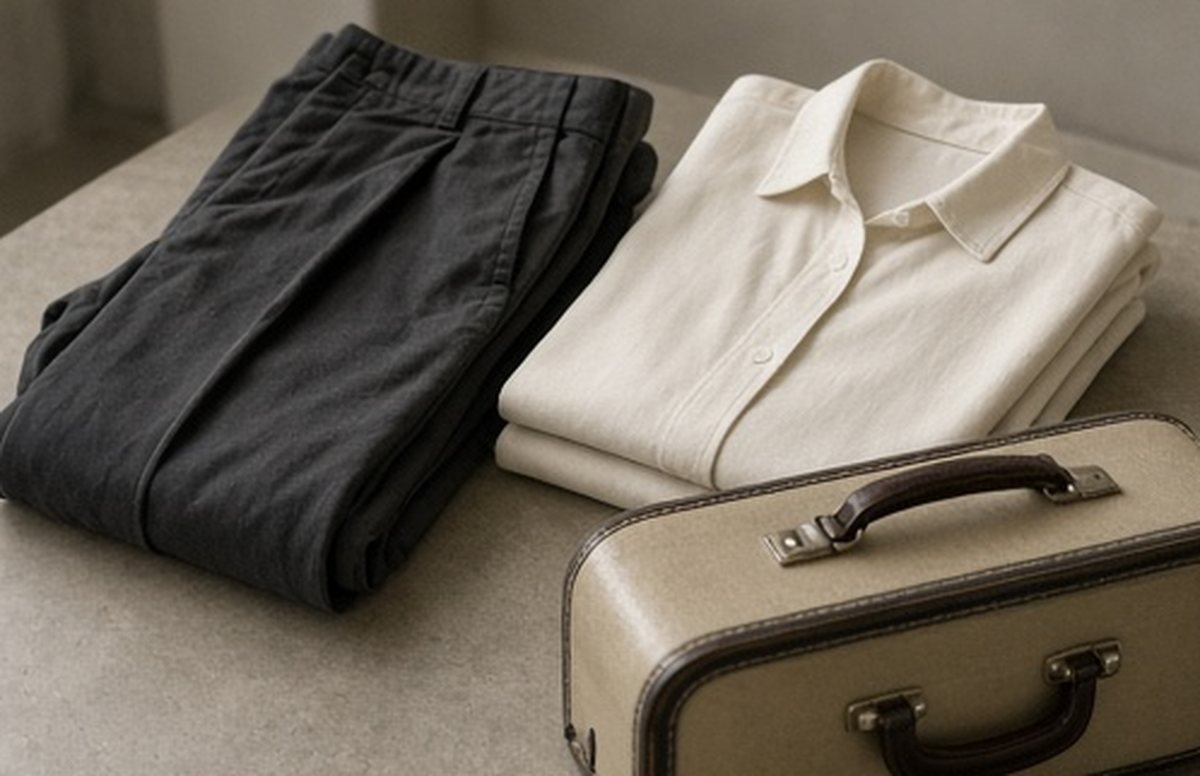
Compare a suitable existing pair
Choose trousers that perform a similar job and note what you like or would change. Use the same measuring method as the seller where available. Distinguish a flat half-width from a full circumference and garment measurements from a body-size chart.
Record the reference pair's current condition, alterations and relevant history. A well-worn favourite may not reproduce its original dimensions. It can still explain your preferences, provided you do not treat the current numbers as proof that every new pair carrying the same size label will feel or look identical.
Give the waistband and rise time
During an appropriate fitting, assess the waist and seated comfort gently. Do not rely on the standing front view alone. Check the ordinary movement relevant to the intended day while respecting the item's condition and any applicable purchase terms.
A belt should not be treated as an automatic solution to every mismatch. It may be part of an outfit, but it cannot be assumed to change the garment's whole pattern or preferred rise. If the fit is unsuitable, identify the actual issue instead of insisting that a broadly familiar leg shape must work.
Add the intended shoes
Try the pair with the shoes that belong to the planned outfit. Observe the hem relationship in normal standing and walking without dragging or forcing the garment. A trouser shape can look different when the footwear changes, even though the labelled silhouette remains the same.
Do not make an irreversible alteration before deciding that the rest of the fit is suitable and understanding the relevant conditions. If a hem change is appropriate, use a competent alteration route and the actual footwear brief. A general preference for straight trousers does not determine one correct length for every wearer or shoe.
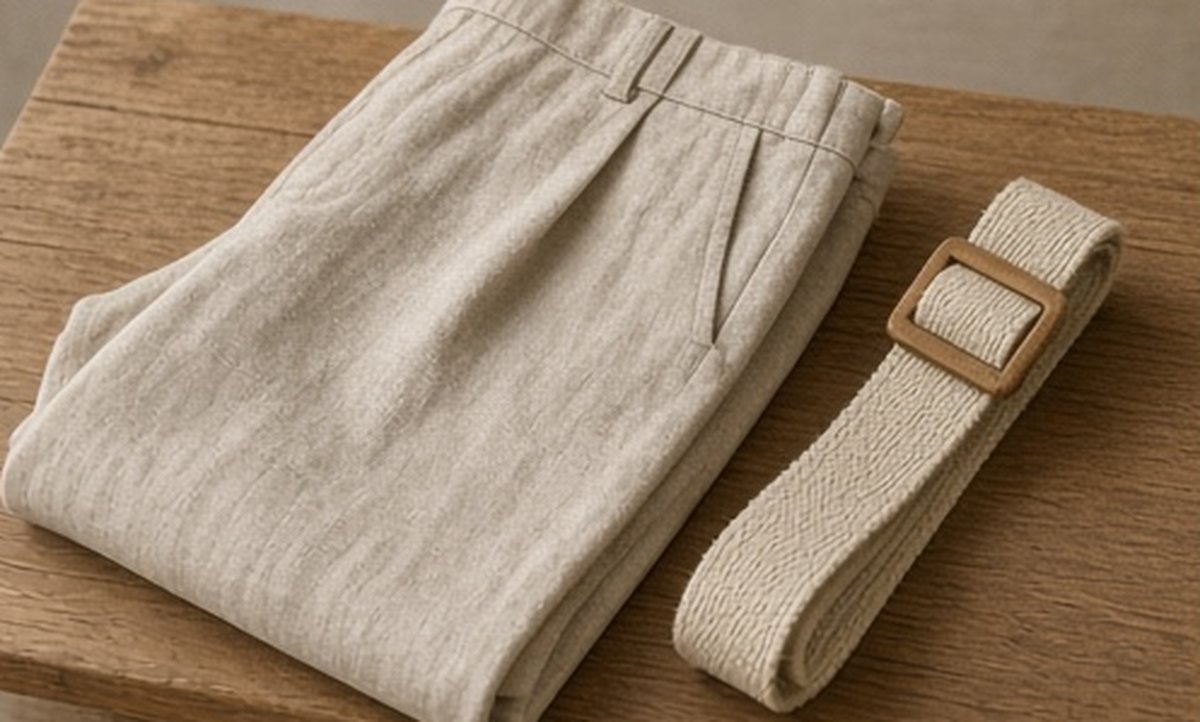
Check material and care independently
Read the exact composition and complete care instructions. The word chino and the product's styling do not establish every fibre, finish or maintenance requirement. Do not carry a routine from another pair into this one merely because both belong to the same broad wardrobe category.
Consider whether the care process fits your facilities and schedule. A useful trouser should be available when you need it, not only visually compatible with several tops. If you are travelling, the laundry and drying plan remains part of the decision even when the outfit itself looks pleasantly uncomplicated.
Build two real combinations
Use existing tops, outerwear and shoes to make a small set of actual outfits. Look for a repeatable combination rather than proving that the trousers match every possible item. Two clear uses can be more valuable than a long theoretical list.
Notice whether each combination works with the same waist and hem arrangement. If a shoe change creates a new problem, count that honestly. A compact wardrobe can include deliberate pairings; it does not require every garment to coordinate with every other piece under all conditions or without any preference-driven compromise.
Keep the straight-leg preference separate from the reason you reject or keep a particular pair. A waistband issue, unsuitable length or difficult care routine may explain the decision more accurately than the silhouette. That distinction makes the next comparison more useful instead of ruling out an entire category.
Keep shape and suitability separate
Save the exact product information and your observations rather than a blanket note that straight fits. Future comparisons will be clearer when you know which dimensions and companion pieces mattered. The silhouette word remains useful, but its limits stay visible.
A straight-leg chino can be a practical wardrobe option when the complete item suits the intended wearer and setting. The decision becomes stronger when it rests on dimensions, comfort, construction and care alongside appearance. Let straight describe the shape it actually describes, without asking it to guarantee every other part of the fit.