
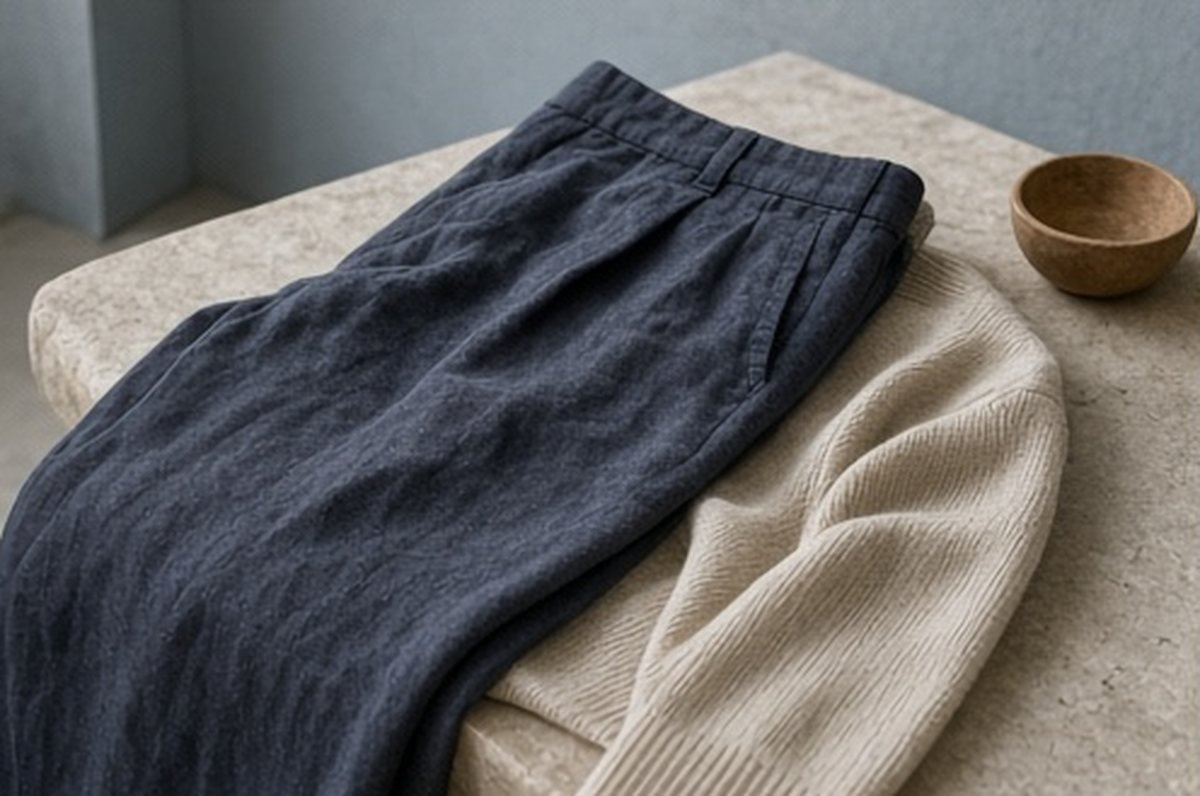
A wide-leg trouser can look useful for travel because it appears relaxed and easy to combine. Its practical role still depends on the hem, footwear and ordinary movements of the journey. The pair you walk in matters more to that decision than a shoe chosen only to make a full-length photograph look balanced.
Per the brand, Unbound Merino lists a Wide Leg Merino Travel Trouser among its clothing. The name does not establish exact measurements, composition percentages or suitability for every route. This guide is an outfit-planning framework, not a hands-on review or a promise about comfort, drying time or technical performance.
Choose the actual travel shoes
Start with footwear you already know and that suits the planned activity. Consider the relevant requirements of the route rather than assuming any casual shoe is appropriate. A clothing guide cannot establish grip, protection or fit from a photograph.
Put those shoes into the trouser comparison from the beginning. If the garment only seems workable with another pair you do not own, include that consequence honestly. The trouser's additional cost in the wardrobe may be more than one item, and its role should remain clear before you create a supporting shopping list.
Read length and rise together
Use the exact product measurements and the seller's method where available. A familiar inseam alone may not reproduce the result of another trouser because waist position and cut can differ. Compare with a suitable existing pair and note those differences.
Do not assume wide leg means a particular amount of floor clearance or ease at every point. The finished dimensions matter. If a measurement central to your plan is absent, ask for clarification rather than using the model's height as a complete fit prediction. Your own proportions and preferred waistband position still belong in the decision.
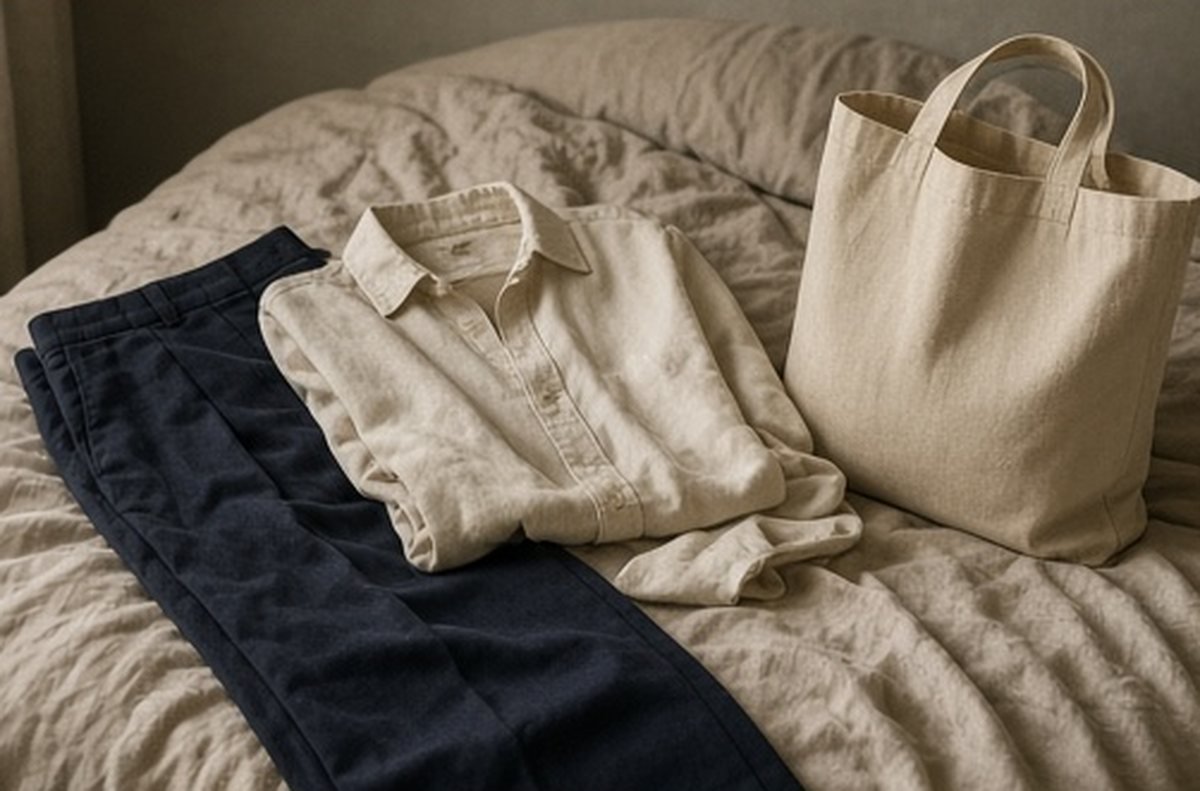
Check the standing hem naturally
During a careful fitting that respects applicable conditions, stand in the intended shoes without lifting the waistband to create a preferred image. Look at clearance around the foot and whether the hem meets the shoe in a way you like.
Avoid assuming that a trailing hem will be manageable because you can lift it occasionally. Consider the actual route and what else you will carry. If the length is unsuitable, establish whether a professional alteration is feasible before treating it as an automatic solution. Construction and the desired finished shape need assessment.
Walk and sit without a performance test
Use gentle ordinary movements to notice how the trouser behaves. The point is to assess the combination, not stress the seams or demonstrate the maximum stride. Stop if the garment strains or feels unsuitable, and keep return conditions in mind.
Sit in an ordinary chair and check waistband comfort, knee room and the way the hem moves relative to the shoe. Clothing changes position during use; it need not look identical in every posture. Decide whether those changes are comfortable and acceptable for the journey rather than judging only the standing silhouette.
Include the top and outer layer
Choose one existing top and appropriate outerwear for the planned day. Check whether tucked or loose arrangements remain comfortable at the waistband. A wide-leg shape does not require a particular top length, but the complete outfit should meet your preferences and the setting.
Do not use another new layer to distract from a trouser fit issue. If the base combination works, add the coat and bag and assess ordinary movement again. The useful capsule is made of pieces that cooperate, not a collection whose individual product names all include travel.
Plan the care and availability
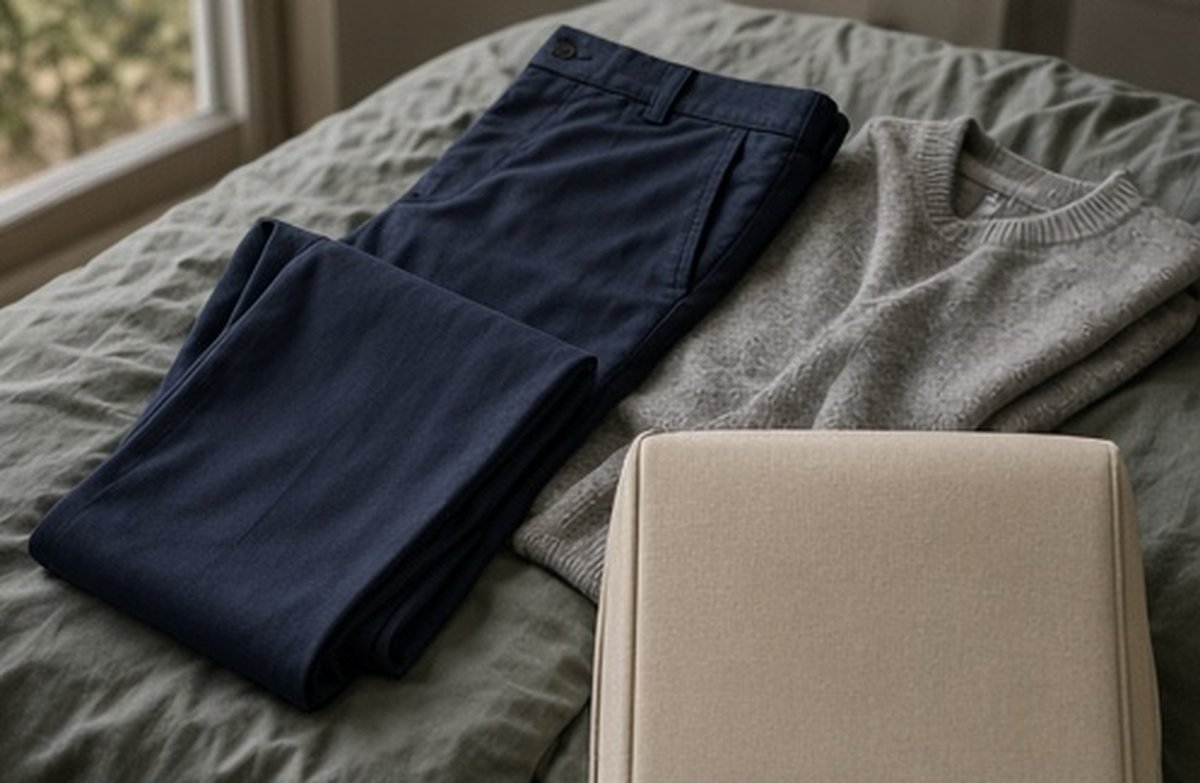
Read the exact composition and cleaning guidance rather than inferring them from merino in the name. Another product from the brand may have different construction or requirements. Follow the item-specific label when the garment arrives.
Think through the laundry access and time available during the trip. Do not count the trousers as ready for every stage if they will need care you cannot provide. A spare or another suitable existing option may be appropriate, but define its role instead of adding several unrelated bottoms to compensate for an unclear plan.
Compare with the existing trouser honestly
Identify what improvement you seek over a pair you already use. It might be a different silhouette, another workable outfit or a specific fit requirement. A clear reason makes it easier to compare relevant details and leave unsupported performance assumptions out.
If the improvement remains vague, an existing pair may already cover the journey. If the gap is real, use it as the brief. A product does not need to outperform every garment you own to be useful, but it should solve something more concrete than the feeling that a travel wardrobe needs another specialist-looking item.
If the intended walking shoe is unavailable during the fitting, keep the hem decision provisional. A different shoe may offer a helpful first impression, but it should not silently become evidence about the actual combination you intend to walk in throughout the journey.
Keep the shoe-and-hem note
If the combination works, record the shoes, waistband position and any verified alteration information. That is a practical reference for future packing. It is more useful than a broad rule that all wide-leg trousers work with one type of shoe.
A travel trouser earns its place through the complete arrangement: appropriate footwear, usable length, comfortable movement and workable care. Starting with the shoe you will actually walk in makes those relationships visible early, before an attractive product image becomes a promise the rest of the wardrobe has to fulfil.