
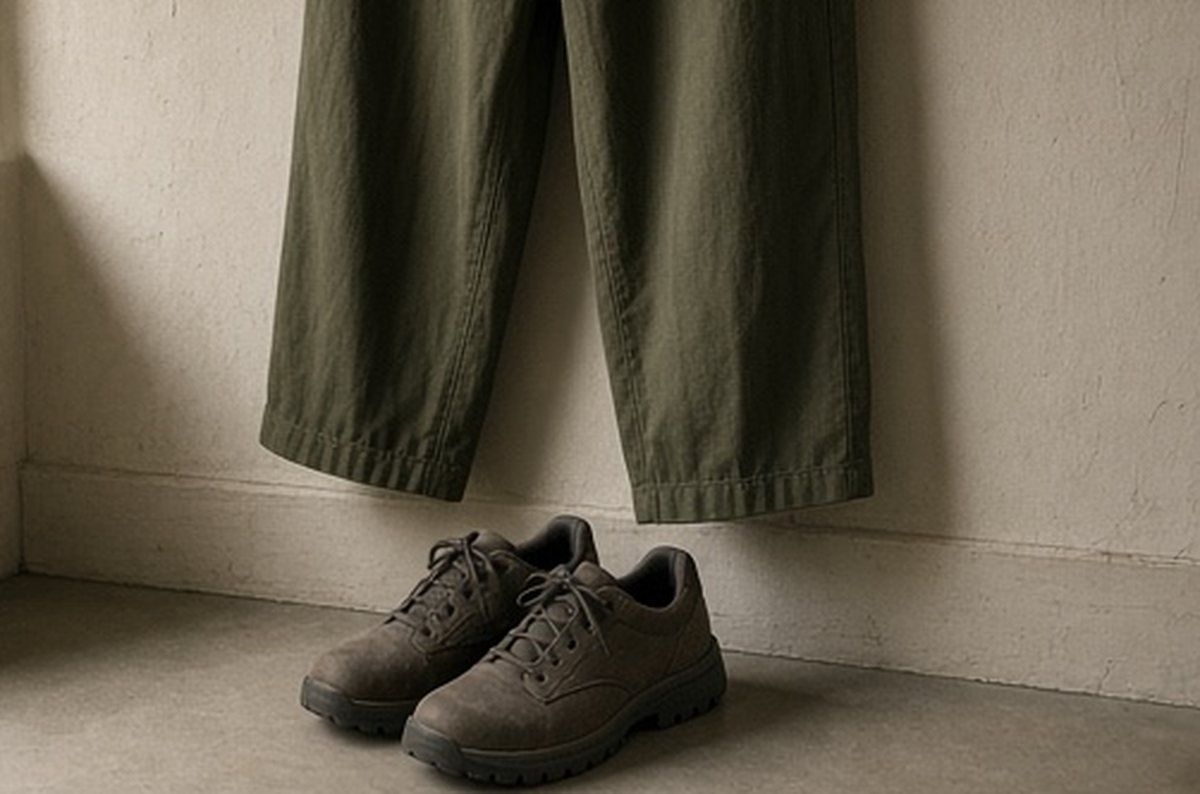
Trousers can fit well at the waist and still make a commute awkward. A hem that catches under a heel, brushes a wet pavement or changes dramatically with another shoe affects more than appearance. Before arranging an alteration, test the length in the situations the trousers actually need to cover.
There is no universally correct hem position for every cut and shoe. Wide, straight and tapered legs behave differently, and personal preference matters. The goal is comfortable movement and a result you enjoy, not strict obedience to a tailoring rule borrowed from a different style.
Start with your main shoe
Choose the pair you wear most often with the trousers. Add your normal socks or hosiery and fasten the waistband as usual. A belt or a different waist position can change where the hem falls, so recreate the complete fit rather than testing loosely worn trousers.
Stand naturally and inspect the front, back and sides. Fabric resting on the shoe, folding above it or clearing it entirely can each be intentional. Note what you see before deciding whether it is a problem. The relevant question is how the line works with your movement.
Walk before making a decision
Take ordinary steps on a safe surface and turn as you normally would. Check whether fabric catches beneath a heel or against the other shoe. Stop if the hem interferes; do not keep walking to complete a test with cloth trapped underfoot.
Use stairs only where safe and with the garment controlled. A length that looks harmless on level ground can behave differently when lifting the foot. Comfort and safety matter more than preserving a particular photograph-ready silhouette. Repeated catching is useful evidence that something needs changing.
Compare the second shoe
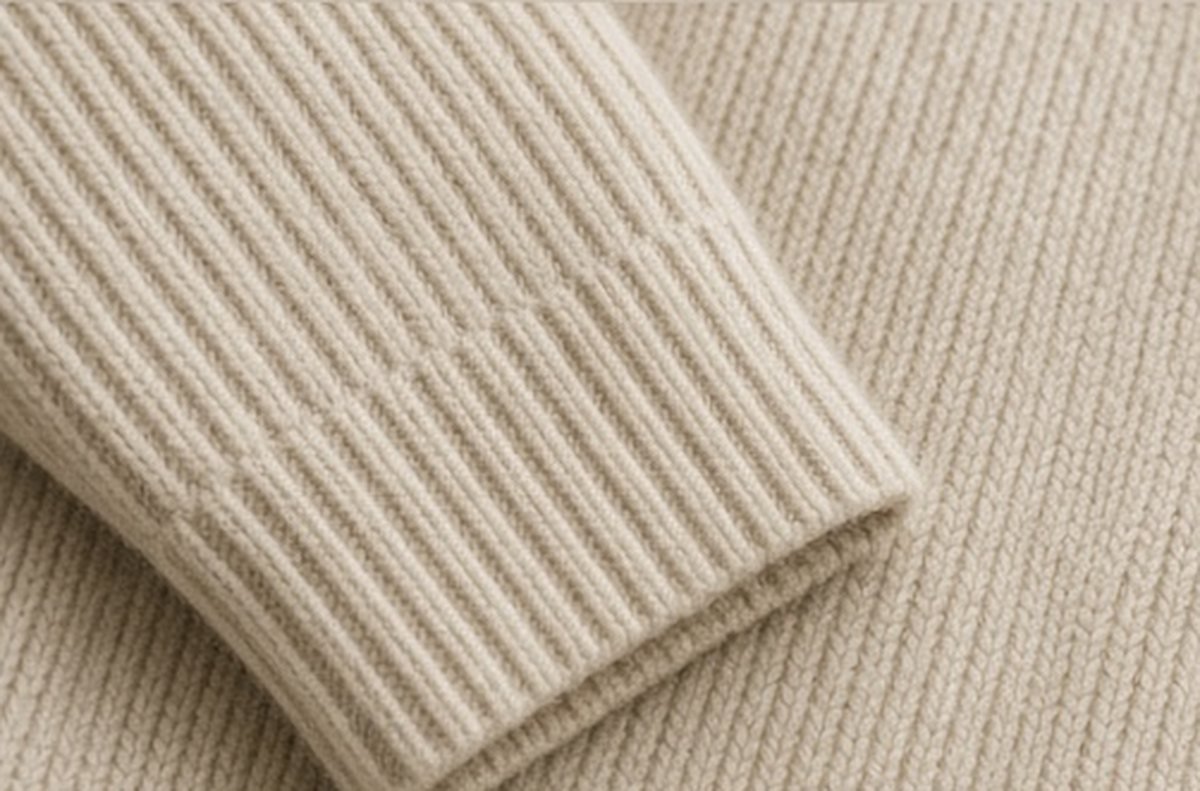
If you switch between walking and office shoes, test both. Sole height, heel shape and the upper can change how the leg hangs. Decide which shoe has priority if one length cannot work equally well with both. You may need a compromise rather than a perfect universal result.
Another option is reserving the trousers for one pair and using different trousers on other days. That is not a wardrobe failure. Clear roles can be more reliable than forcing every piece to accommodate the entire footwear collection. Choose based on actual use, not theoretical maximum versatility.
Sit, then stand again
Spend several minutes in a normal chair. Check whether the hem catches on the shoe or reveals more leg than you prefer. Some movement while seated is normal, but your comfort still matters. Stand and see whether the fabric settles without a major rearrangement.
Think about your commute posture and any bag you carry. Bunching can involve leg width, rise and drape as well as length. If the problem is unclear, an alteration professional can assess the interaction instead of simply removing fabric from the bottom.
Consider wet routes realistically
Fabric close to the ground may collect moisture and dirt on a wet walk. A shorter hem can reduce contact, but it does not turn trousers into waterproof clothing. Appropriate weather protection and route choices remain separate considerations. One alteration cannot solve every rain problem.
Check the fabric's care needs after wet or dirty use. Different weights, linings and finishes can require different handling. Dry the trousers appropriately before storage and avoid assuming a familiar fibre name guarantees a particular drying time. Maintenance belongs in a practical commute plan.
Inspect the existing finish
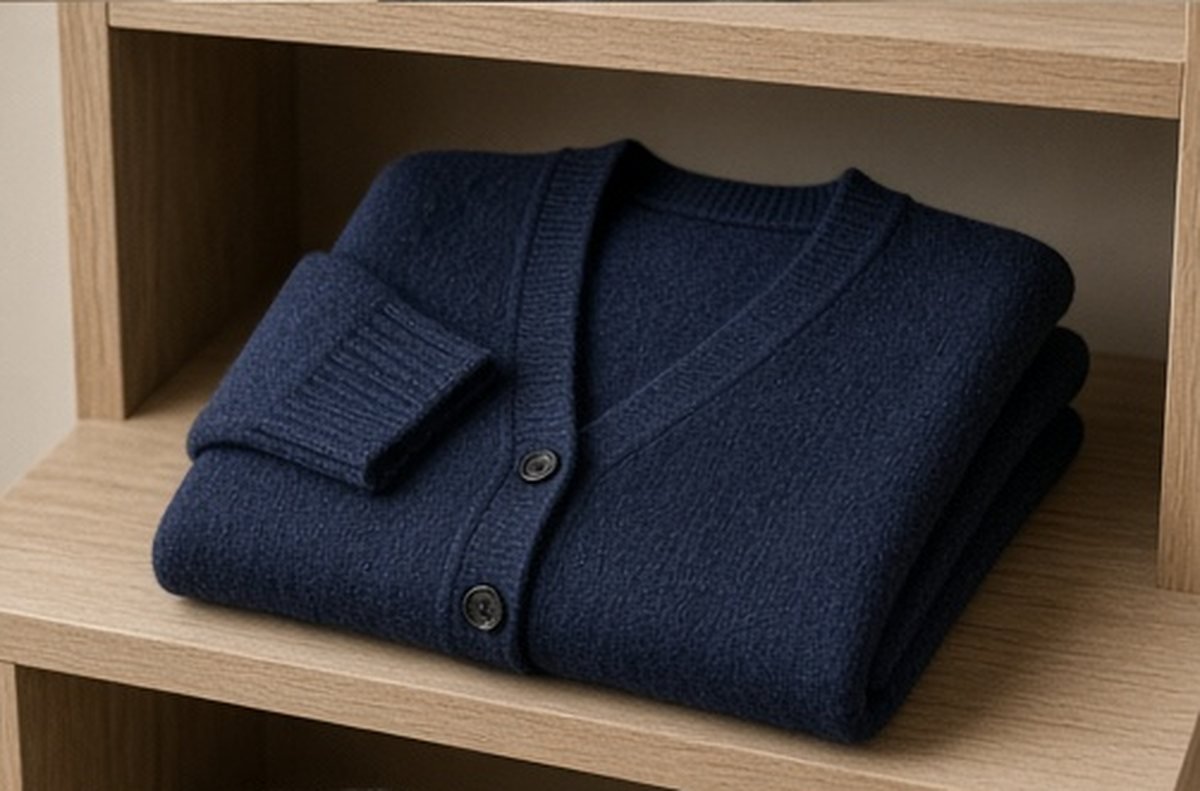
Cuffs, zips, lining and decorative stitching can affect what alterations are possible. Shortening is not equally simple on every garment. Lengthening needs suitable available material, and the existing allowance may be insufficient or show wear from the original fold.
Ask for a quote and assessment before committing. Bring the intended shoes and explain the activities involved. A request for the correct length is less useful than a clear explanation of walking, sitting and switching footwear. The professional can advise more accurately with that context.
Use temporary tests carefully
A reversible fold or professionally placed pinning can show a proposed result, but do not walk with loose pins where they could injure you. Follow the alteration professional's process. Avoid adhesive products without understanding whether they are suitable for the fabric and future cleaning.
Temporary fixes are not automatically appropriate long term. A bulky fold changes drape, and a quick solution may not tolerate repeated wear. For trousers in regular rotation, a considered permanent finish may be worth arranging once the preferred length is established.
Read online dimensions before ordering
Check inseam, rise and intended fit where available. Compare with trousers you already enjoy, measured in a consistent way. A model's height gives context but cannot establish where the hem will land on you. Body proportions and wearing position also matter.
Per the brand, Toad&Co's official site lists trouser styles including a wide-leg crop and a straight chino. Those names illustrate different cuts, not a universal hem rule. Check the exact current listing rather than assuming one range fits or hangs like another. This is not a hands-on product assessment.
Record the useful result
After alteration, note the preferred shoes and finished measurement. Keep the measuring method clear so the information remains useful. If your footwear changes substantially, reassess the result rather than treating an old number as permanently correct.
A good hem becomes easy to forget during the day. You can walk, sit and use the footwear you need without continual adjustment. That ordinary reliability is a stronger reason for an alteration than achieving a rule-perfect trouser break that does not suit your life.
Brand source
Range references are per Toad&Co's official website. Verify dimensions and construction on individual current listings; no fit guarantee is made.