
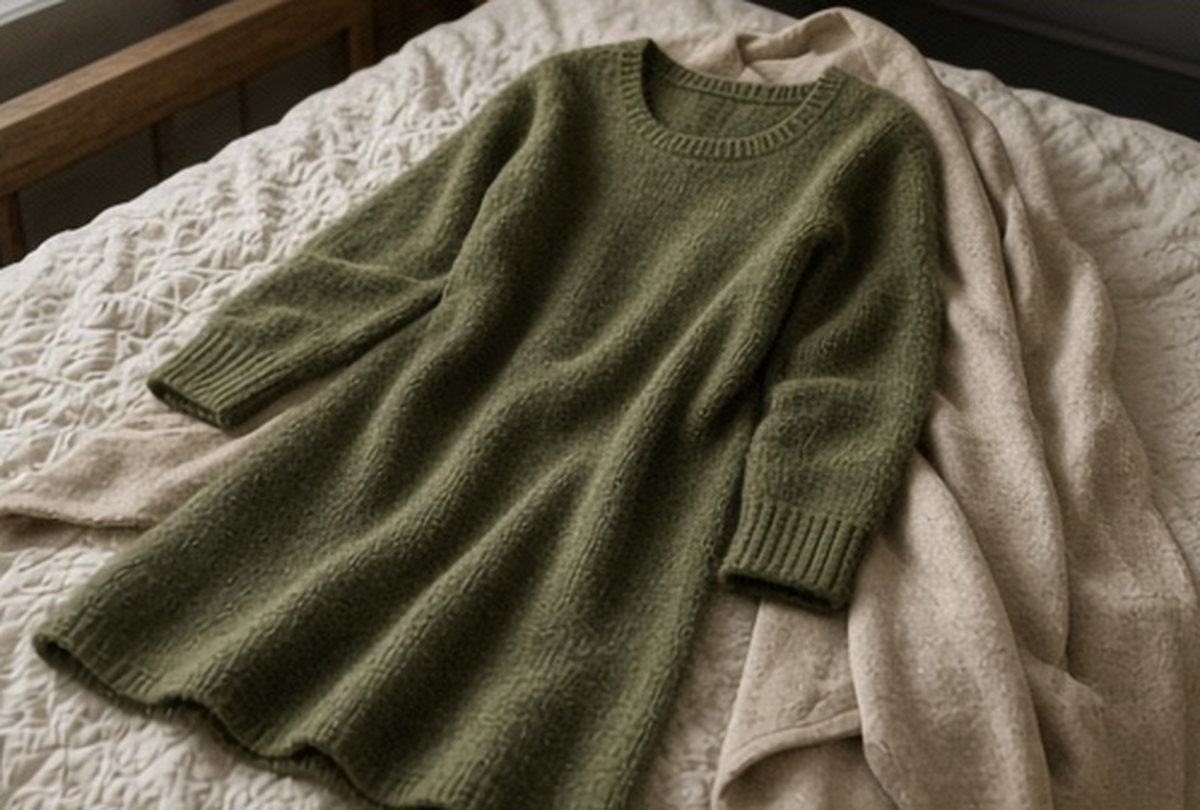
A sweater dress can make getting dressed feel pleasantly direct, but the neckline still needs to work with the accessories and coat you intend to wear. Adding a scarf automatically is not always the simplest choice. Start with the dress's own shape, then decide whether another layer has a useful job.
Per the brand, Young Eden lists an adult Women's Organic Mock Neck Sweater Dress with Hope & Henry identified as the vendor. This is a retailer listing, not an independent assessment of the garment's composition or comfort. Check the selected item's exact material, dimensions and care directly rather than treating its product name as a complete specification.
Establish the dress's first role
Choose an ordinary setting and the lower layers, footwear and outerwear needed for it. A sweater dress used for a seated workday may require a different combination from one worn on a short social visit. The product category alone does not settle that choice.
Use familiar supporting clothing where possible. That keeps the assessment focused on the new relationship rather than several unfamiliar pieces at once. The question is whether the complete outfit suits the intended day, not whether a dress can theoretically combine with every scarf, coat and shoe already stored in your wardrobe.
Read the actual neckline description
Look at the selected version's information and images, keeping unknown dimensions visible. Mock neck is a useful style term, but it does not tell you exactly how the edge will sit on your body or whether you will enjoy the contact throughout a day.
Do not infer comfort from a model's pose or from another garment carrying the same term. If the neckline is important to your decision, ask for relevant details or use an appropriate fitting route. A familiar word can narrow the search while still leaving a personal fit question that only the actual combination can answer.
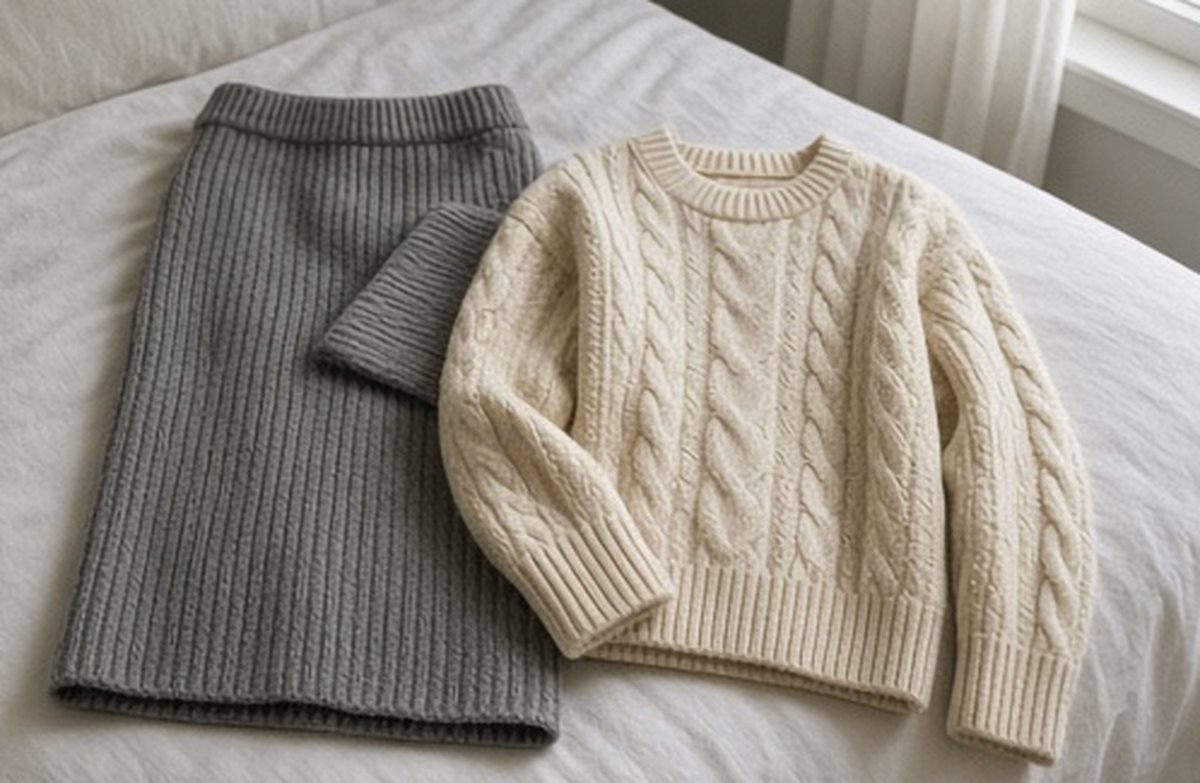
Try the dress without the scarf
Assess the neckline on its own before adding another layer around it. Notice ordinary comfort when sitting, looking down and turning gently. You do not need a scarf to make the outfit complete if the dress already provides the arrangement you prefer.
Keep the observation personal rather than claiming that a particular neck shape is universally comfortable or restrictive. If it does not suit you, another dress or neckline may be a better choice. Adding an accessory should not become a way to conceal a fit issue that remains present beneath it.
Give the scarf a specific job
Decide whether the scarf supplies appropriate extra coverage, a preferred colour relationship or another clear function. Those can be valid reasons, but they should be real. Do not add it merely because sweater dresses are often photographed with accessories around the neck.
Use a familiar scarf and handle it normally without forcing the dress's neckline into a new shape. If the combined volume feels cumbersome, try a simpler existing arrangement or leave the scarf out. A capsule wardrobe can benefit from subtraction when an accessory adds more handling than practical value to the day.
Add the actual coat
Check the coat with the complete neckline arrangement. Use closures normally and assess comfort without forcing layers into place. A scarf that works over the dress alone may sit differently once the coat collar is involved, and the coat should be part of the assessment rather than an afterthought.
If the combination is awkward, change one element at a time. Perhaps the scarf belongs outside a particular arrangement, another familiar scarf is simpler or the dress works best without it. Follow the garments' intended use and your own comfort instead of trying to reproduce a single idealised styling formula.
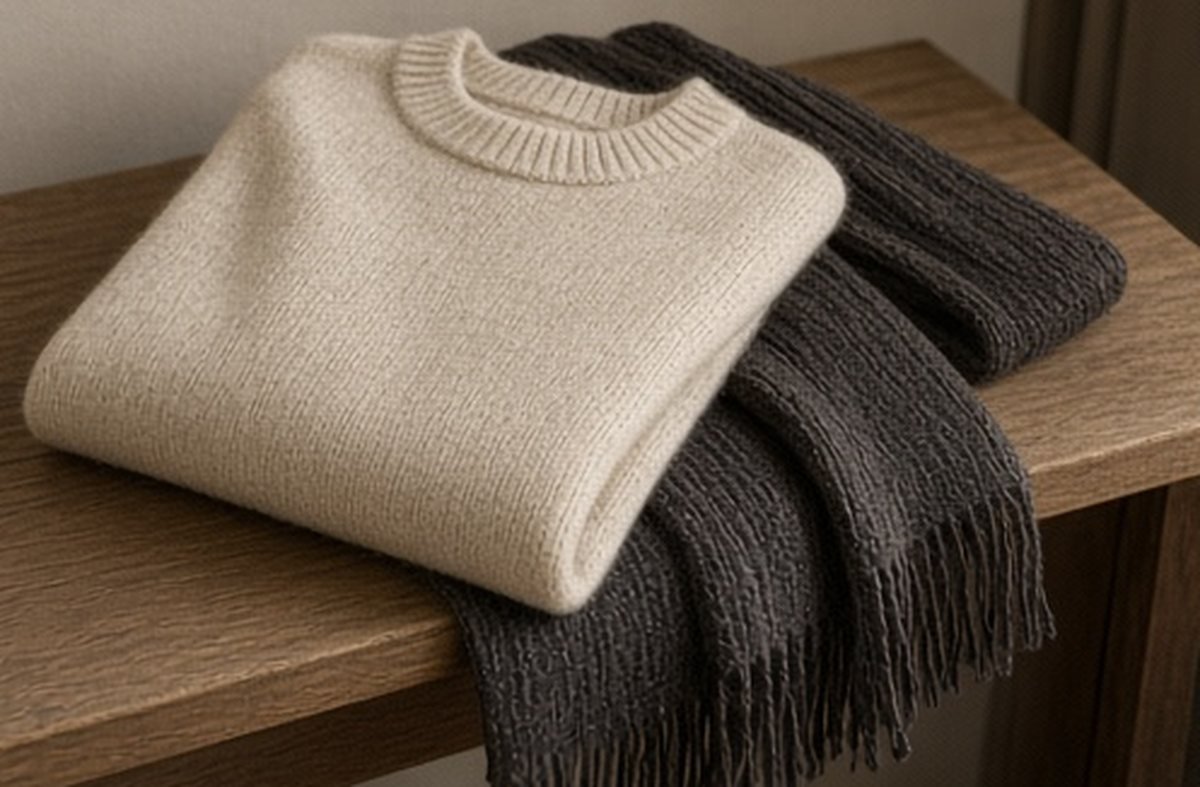
Plan the indoor transition
Decide where the scarf and coat go when removed. Use an appropriate place and respect shared space rather than assuming a spare chair or cloakroom is available. A small accessory still needs a known destination if the outfit changes as you move indoors.
Check that the dress remains an outfit you are comfortable wearing once the accessories are off. A useful combination does not depend on keeping an unnecessary layer in place all day to preserve a particular photograph. The indoor version deserves its own clear role in the plan, especially when that is where most of the day will be spent.
Keep care and retailer identity clear
Read the complete item's care instructions and the relevant seller conditions directly. Do not copy guidance from another Hope & Henry product or assume every item at Young Eden follows one routine. The named vendor and the retailer each identify part of the shopping context, not a universal material specification.
Consider whether the actual cleaning and drying process fits your facilities. An uncomplicated silhouette can still need thoughtful care planning. If the outfit is intended for travel, do not count it as repeatedly available on the strength of a broad natural-fibre description or an imagined overnight drying schedule.
Save the successful combination
Record the dress, footwear, coat and chosen scarf arrangement, including the version without the scarf if that works best. A short personal note can be enough to make the outfit easy to repeat. There is no requirement to create several alternatives before wearing one useful combination again.
Reading the neckline first turns an automatic accessory habit into an intentional choice. The dress remains the central garment, while the scarf earns its place through comfort and function. That makes an adult sweater-dress outfit easier to manage without asking a product name or a familiar styling image to decide every layer for you.