
This post may contain affiliate links. We may earn a commission if you buy through them, at no extra cost to you. See our Affiliate Disclosure.
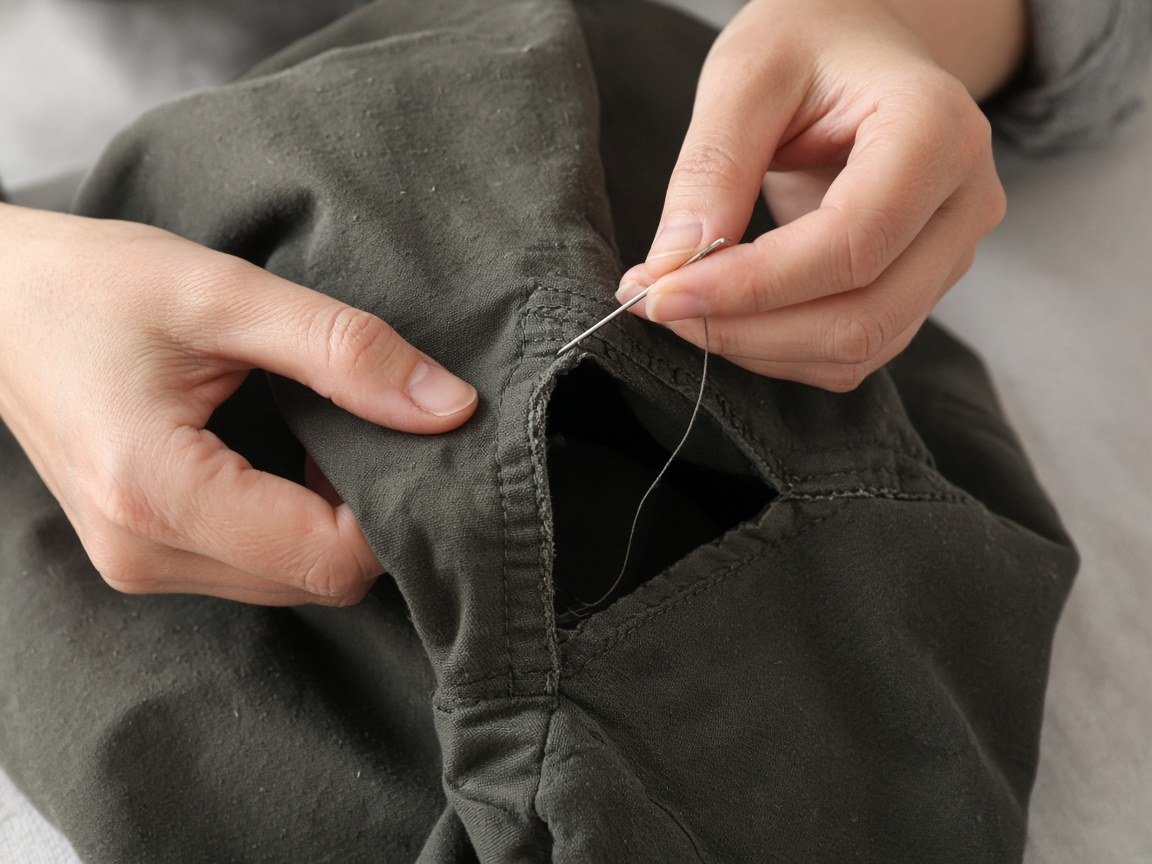
Knowing how to reinforce thrifted jackets turns a cheap find into a season of wear — or tells you to leave a failing coat on the rack.
Quick answer
Check underarms, pocket bags, button shanks and lining hems before you buy. Reinforce weak stitches early with small hand repairs or a tailor.
Key takeaways
- Stress-test seams in the shop.
- Fix linings before they tear further.
- Re-stitch loose buttons immediately.
- Walk away from rotten fabric.
Pair with thrift quality basics, quality upcycled checks and visible mending.
Shop checks before you pay
- Lift arms and watch underarm seams.
- Turn pockets inside out.
- Open the lining and look for dry rot.
- Zip and button every closure.
Simple reinforcements at home
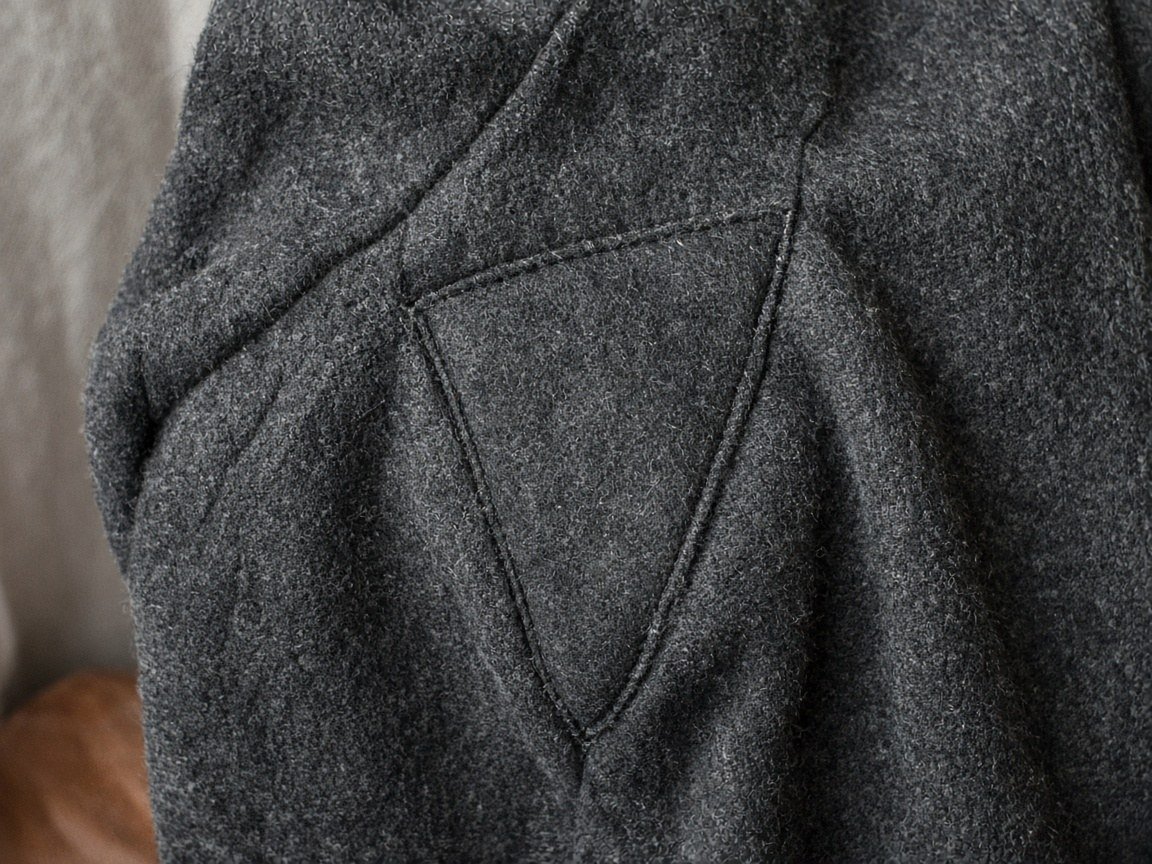
- Re-stitch loose buttons with shank space.
- Catch loose lining hems with small slips stitches.
- Add bar tacks at pocket corners if threads look thin.
- Patch the inside of elbows before holes open.
When to stop
| Issue | Try | Skip |
|---|---|---|
| Loose stitching | Hand reinforce | — |
| Small lining tear | Patch or stitch | — |
| Crumbly fabric | — | Buy something sounder |
| Broken zipper on sound cloth | Replace zipper | If labour exceeds value |
Tools worth owning
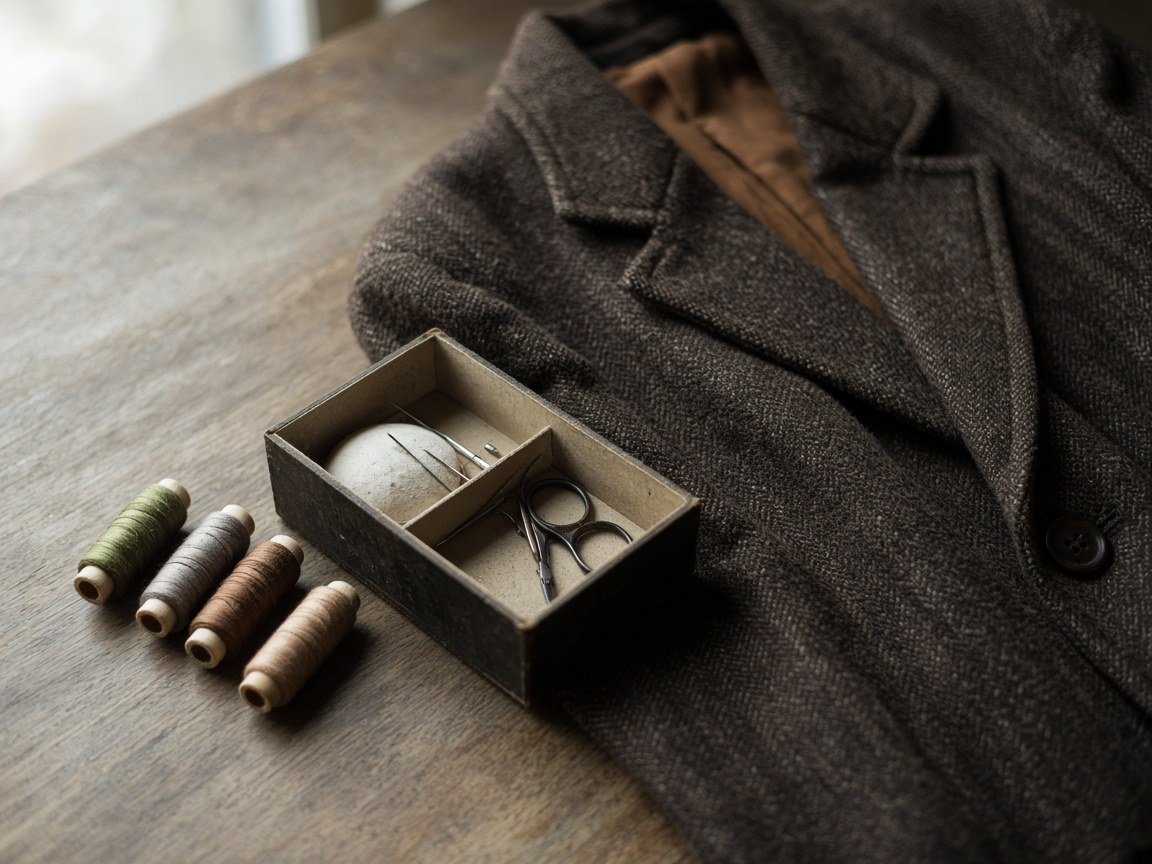
A sharp hand needle, polyester all-purpose thread, beeswax, small scissors and iron-on mending patches cover most cloth-jacket emergencies. Leather needs different needles — do not force cloth tools through thick hide.
FAQ
Yes when the cloth is sound and the fit is close.
Use leather-appropriate thread and needles, or a specialist.
Match fibre and colour; polyester all-purpose works for many cloth jackets.
Same stress-point logic — see our upcycled quality guide.
Bottom line
Reinforce early, while stitches are merely loose. Waiting until the seam opens costs more cloth.