
This post may contain affiliate links. We may earn a commission if you buy through them, at no extra cost to you. See our Affiliate Disclosure.
Visible mending is repairing clothes in a way that shows, using contrast thread, patches or darning so the fix becomes part of the design. The three easiest methods are a sashiko-style running stitch patch for denim, a woven darn for knitwear and a simple appliqué patch for holes and stains. You need a needle, thread and some fabric scraps.
Quick answer
Pick a method by fabric: patch and running stitch for woven fabrics like denim, darning for knits, appliqué for stains. Use strong thread and work on a flat surface.
Key takeaways
- Visible mending turns a hole into a design feature.
- Sashiko-style stitching suits denim and heavier cottons.
- Darning with a mushroom or egg suits socks and sweaters.
- Mend early: small holes are faster to fix than big ones.
Why choose visible mending?
Repairing what you already own is one of the simplest ways to slow your wardrobe down. It keeps a favourite piece in use and adds character. It also fits naturally with upcycled fashion: our guides to upcycled denim brands and patchwork clothing show how pieced and reworked garments look better with age.
What do you need to start mending?
| Tool | Use |
|---|---|
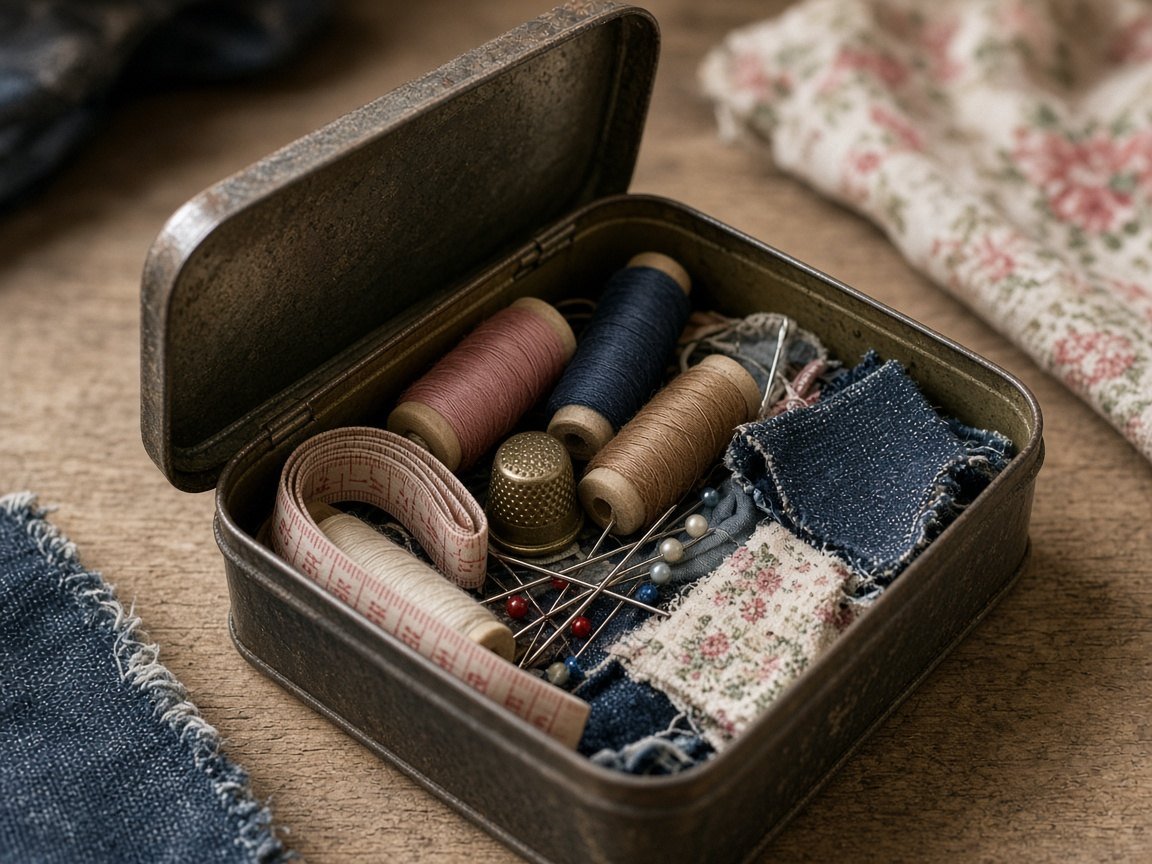
| Sashiko or embroidery needle | Long needle for running stitches through denim |
| Strong thread (sashiko, embroidery or wool yarn) | Visible stitches that last |
| Darning mushroom or a smooth egg-shaped object | Supports knit fabric while you weave |
| Fabric scraps | Patches; old shirts and offcuts work |
| Embroidery hoop, pins and small scissors | Keeps fabric flat and neat |
How do you patch jeans with sashiko-style stitching?
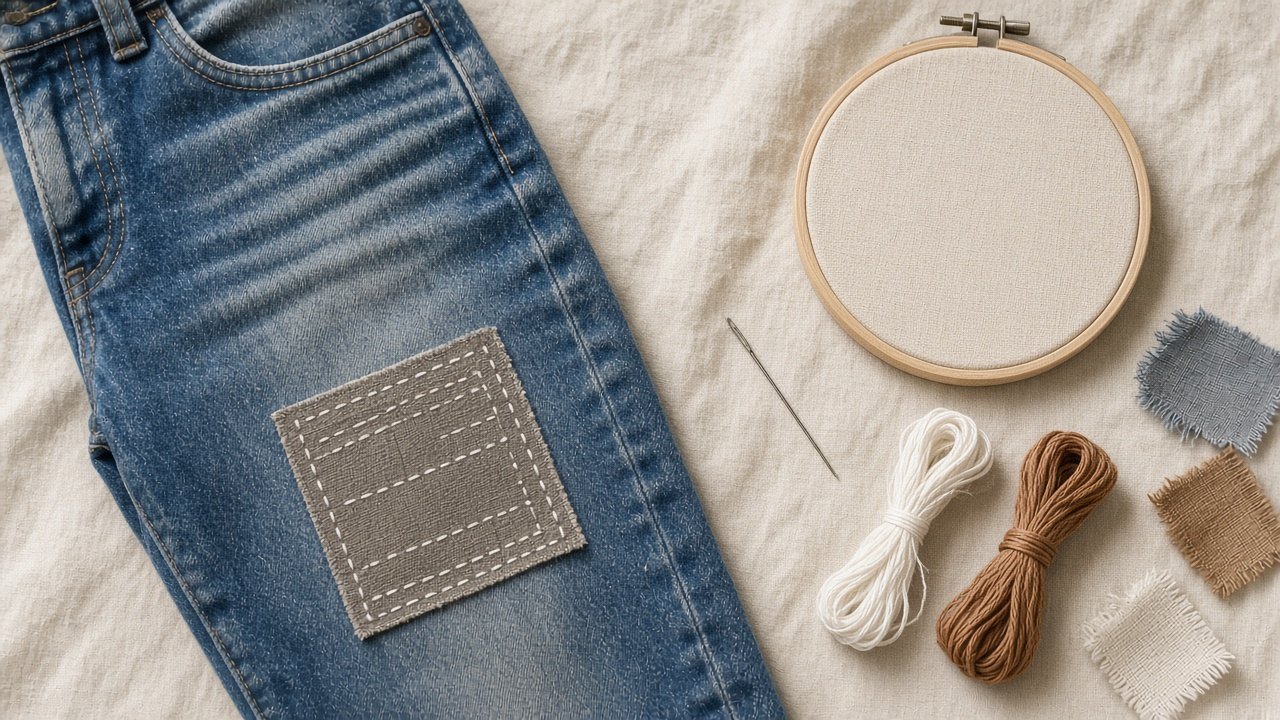
- Cut a patch a little bigger than the hole, from denim or sturdy cotton.
- Place it behind the hole (or on top for a bold look) and pin or tack it.
- Mark straight guide lines with chalk about 5 mm apart.
- Sew rows of even running stitches through both layers, following the lines.
- Add cross rows for strength on knees and seats. Knot securely on the inside.
How do you darn a hole in a sweater?
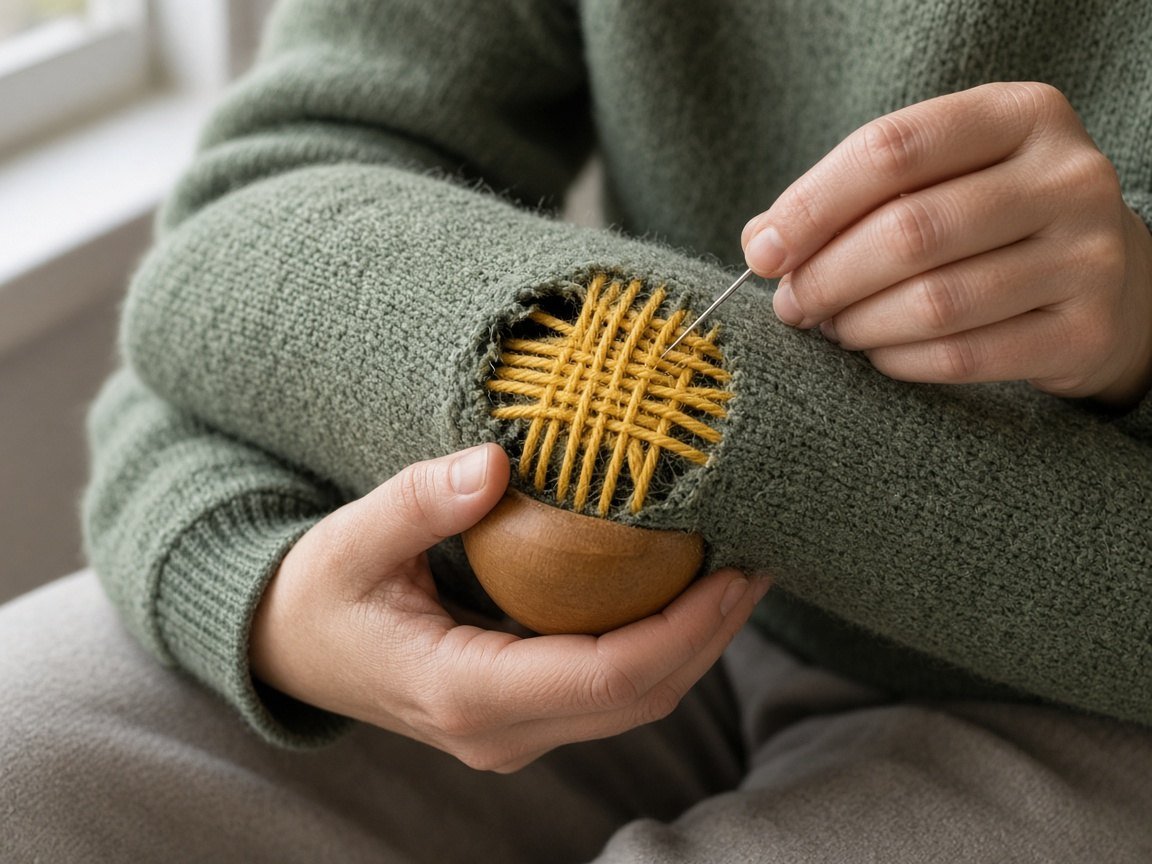
- Place a darning mushroom under the hole so the knit lies flat.
- With wool yarn, sew vertical lines across the hole, anchoring into healthy stitches.
- Weave horizontally over and under those lines to make a small woven patch.
- Keep the tension loose so the knit can still stretch.
- Wash gently afterwards; see our wool sweater washing guide.
What else can you mend visibly?
- Stains: cover with an embroidered motif or an appliqué patch.
- Frayed cuffs: bind with a strip of contrast fabric.
- Pilled knits: de-pill first; see our de-pilling guide.
- Quilted or kantha pieces: add a few running stitches in matching thread; our kantha clothing guide explains the stitch.
Not confident? Many brands and local tailors offer repairs. E.L.V. Denim, for example, lists repairs and alterations on its site. A tailor’s fix plus your own decorative stitching is a good middle ground.
Flow Check: Visible mending
- What it is: A repair style that celebrates the fix with contrast thread or patches.
- Who it’s for: Anyone with a favourite piece that has a hole, stain or worn knee.
- What to know: Start small; practise on an old tee before your best jeans. Visit E.L.V. Denim (repairs)
FAQ
Sashiko is a traditional Japanese running-stitch technique. Visible mending is the broader idea of repairs that show; sashiko-style stitching is one way to do it.
Sashiko thread or embroidery floss for woven fabrics, and wool yarn for knits. Choose a fibre similar to the garment.
Yes. Use a looser stitch, darning for knits, and avoid stiff patches that stop the fabric stretching.
A well-anchored mend in strong thread lasts many washes. Wash cold and gentle, and inside out for the first few.
Bottom line
A needle, strong thread and a scrap of fabric can save your favourite jeans or sweater. Make the repair part of the look, and it becomes a story rather than a flaw.