
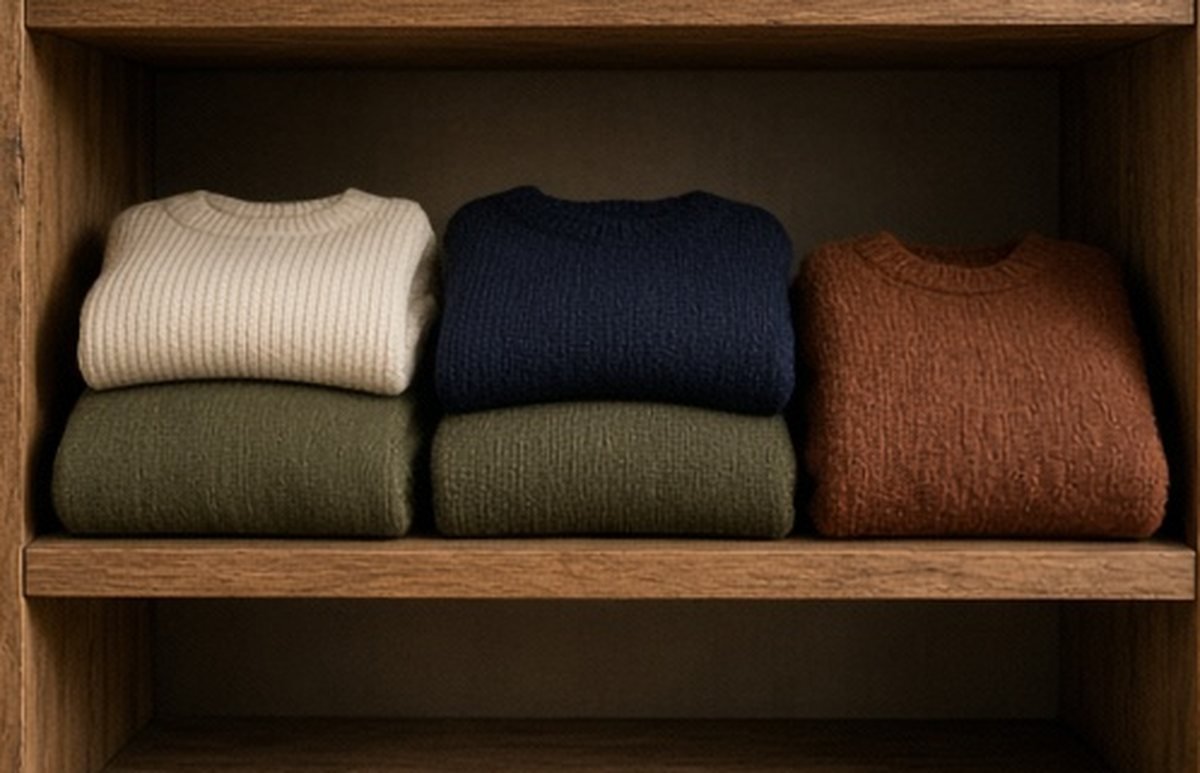
You can learn a great deal about a wardrobe by mapping a week with a deliberately small selection. The exercise is not a rule that everyone should own six garments, nor is it a complete packing list. Underwear, footwear, appropriate outerwear and other necessary items still exist outside the map.
Choose six main pieces you already own: two tops, two bottoms, one dress or comparable one-piece outfit, and one layer. Adapt the categories to your preferences. The point is to see how a small set works together, then identify which limitations are genuine rather than buying more clothes before you have tried the combinations.
Select for the week you actually have
Look at seven ordinary days, including work, errands and time at home. Leave exceptional events out of the first attempt unless they truly belong to the coming week. A capsule designed around imaginary dinners and unusually active days will not tell you much about your normal dressing needs.
Choose garments that are currently usable and comfortable. Do not include a skirt waiting for repair or a top you avoid wearing simply because it makes the colour palette attractive. Note the condition and care requirements of the six pieces. The map depends on availability, not merely on ownership.
Give each piece a simple name
Write short labels such as blue shirt, cream tee, dark trousers, olive skirt, navy dress and grey cardigan. Use your own actual pieces rather than copying those examples literally. Simple labels make combinations easy to record without turning the exercise into a visual branding project.
Keep the identities stable throughout the first map. If you quietly substitute three different cream tops, you lose the useful constraint. Equally, do not force unsuitable categories on yourself. Someone who never wears dresses can choose another garment, as long as the total remains clear and the exercise still represents real use.
Build five combinations before assigning days
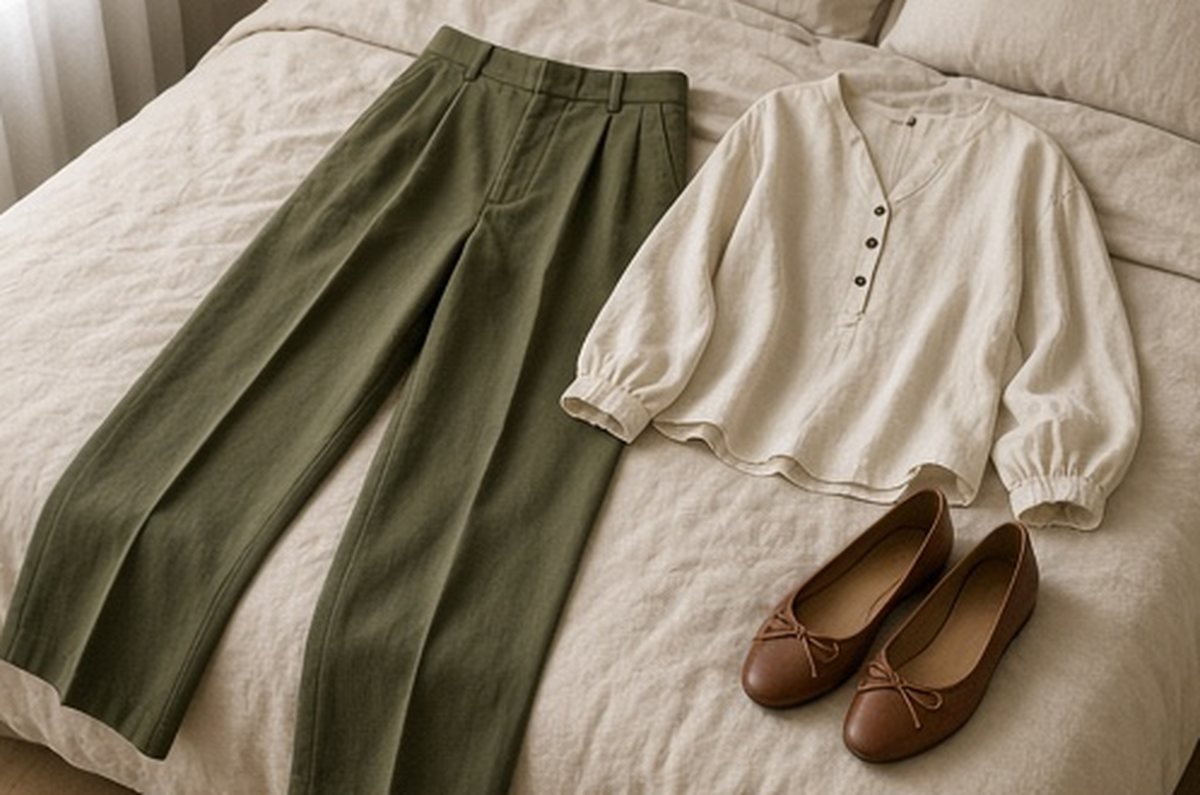
Try top one with bottom one, top one with bottom two, top two with bottom one, top two with bottom two, and the one-piece outfit. These are possible combinations, not automatic successes. Check each with the shoes and necessary underlayers you would actually use.
Some pairings may fail because of fit, proportions or personal preference. Record the specific issue rather than assuming every item in a capsule must work with every other item. A skirt and a long shirt may both be useful without being your preferred combination. The map is meant to reveal that distinction.
Use the layer where it has a job
Add the selected layer to the combinations that genuinely need or suit it. Do not count each addition as a new practical outfit merely to inflate the total. Ask whether it changes comfort, coverage or suitability for the day in a way you value.
Try removing the layer too. If an outfit only feels acceptable while the layer stays on, decide whether that is realistic for the intended setting. A single cardigan may work across several combinations, or it may reveal a neckline or sleeve conflict. Both results provide useful information without requiring an immediate replacement.
Assign seven days, including repetition
Place the workable combinations against the actual week. Repetition is allowed; it is part of the exercise. The same trousers may appear with a different top, or the same complete outfit may be appropriate again when its condition and your comfort allow.
Do not assume a garment remains ready just because its name appears on the list. Account for care, visible soil and any cleaning required after use. If a piece needs washing, mark the period when it will be unavailable. A paper map with seven attractive rows is not a workable plan if three rows rely on damp clothing.
Observe the friction rather than judging yourself
As the week progresses, note why you depart from the map. Perhaps the weather changes, a garment is uncomfortable or you simply prefer another outfit. Those are observations, not failures of discipline. The exercise should make dressing clearer, not impose a test you must pass.
Distinguish a missing clothing function from an organisational problem. A shirt that was clean but inaccessible is different from a shirt that did not fit. An outfit rejected because you disliked it is different from one ruled out by a real dress requirement. The next action depends on which problem actually occurred.
Change one element for a second attempt
At the end of the week, identify the most useful adjustment. It may be swapping the layer for another one you own, choosing a different skirt or revising the laundry timing. Make one change first so you can understand its effect rather than replacing the whole selection.
If you find a genuine gap, describe it by function: for example, another comfortable top that works with both bottoms during a laundry interval. Check the wider wardrobe before treating that description as a shopping list. The six-piece exercise was deliberately limited; the answer may already be outside the selected set.
Keep a map, not a permanent uniform
Save the combinations that worked and any care or fit notes likely to matter again. You do not need to keep the same six pieces in constant rotation. The value lies in learning which relationships between garments support your days with little effort.
A useful wardrobe can be larger, more varied and more seasonal than this exercise. The small map simply exposes patterns that are difficult to see in a crowded rail. When you can name what works and why, future choices become more specific, and an attractive new item no longer has to stand in for an entire imagined capsule.