
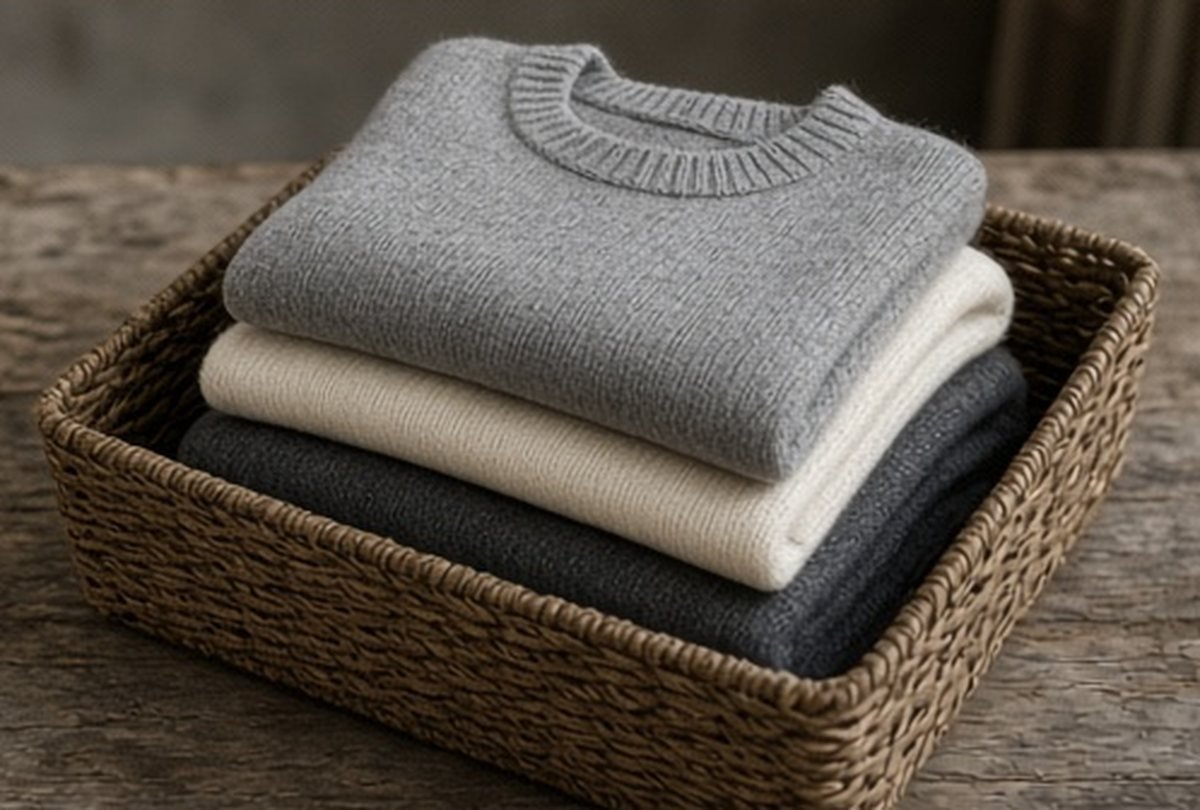
A cardigan can spend much of a day somewhere other than on your body. It may be removed during a visit, left beside a desk or carried between shared rooms. That temporary state deserves a small plan, especially when the nearest hook or chair is not necessarily suitable for the garment.
Start with the actual knit's construction and care guidance. This is not a rule that every knit must always be stored in one way. The useful question is whether the temporary arrangement supports the item appropriately, keeps its condition understandable and respects the space around it without creating a larger storage project.
Know whether the garment is ready to store
Assess the piece after removal. Dry clothing suitable to wear again, damp clothing and an item needing cleaning are different states. Do not place everything in the same tidy pile merely because it is temporarily off your shoulders.
Follow the garment's care requirements and attend appropriately to dampness or visible soil. A temporary location is not a long-term solution for an item needing another process. Keeping the state clear prevents a worn garment from silently returning to the clean supply or a damp piece from being forgotten inside a closed bag.
Look at the available support
Check the actual surface or hanging arrangement rather than choosing by convenience alone. A small hook may concentrate weight in a way that does not suit the garment. A decorative rail or borrowed hanger should not be assumed appropriate without considering its intended use and the item's guidance.
If suitable support is unavailable, a careful folded arrangement may be more practical for some pieces. Follow the construction and care needs rather than treating that as a universal method. The aim is a known, manageable place, not a guarantee that one storage technique prevents every change in shape.
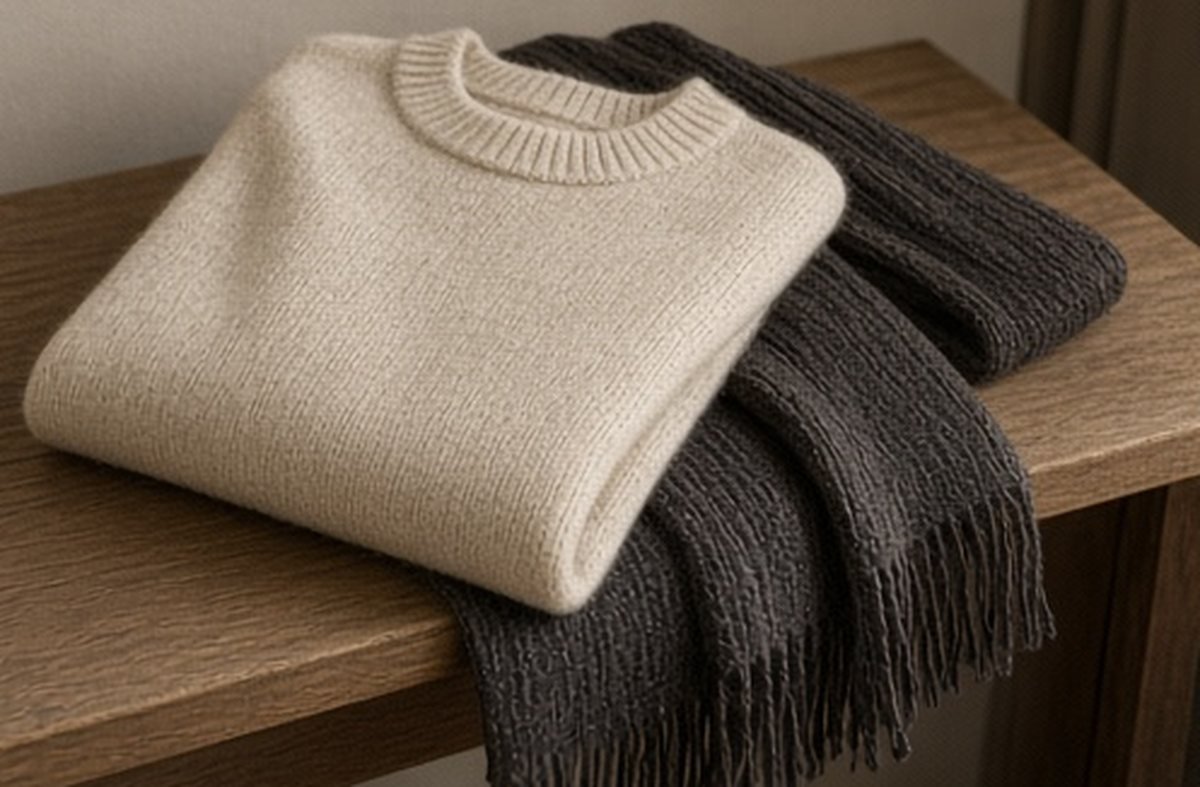
Check surfaces before placing clothing
Look for moisture, dirt, rough areas or anything that could catch the fabric. Do not use another person's belongings as a convenient clothing surface. A chair may be needed for sitting, and a communal table may not be available for an indefinite garment arrangement.
Choose a place that keeps walkways and necessary equipment clear. Practical care includes how the clothing fits into the room's use. A garment is not well managed if protecting it means creating a problem for someone else or placing it where it will need to be moved repeatedly without a clear destination.
Keep heavy objects off the knit
Avoid turning a folded layer into a base for bags, shoes or other belongings. The temporary clothing place should remain understandable rather than becoming the bottom of a mixed pile. Check the area again when you retrieve the garment, particularly in a shared or busy setting.
This is ordinary handling advice, not a promise about damage from every contact. The useful habit is noticing what is placed together and choosing a suitable arrangement. If you need to combine clothing in a bag, use the actual care needs and the state of each item rather than treating all soft things as interchangeable packing material.
Plan bag storage before removing the layer
If the knit will go into your day bag, check the available space with the real contents already inside. Do not assume an empty-bag photograph represents the capacity you have during the day. Keep the garment from unsuitable damp or soiled items and avoid forcing it around sharp or rough objects.
A removed layer may need a different arrangement from the one used for a fresh folded item at departure. Reassess as conditions change. If the bag cannot accommodate it appropriately, another familiar layer or confirmed storage option may be a better plan for the particular day.
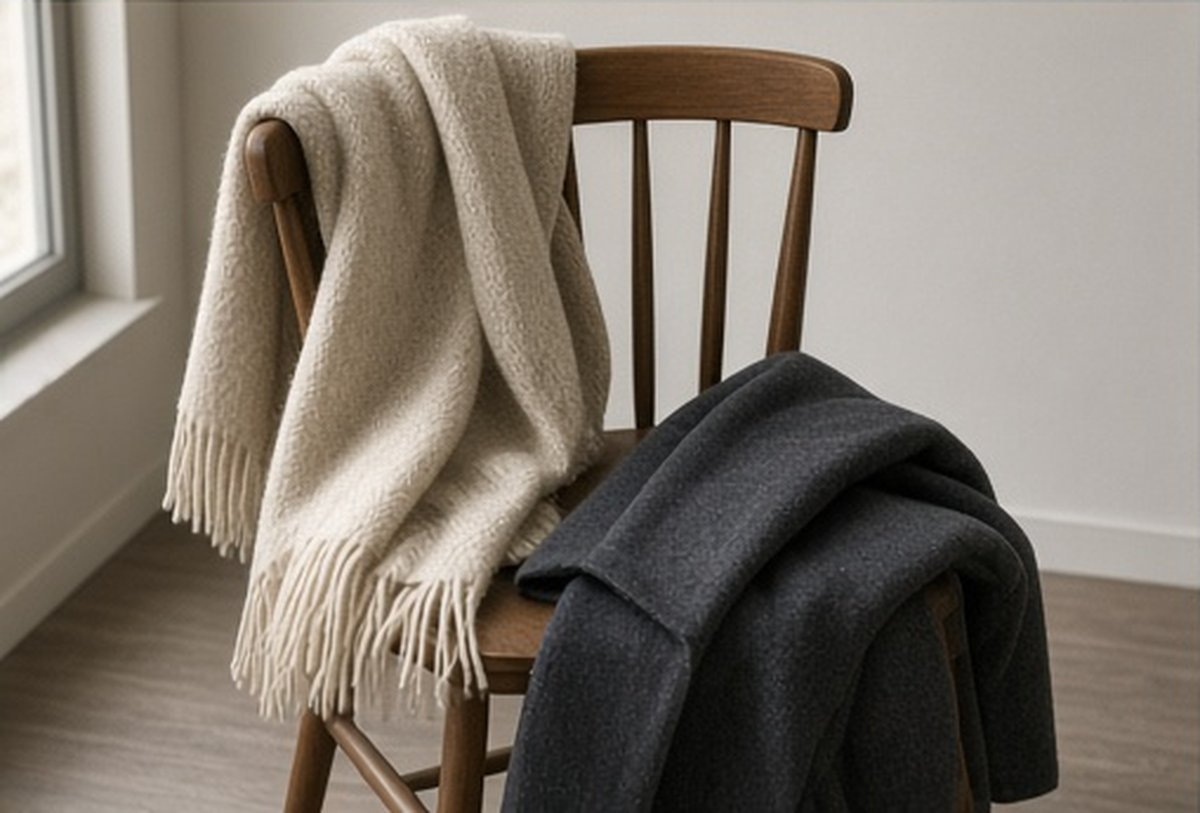
Agree on shared arrangements
When visiting or sharing a room, ask where clothing can go rather than claiming a hook, seat or shelf. The appropriate place may be simple, but it should be real. Do not build the outfit plan around an assumed cloakroom or an empty space that another person needs.
Keep identification easy if several similar layers are together. Use ordinary recognition and agreed handling rather than attaching marks or accessories to someone else's garment without permission. The aim is to avoid mix-ups and repeated unnecessary handling, not to create an elaborate check-in system for a short visit.
Reassess before the journey home
Check the garment's condition before putting it on or packing it with clean items. It may have remained ready, or it may need attention after the day's use. Do not assume a tidy temporary arrangement proves it is in the same state as when you arrived.
Look for belongings left in or beside the garment, and keep any small items securely managed. A layer used as a temporary pocket can hide keys or other essentials. The return plan should restore a clear relationship between clothing and belongings rather than sweep an uncertain pile straight into the bag.
For a short visit, a simple question about available space can prevent repeated handling later. You can choose a suitable arrangement on arrival and leave it alone, rather than shifting the knit between a chair, a hook and an increasingly full bag each time the room is used.
Keep the simplest successful habit
Afterward, note the specific arrangement that worked: a suitable folded space, an appropriate hanger or enough room in the existing bag. You do not need special storage equipment for every visit. A clear choice can be repeated without making the garment feel too precious to wear.
Temporary knitwear care is mostly about paying attention to the off-body state. Support, condition and shared space all matter. Choosing a suitable place before using the nearest hook keeps an ordinary layer manageable through the whole day, including the hours when it is not being worn.