
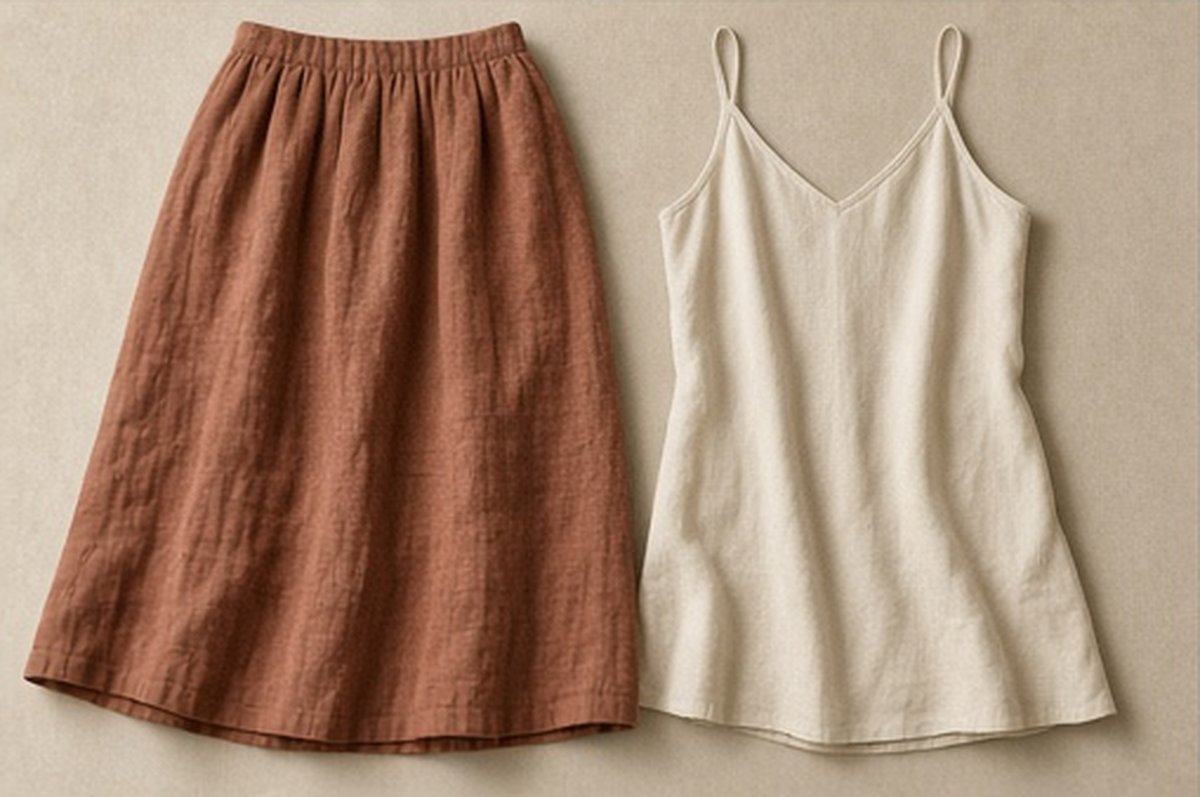
An attractive skirt photograph can answer a styling question while leaving a coverage question unresolved. Before planning an outfit around a pale or light-looking garment, read the exact specification rather than assuming the image establishes opacity. The word linen does not settle that question on its own.
Per the brand, VintageMist's site describes its Basic A-line Linen Midi Skirt With Pockets as non-stretch, lists a linen composition and includes a Sheer: Yes field. These are the brand's listing details, not a hands-on assessment. If a field seems inconsistent with your expectations, ask for clarification rather than deciding from a photograph alone.
Identify what coverage means for your day
Write down the intended use: a workday, a visit, an event or another ordinary setting. Your preferred coverage and any actual dress requirement belong in the brief. Do not assume everyone wants the same result or that a particular underlayer is automatically acceptable to the wearer.
A skirt can be useful in one arrangement and unsuitable in another without being wrongly made. The decision is whether the actual combination meets your needs. Keep that question separate from whether the garment looks romantic, versatile or appealing in the brand's styling.
Read the exact listing rather than a nearby item
Confirm the name and variant you are considering. A similar photograph or another linen skirt on the site may have different specifications. Keep the stated composition, construction and coverage information together so you do not accidentally borrow a reassuring detail from a different product.
If the listing contains unclear or apparently conflicting information, ask a specific question before purchasing. You do not need to diagnose why the field appears as it does. The useful answer concerns the exact item and what information the seller can provide, not a general claim that all linen is opaque or all pale fabric is sheer.
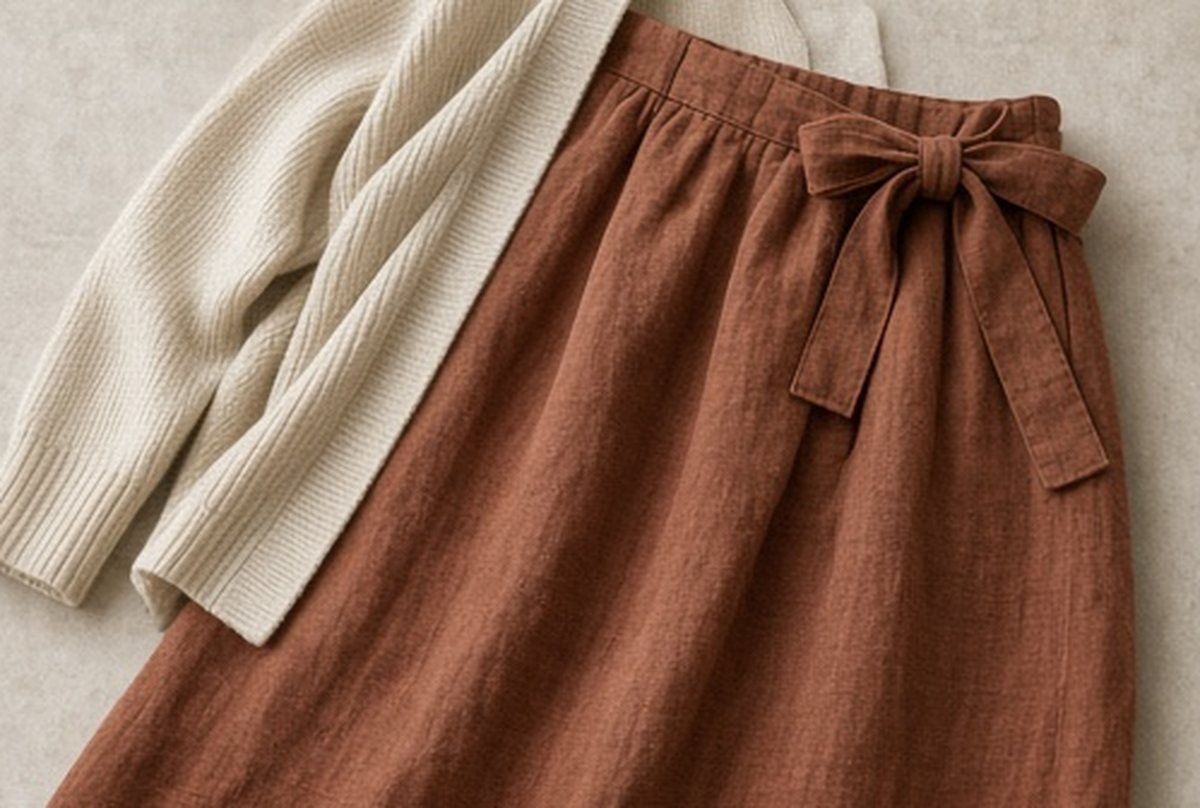
Recognise the limits of the image
Lighting, background, pose and screen settings can change how fabric appears. A photograph can help you understand the silhouette and suggest an outfit, but it cannot guarantee the result in your room, outside or while moving. Avoid treating a still image as a complete coverage test.
Likewise, another person's experience may not reproduce your underlayers, light or preferences. It can prompt a question without replacing the product information or your own careful fitting. Keep the source of each observation clear instead of merging several impressions into a certainty that no single piece of evidence supports.
Choose an underlayer you genuinely want to wear
If you prefer a slip or another suitable layer, consider the actual piece already in your wardrobe. Check length, waistband comfort and how the two garments move together. The solution should be a wearable outfit, not merely a hidden layer that makes a photograph look more reassuring.
Do not assume you will be happy adding another garment later if you normally avoid that arrangement. An underlayer can be a deliberate styling preference, but it may also add care and dressing work. Include those consequences before keeping a skirt that only meets the brief with an unplanned purchase.
Assess the complete outfit carefully
During a permitted indoor fitting, use the intended underlayers and shoes. Check the outfit in ordinary available light and in a seated position without straining the garment or violating return conditions. Notice whether either waistband presses or the layers require repeated adjustment.
A fitting is not a guarantee of every possible lighting condition. Its purpose is to establish whether the combination feels workable for your actual use. If coverage remains uncertain and that uncertainty matters, ask the seller or choose another appropriate option rather than convincing yourself the event will somehow resolve it.
Keep length and movement in the decision
A midi description does not establish where the hem lands on your proportions. Use the exact measurements and the seller's method where available. Consider walking and sitting as well as the standing silhouette, particularly when another layer sits beneath the skirt.
Do not assume non-stretch means no comfortable movement or that a loose-looking shape guarantees enough room. The finished dimensions and cut still matter. If you are considering an alteration, seek an appropriate assessment before treating a shorter hem or different lining as an easy fix for an unresolved problem.
Read care for both garments
Follow the skirt's own instructions and the underlayer's separate guidance. Two pieces worn together do not automatically share a cleaning or drying process. Keep their care information accessible and make sure the outfit can be maintained with your actual facilities.
If one layer is unavailable during laundry, recognise that the complete outfit may also be unavailable. A paper capsule can overstate usefulness when it counts a skirt without the layer you require beneath it. Build the rotation around usable combinations rather than assuming every individual garment can always stand alone.
Let clarification come before commitment
Save the relevant specification and any item-specific clarification with your notes. Check applicable order conditions rather than assuming every listing offers the same fitting or return opportunity. Do not alter, wash or remove required tags while you are still deciding whether the garment works.
A useful skirt choice can remain visually expressive while being practical about coverage. Reading the sheer field is not an instruction to reject the piece; it is a prompt to resolve a real outfit question. Choose the combination you understand and want to wear, not one based only on what the product photograph seemed to promise.