
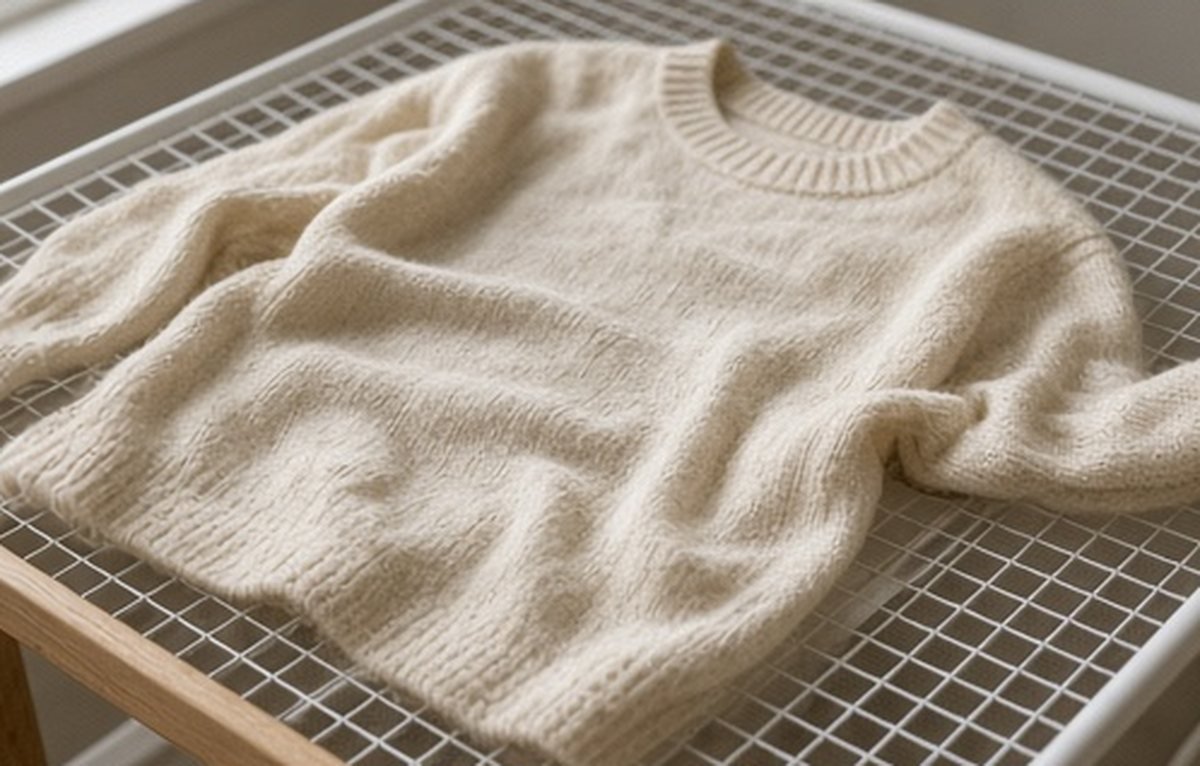
Laundry planning often stops when the wash cycle starts. In a small home or temporary room, the harder question may be what happens afterward: which items need a particular drying method, where they can go and when the space will be available again. Solve that arrangement before creating a pile of wet clothing.
Start with the exact care labels and the equipment you already have. This is not a universal drying recipe or a promise of a particular turnaround time. The aim is to provide suitable support and follow instructions without improvising unsafe heat sources or hanging arrangements simply because space is limited.
Sort by the stated drying method
Read the instructions for each item before deciding what can be cleaned together. A shared wash process does not guarantee a shared drying process. Separate garments that need different arrangements so you know what space and equipment the load will require.
Do not substitute a broad fibre rule for the label. Construction, trims and other components can matter alongside the main material. If guidance is missing and the item is unfamiliar, seek an appropriate answer before washing rather than assuming you can solve the drying question afterward with whichever surface happens to be free.
Check the available support
Use equipment intended for the task and follow its capacity and setup guidance. A rack, flat support or hanger arrangement should suit the garment and the method required. Do not assume a decorative rail, door handle or improvised fixture can safely carry wet clothing.
Inspect contact surfaces for cleanliness and anything likely to mark or catch fabric. Keep the arrangement stable and clear of routes through the room. The useful space is not merely an empty area; it is somewhere the clothing can remain appropriately supported without creating another household problem.
Leave the garment room to occupy its shape
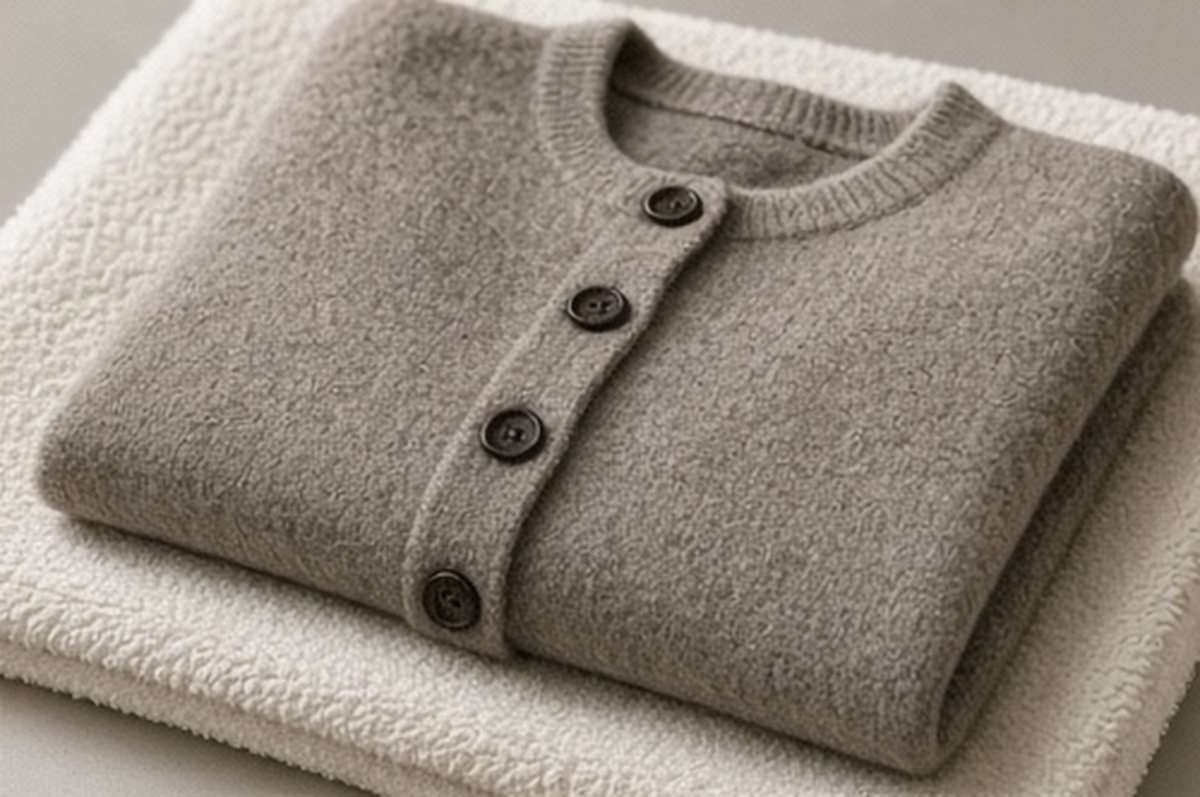
Avoid forcing several pieces into a space that cannot accommodate them properly. Follow the care guidance for shape and support rather than folding a garment into a dense bundle merely to fit the rack. A smaller laundry load may be more practical than an overfull drying arrangement.
For pieces requiring a flat method, establish a suitable surface before washing. Do not assume a heavy wet garment can simply be moved to an ordinary narrow hanger without consequences. The exact handling should follow the item's guidance, especially when unfamiliar construction makes a generic shortcut unreliable.
Keep heat within the instructions
Check the garment and appliance guidance for any permitted machine-drying process. Do not infer a setting from the fibre name or use high heat merely because the item is needed soon. A shortened schedule does not change the clothing's care requirements.
Do not place garments on heaters, over vents or against other heat sources as an improvised solution. Follow relevant equipment safety guidance and keep the area suitable for its intended use. The practical response to limited time may be another ready outfit, not an attempt to force the original garment through an unsuitable process.
Separate wet, damp and ready clothing
Give each state a clear place. A garment that looks nearly finished should still be assessed before it returns to clean storage or luggage. Do not let the need for space push damp clothing into a closed container as though the task were complete.
Temporary separation may be necessary during a move or departure, but it is not a long-term drying arrangement. Attend to the item appropriately when facilities become available. Keep its status visible with a simple note if necessary, especially when more than one person shares the household laundry routine.

Plan the room as a shared space
Consider the people using the area and the time the arrangement will occupy it. Keep walkways, exits and necessary equipment accessible. If the space is shared, agree on the setup rather than spreading clothing over another person's belongings or assuming a common area is available indefinitely.
A modest repeatable arrangement is often easier to manage than a large occasional one. You may prefer smaller loads or a different laundry day. The right plan is the one that respects care instructions and the room's actual use, not the one that gets every garment wet at once.
Build a realistic availability gap
Do not schedule essential clothing on the assumption that it will be ready at a fixed time unless you have a reliable basis for that plan. Conditions and garment requirements vary. Keep an appropriate ready outfit outside the laundry queue when the next day's plans depend on it.
If drying repeatedly creates a shortage, identify the bottleneck before buying duplicates. It may be load size, unsuitable equipment, timing or a garment that does not suit your available care facilities. A precise change can be more useful than adding clothes to a system that already struggles to make them ready.
Reset the space after use
Return dry clothing to appropriate storage and clean or store the equipment according to its guidance. Check for items left behind and follow through on any piece needing further care. A drying space works best when it returns to a known starting state rather than remaining a permanent mixture of finished and unfinished laundry.
The useful principle is support and planning before speed. A small space can still host a manageable clothing-care routine when the load, method and available time agree. Extra heat is not a universal answer; a realistic arrangement and a ready alternative outfit are often the more practical tools.