
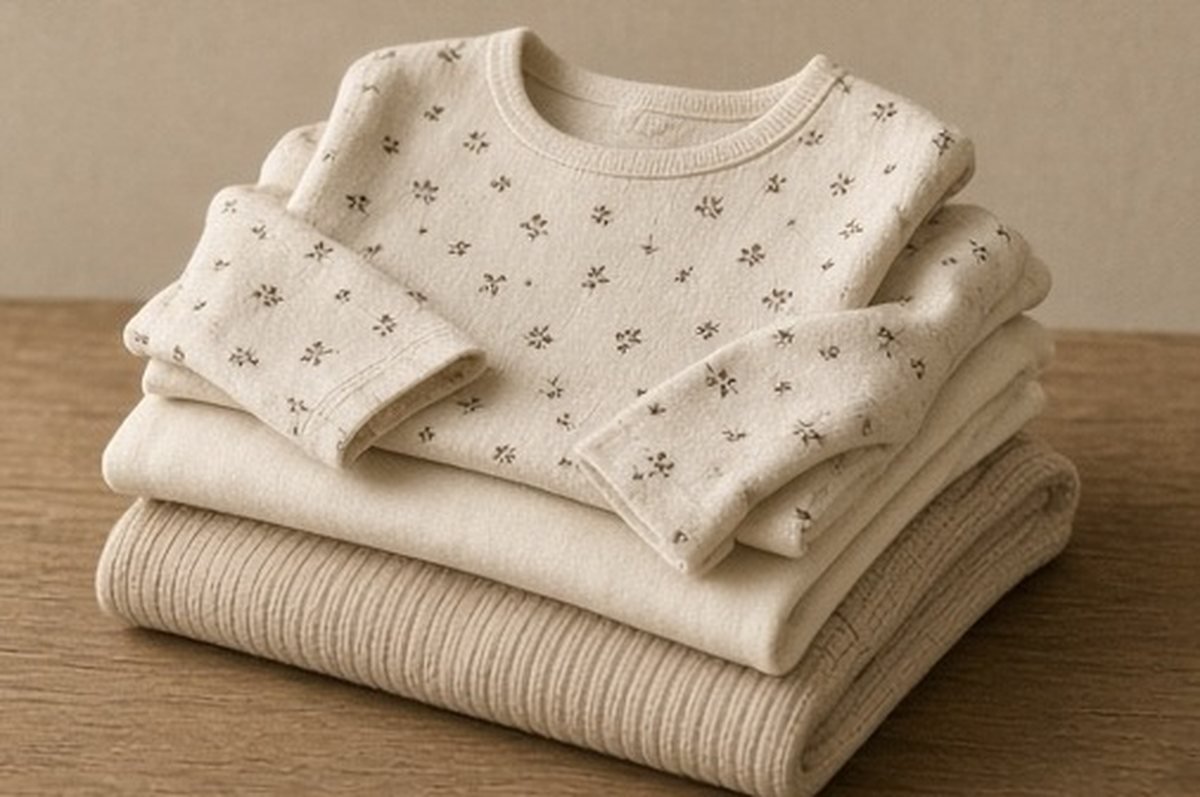
A possible hand-me-down is more useful when its information survives alongside the garment. A size label alone may not explain the maker, care routine or changes made during use. A small record can help another caregiver assess the clothing later without asking them to reconstruct its history.
Per the brand, Young Eden presents a curated range with named vendors including Hope & Henry and Burt's Bees Baby. This does not establish a resale or take-back programme, nor does it guarantee that every item will be suitable to pass on. The record below concerns ordinary household planning for the exact clothes you own and their actual condition.
Identify the item rather than only the shop
Keep the vendor, style or clear garment description and labelled size together. A retailer name is useful context, but a multi-brand shop does not make every product share one sizing or care system. Record the exact information while it is easy to find.
Use a short practical description if the original product title is unavailable. Colour, garment type and a recognisable detail may be enough for identification. Do not invent a maker or material to fill a gap. A clear unknown is more useful to the next person than an uncertain guess presented as fact.
Preserve the complete care information
Photograph a readable composition and care label, including separate component details where present. Check that the image is sharp and complete. A blurred photograph of half a label may create false confidence rather than a usable record.
Do not replace the label with the routine you happened to use unless you clearly distinguish the two. The next caregiver needs the garment's guidance, not an assumption that every cotton-containing item belongs in the same process. If instructions are missing, say so and seek appropriate advice where necessary rather than creating a universal substitute.
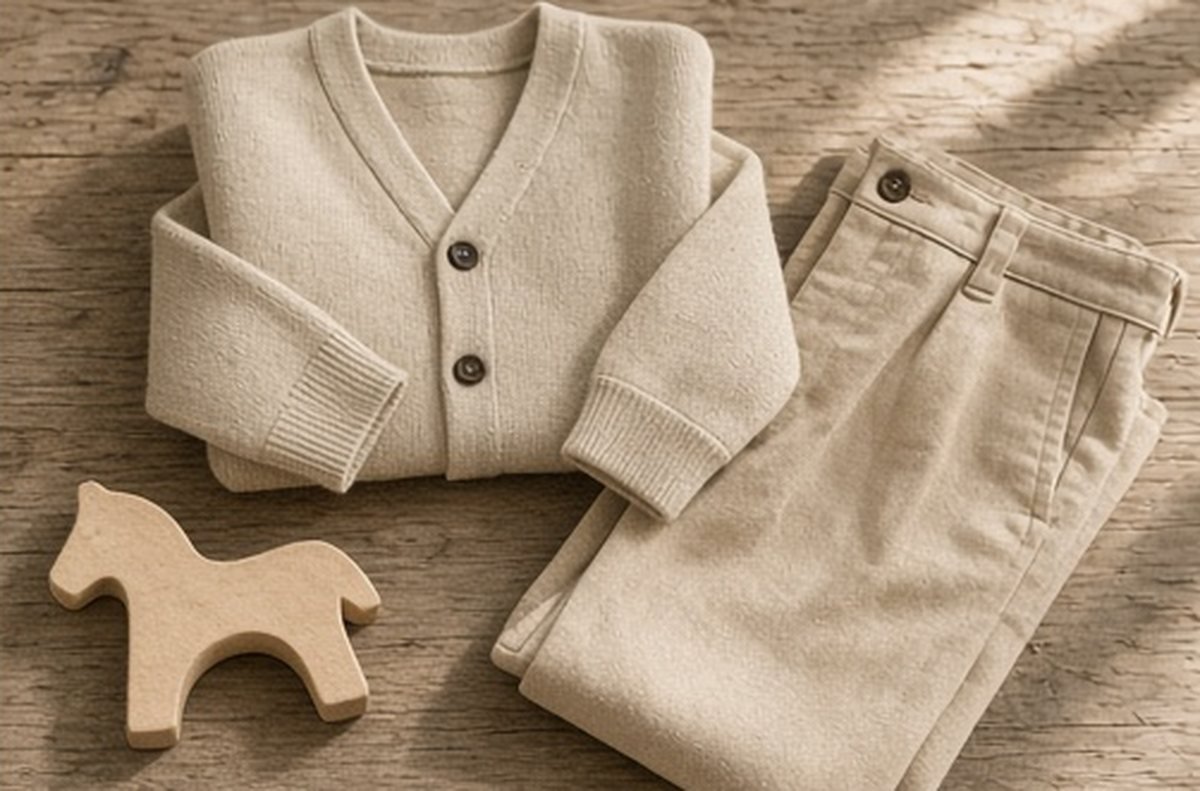
Record measurements only where useful
A few current garment measurements can help another person compare with clothing they already use. Follow a consistent method and describe it clearly, such as a flat body width or length. Do not confuse a finished garment measurement with the body size it will fit.
Keep the label visible too, but avoid treating an age range as a promise. Fit and intended use vary, and another child may need a different cut or amount of room. The record supports the recipient's decision; it should not pressure them to accept a garment because someone predicted it would fit by a particular date.
Note alterations and repairs honestly
If a hem was changed, a button replaced or another repair made, record the fact and the location. Include the date only if known. Do not describe a similar replacement as original or a repair as professionally completed unless that is accurate.
A repair history can be useful without guaranteeing future durability. The recipient still needs to assess current condition. If an issue remains unresolved, state it plainly rather than hiding it inside a positive story about circularity. Passing clothing on should transfer useful information, not transfer a problem under an optimistic description.
Review condition before each transfer
Assess the actual item when it is being considered for another wearer. Stored notes from an earlier season do not establish its current state. Check for visible damage, missing components and other issues relevant to appropriate use, and follow any applicable garment guidance.
Do not assume a material claim or brand reputation makes condition assessment unnecessary. If an item is unsuitable, choose an appropriate next route rather than presenting it as ready. A hand-me-down plan is a possibility based on the garment's real state, not an obligation to keep every piece moving through another wardrobe.
Ask whether the recipient wants it
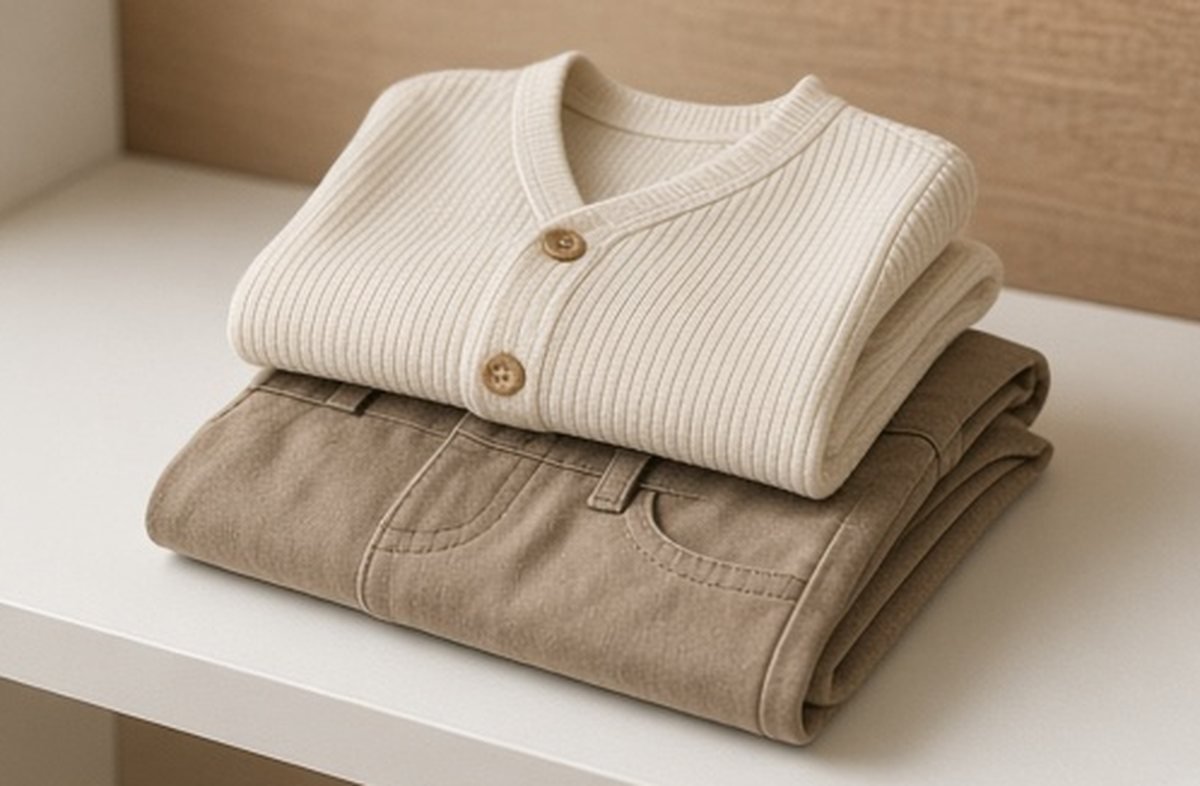
Offer a clear description and let the caregiver decide whether the garment fills a need. They may have enough clothing, different care facilities or a preference for another fit. Do not treat accepting secondhand clothes as proof of shared values or make declining socially difficult.
Avoid storing large amounts solely for an assumed future recipient without agreement. A speculative backlog can use space while the clothes' usefulness remains uncertain. A small, clearly identified group with an interested recipient may be more practical than a large collection organised around growth predictions that no one has confirmed.
Pass information without unnecessary personal data
Include the care details, known changes and relevant condition notes, but remove unrelated order information or personal records. A purchase receipt may contain details the next person does not need. Share only what supports identification, care and an honest understanding of the garment.
Keep small spare parts securely contained and clearly identified if they are appropriate to include. Do not leave loose buttons or sharp tools in pockets. The useful package is understandable and safe to handle, not a collection of extras whose purpose the recipient has to guess.
Let the next wearer make the fit decision
A good record makes assessment easier; it does not replace it. The recipient should compare the item with their own needs and decide whether it is suitable now, later or not at all. That freedom is part of a thoughtful passing-on arrangement.
Clothes bought through a curated retailer can carry several layers of information: the shop, the vendor and the exact garment. Preserving those distinctions helps the next person more than a broad sustainability label. Reuse becomes practical when the piece is wanted, its condition is clear and the care story remains attached without exaggerated promises.