

By Sarah J. · January 30, 2026
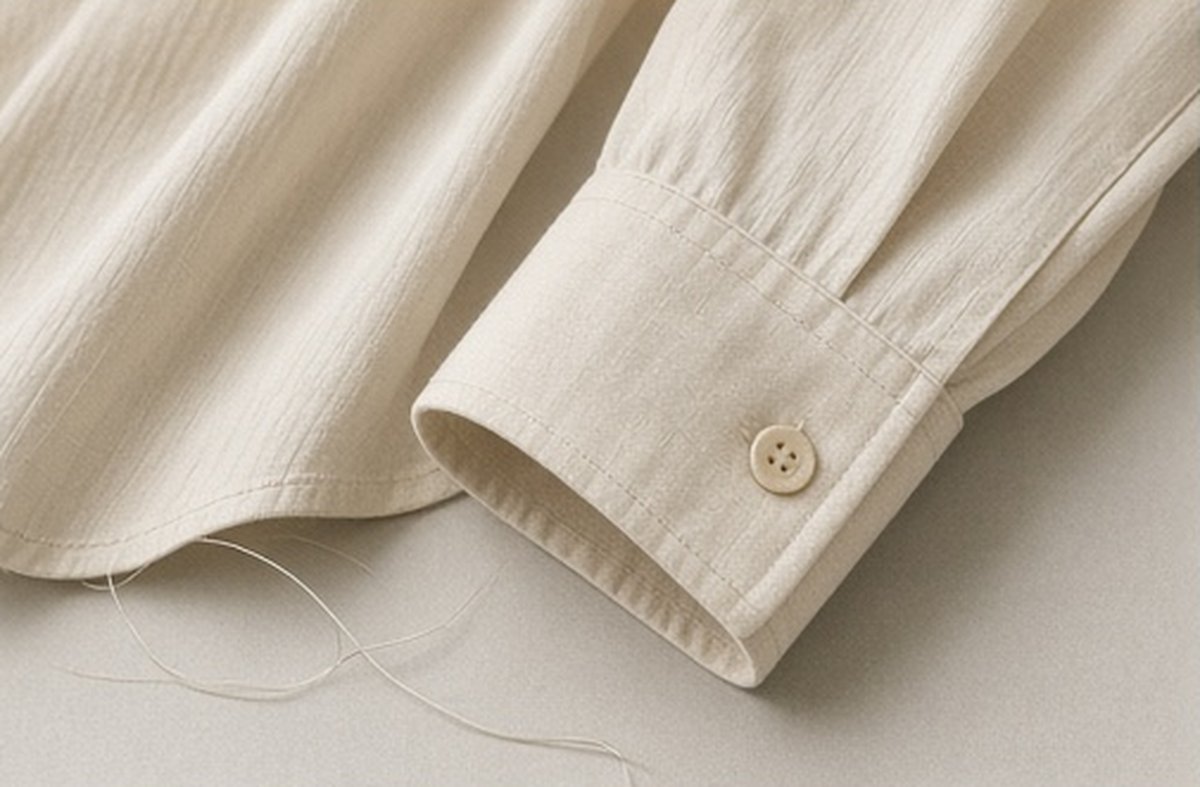
A replacement button from a saved tin must suit the actual buttonhole and attachment, not only the nearest colour. Compare diameter, thickness and construction with a relevant original where available, then choose the visual result within a functional repair plan rather than changing the garment to suit an uncertain spare.
Key takeaways
- Compare thickness as well as width.
- Check the existing opening.
- Agree on appearance.
Keep an original for comparison
If another matching button remains, examine it without removing it unnecessarily. Notice its diameter, thickness and the space beneath it when fastened. Photograph both sides of the candidate and keep it with the garment until you have decided whether it is suitable.
Consider the buttonhole too
A replacement that forces through a small opening can strain the surrounding cloth. A much smaller one may not stay secure. Do not cut or enlarge the buttonhole simply to accommodate whatever is in the tin; ask for repair advice if the fit or construction is uncertain.
Decide the visual result
An exact match may be unavailable, and a deliberate contrasting choice can be acceptable if you like it and it functions properly. Discuss any wider replacement plan before changing several buttons. Keep useful spare components identified rather than returning everything to an anonymous mixed collection.
How do you assess a replacement button from an existing tin?
Identify the garment, missing position and the job that component performs. If a suitable original remains, examine it gently without removing it unnecessarily. A front fastening, cuff or decorative location may have different requirements even on the same piece. Keep the candidate and relevant information together rather than returning them to an anonymous collection before the actual decision is complete.
Notice diameter, thickness and the way the original sits relative to the fabric. A close colour can make two components look interchangeable while their functional relationships differ. Keep observations separate from a complete diagnosis if construction is unfamiliar. The useful starting point is the actual garment and candidate together, not the assumption that any saved part becomes the most suitable choice simply because it avoids another purchase.
Why does attachment deserve a separate comparison?
Look at the candidate’s construction, including holes or a built-in shank where present, rather than judging only the visible face. Different attachment arrangements need suitable methods and space. Do not assume that the same colour or number of holes establishes an identical result. If you lack the relevant experience, ask someone competent to assess the component and garment as a pair.
Keep any known care information with the item and mention uncertain older components where relevant. The spare’s appearance does not establish every treatment it tolerates. A functional replacement belongs in a complete garment whose care remains understandable. Avoid turning the attachment decision into an improvised experiment merely because the part is small or the repair seems too modest to deserve a considered method.
How should the existing buttonhole guide the choice?
Assess the opening and surrounding fabric without repeatedly forcing the candidate through it. A component that is difficult to pass or appears too small for secure use needs an item-specific question, not a stronger push. The buttonhole is part of the construction brief. Do not treat it as an obstacle that can automatically be cut larger to accommodate the favourite spare already selected.
If dimensions or condition are uncertain, preserve the starting state and seek repair advice. A replacement and an alteration to the opening are different scopes of work. Keep them explicit rather than allowing one to follow silently from the other. Another suitable component can be simpler than changing sound garment construction, and an apparent match can remain unsuitable once thickness and fastening behaviour are considered together.
When should appearance be chosen?
Decide the visual preference once functional options are understood. A close match, deliberate contrast or a broader coordinated change are different briefs, and none automatically removes the fastening requirements. Look at the whole garment rather than the loose part in isolation. A colour you like in the tin may not be the effect you want at the particular repair position.
You do not need exact uniformity at any cost, nor must every repair advertise itself. Keep the wearer’s actual preference central. If only one compatible substitute is wanted, a wider replacement project may be unnecessary. If several components are to change, agree the scope before work starts and identify originals to be retained. A considered visual result should sit within appropriate function, not dictate an incompatible repair.
What should you confirm with a repairer?
Bring the garment and candidate components and identify the relevant position. Explain known history, previous difficulty and the desired appearance without declaring that the spare must be used. Keep the candidate as an option until compatibility and method are assessed. A clear brief gives the repairer a concrete decision to support rather than an instruction to make an uncertain part fit by any available change.
Discuss what work is actually proposed and whether originals or unused parts should be returned. Keep recommendations distinct from guarantees, particularly where an exact match is unavailable. The immediate outfit can be another suitable familiar option while the decision is open. A departure deadline does not make a wrong attachment or strained opening a practical long-term solution.
How should the finished repair and remaining spares be handled?
Check intended fastening gently through ordinary use without forcing the closure or stress-testing the attachment. Include the usual relevant layers where they affect fit. If something catches or remains unclear, return to the repair question rather than expecting repeated wear to resolve it. A complete-looking row is not the only measure of a usable garment.
Retain relevant care clarification and identify useful spares with the garment rather than returning everything to the mixed tin. A short note can preserve the relationship without an elaborate catalogue. The practical benefit of saved components is informed future choice, not automatic compatibility. A button is a functional part whose colour, construction and opening need to work together before the nearest shade becomes a genuinely useful replacement.
A button is a small functional component, not just a coloured dot. Compare how it works with the fabric and opening before deciding that the nearest shade is the best replacement.
Which practical check fits the situation?
| Situation | Practical check |
|---|---|
| Candidate | Compare diameter, thickness and attachment rather than colour alone. |
| Garment | Keep the existing opening and surrounding construction in view. |
| Decision | Choose appearance within a suitable functional repair plan. |
Related reading
- A Missing Coat Button Before a Visit: Avoid the Rushed Repair
- Elbow Patches: Measure the Worn Area Before Choosing the Colour
- A Cardigan Over a Cotton Dress: Compare the Two Waistlines
Frequently asked questions
Construction affects the attachment method. If unsure, ask someone experienced to assess the garment and candidate together.
Not automatically. A functional replacement you like may be enough; broader changes are a separate preference and repair decision.
No. Consider the whole component and appropriate method with the actual garment, seeking competent advice where uncertain.
Do not alter by guesswork. Treat any opening change as a separate assessed decision and consider another compatible part first.
No. Reusing a component is practical only when it actually suits the garment and intended repair.