
By Sarah J. · January 31, 2026
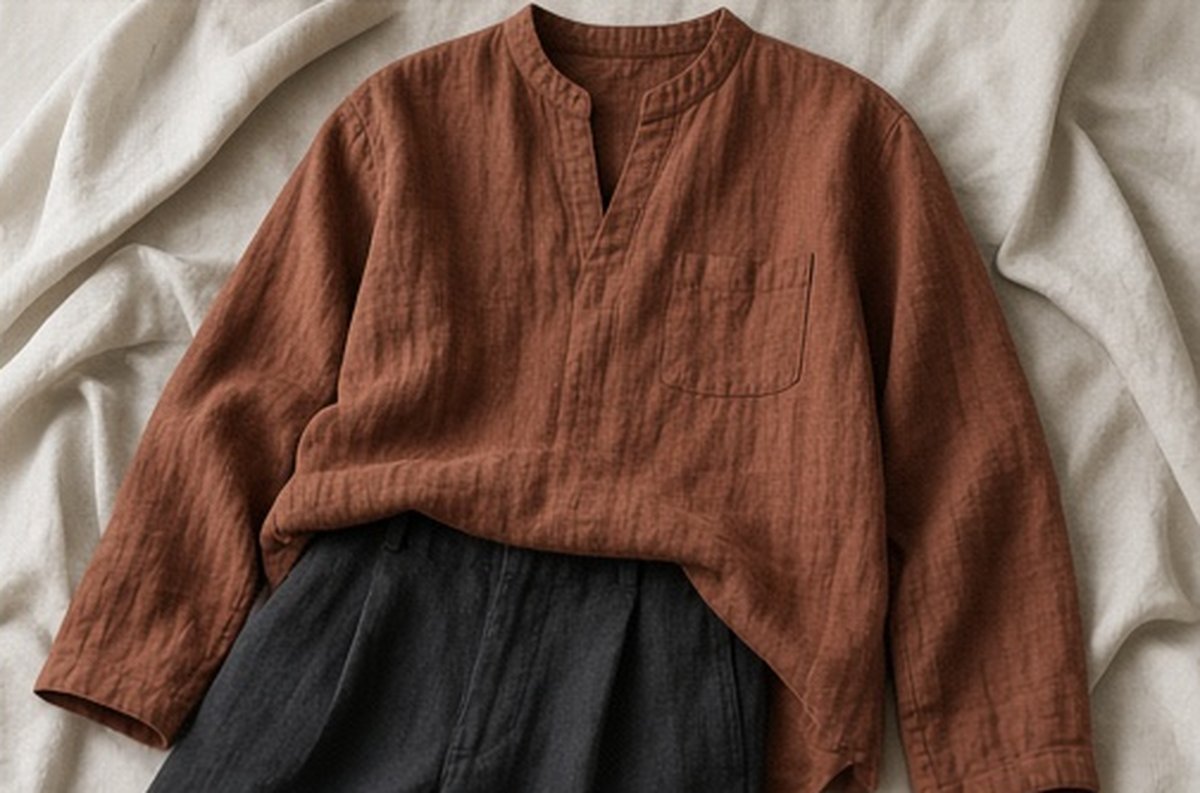
Choose linen shirt tails beneath a winter coat with the actual lower half and full hem visible. Check front, back, ordinary sitting and the coat’s intended closures; a deliberate exposed edge can be a preference, but forced tucking or repeated correction does not become practical simply because the standing photograph looks tidy.
Key takeaways
- Check front and back.
- Fasten the actual coat.
- Avoid a forced tuck.
Inspect the full length
Put on the shirt with the trousers or skirt you will actually wear. Notice side vents and any curved hem before adding the coat. A longer back can behave differently from the front, so use a second view rather than judging only the mirror image straight ahead.
Test the coat closed
Walk a few steps, sit and stand, checking whether the hem becomes trapped or the shirt pulls at the shoulders. Do not force excess fabric into a tight waistband to make the outside look shorter. Compare an alternative existing layer if the arrangement needs constant correction.
Keep weather in the decision
An exposed tail is not a protective outer layer. Plan suitable clothing for local conditions and keep trailing fabric clear of dirty or wet surfaces. If the shirt needs attention afterward, use its own care information rather than treating every linen item identically.
How should linen shirt tails be assessed before the coat?
Put on the actual shirt with the trousers or skirt intended for the day. Notice the front, back, side vents and any curved or uneven hem arrangement. A straight-ahead mirror view may leave the important difference hidden. Keep the shirt’s independent comfort and condition clear before another layer covers it; the coat should not be asked to conceal an unresolved fit or care question.
Use the shirt as designed rather than forcing its fabric into an unfamiliar role. Name the appearance you prefer while leaving room for another practical arrangement. There is no universal requirement that every hem disappear beneath outerwear. The useful brief concerns these physical garments, your preferred use and the day’s conditions, not a styling formula transferred from a cropped image of different clothing.
What changes when the actual winter coat is added?
Put on the intended appropriate coat and use its closures normally without force. Check where the shirt lies around the shoulders, waist and lower edge, not only the visible tail. A coat can change how the layers move or occupy space. Keep the complete arrangement in view rather than judging the shirt alone and assuming the same result once outerwear is fastened.
If fabric becomes trapped or the shirt pulls, identify the relevant relationship before choosing a fix. Another familiar coat or shirt may serve the role more simply. A shorter outer layer is not automatically the answer because the issue can involve more than the two hems. The practical outcome is a manageable combination, not proof that every shirt and coat must work together in all intended arrangements.
Which movements should the hem arrangement support?
Walk, sit and stand gently in an appropriate setting, keeping the actual lower half and relevant footwear in the test. Observe the back as well as the front where practical. A longer tail can move differently from the visible edge first noticed. Do not hold fabric in place throughout the trial and treat the still result as an ordinary outfit ready for the full day.
After moving, notice whether the arrangement remains acceptable without repeated straightening. If not, change one familiar element rather than tightening every layer or adding another accessory. The feedback is specific to the pairing, not a verdict that linen tails are inherently unsuitable for winter. One successful arrangement can be enough while other combinations remain untested or reserved for another use.
When is a tuck appropriate rather than forced?
Use an intended comfortable arrangement and check the actual waistband independently. Extra fabric compressed into a close space can create a different fit question, so do not make the outside appear shorter by ignoring discomfort beneath it. A longer top changes visibility without resolving a restrictive lower garment. Keep the underlying fit as a separate requirement before deciding whether a tuck suits the complete outfit.
Compare another familiar version, including leaving the shirt out where appropriate, before turning a style preference into alteration. If a permanent change genuinely interests you, ask about the actual construction and desired result. The immediate outfit can remain another suitable choice while that question is assessed. A cropped photograph is not enough information to make an irreversible hem decision for a different garment.
How should weather and transitions shape the decision?
Choose appropriate clothing for the actual conditions and activity, keeping protection separate from the visual hem preference. An exposed shirt tail is not automatically an outer protective layer. Keep fabric clear of unsuitable wet or dirty surfaces rather than relying on its material name to make every contact unimportant. A useful indoor appearance does not settle the journey’s practical requirements.
Plan the version that remains when the coat comes off and a suitable place for removed clothing. You may want different arrangements at different stages, but do not make the day depend on constant rebuilding or an unconfirmed storage surface. Practical flexibility can be a simple choice before leaving. The preferred outfit should support the ordinary transition, not require everyone else’s space or attention to preserve the original styling idea.
What should happen after wearing the combination?
Assess the shirt’s condition and follow its complete care information if attention is needed. Do not transfer a general linen recipe to every construction or treat a neat surface as proof of readiness. Read the coat and other garments separately as well. Worn together does not make the pieces one care unit or guarantee the same turnaround before the next outing.
Keep a brief record of the specific successful arrangement if it helps repetition. Review ordinary use rather than relying solely on the first mirror view, and leave uncertain pairings provisional. A deliberate hem choice can be personal and simple. Its practical value comes from comfortable movement, manageable care and appropriate conditions, not from hiding every edge or keeping a difficult stack continuously corrected for the sake of a photograph.
A deliberate hem arrangement can be simple and personal. The useful version stays comfortable when the coat closes and when you sit down, not only when every layer is held in place for a photograph.
Which practical check fits the situation?
| Situation | Practical check |
|---|---|
| Before outerwear | Check the full shirt hem with the actual lower garment. |
| Complete pairing | Use the intended coat closures and ordinary movement. |
| After use | Assess actual condition and follow separate complete-item care. |
Related reading
- Linen Shirt Buttons Under a Winter Knit: Check the Pressure Points
- Convertible Dress Tie Ends Beneath a Winter Coat
- A Linen Blouse Under a Winter Vest: Check the Armhole Edge
Frequently asked questions
No. That is a styling preference, provided the combination remains practical and appropriate for the conditions.
No. Check the full pairing, including shoulder room and how the shirt sits with the lower garment.
No. The appearance can be a preference where the actual combination remains comfortable and appropriate for the conditions.
No. Keep the lower garment’s independent fit visible rather than compressing extra fabric to hide the issue.
No. Assess shoulders, waist and full garment interaction before assuming the two visible hem lengths explain everything.