
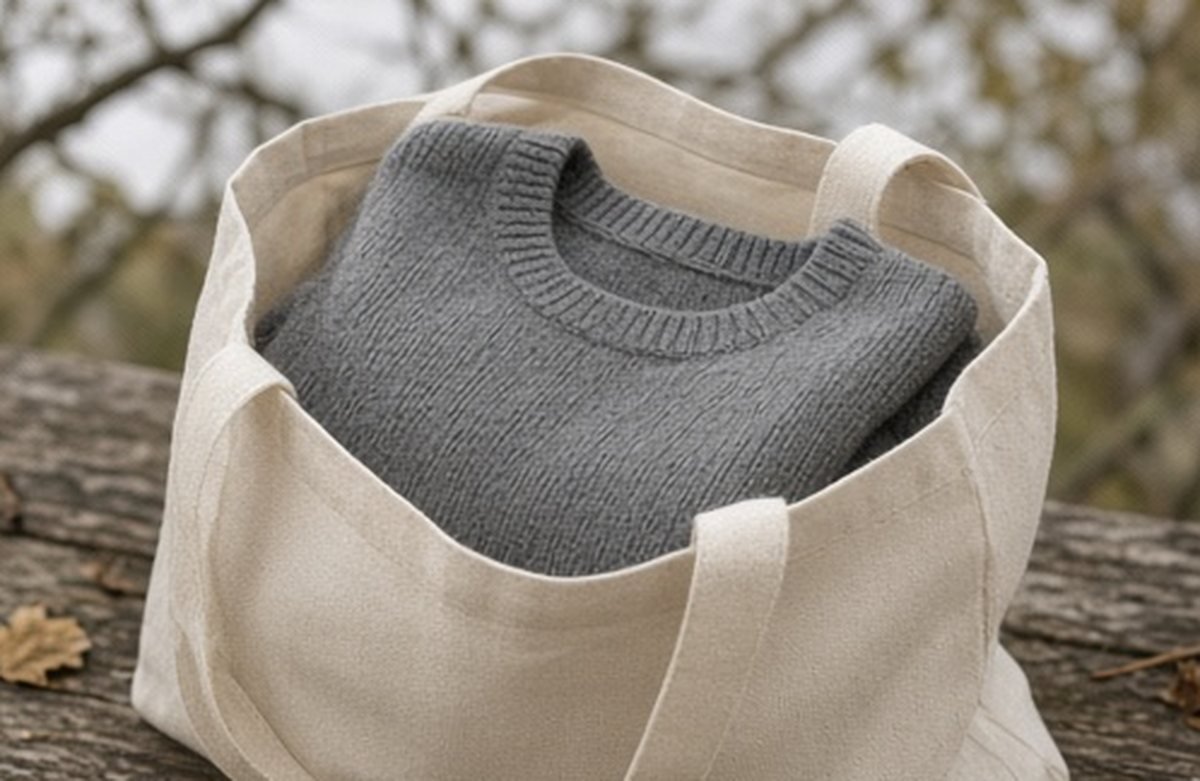
When a knit develops a worn-looking area, it is tempting to judge the whole garment immediately. Before reaching a conclusion, look at the pattern of contact during ordinary use. A shoulder strap, the side of a bag or a rough component may repeatedly meet the same part of the fabric.
This does not prove that a bag caused a particular mark, nor does it establish a fault in either item. It gives you a practical place to investigate. The goal is to understand the combination and reduce avoidable contact where possible, not to claim that any sweater or bag can be made immune to wear.
Locate the change precisely
Look at the garment in ordinary light and identify what you can actually see: a fuzzy surface, a pulled loop, a thinning area or another change. Avoid treating all these conditions as the same problem. A pilling tool, for example, is not automatically the right response to every visible irregularity.
Compare the location with the areas touched by bags, seat belts, desks or other clothing. A repeated pattern can suggest a question, but it is not conclusive evidence. If the damage is significant or the cause matters to a purchase issue, seek an appropriate assessment rather than diagnosing it from a quick photograph.
Inspect the bag as well
Check the contact surfaces for visible roughness, exposed hardware, damaged stitching or trapped debris. Do this without dragging the bag across the garment as a test. A component that looks smooth can still behave differently in use, so avoid turning appearance into a guarantee of compatibility.
Follow the bag manufacturer's guidance for any cleaning or repair. Do not sand, glue or cover components in an improvised way that could create another problem. If the bag has a damaged area, address that condition through an appropriate route before continuing to use it against clothing you want to protect.
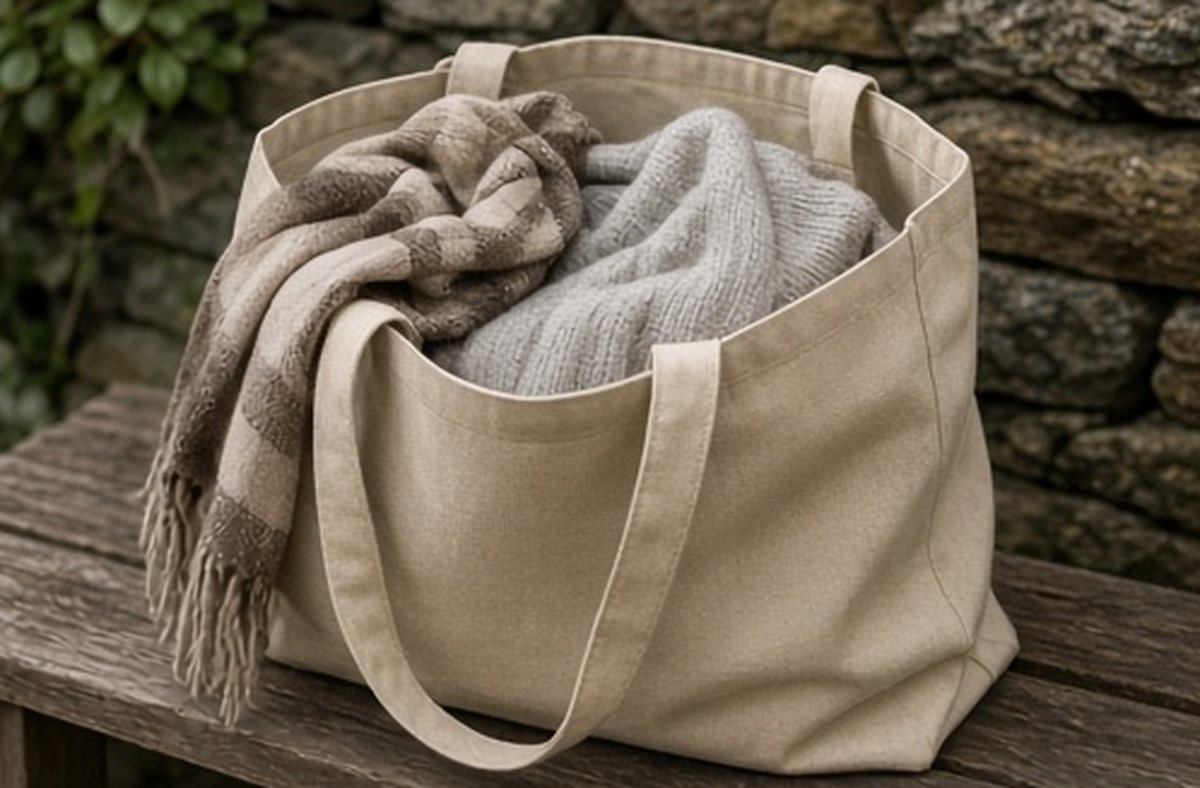
Recreate the ordinary carrying position
Put on a familiar outfit and the bag with a realistic, manageable load. Observe where it sits while standing and walking normally. The contact point may change depending on strap length, outer layers and how you carry the bag. Do not overload it or repeat abrasive movements to demonstrate a theory.
Consider whether the bag rests on the knit, a coat or another layer during most of the day. A photograph taken while standing can miss the movement that occurs on a commute. The useful observation is where repeated contact happens, not whether the combination looks balanced in a mirror.
Count the load honestly
Empty the bag and identify what you actually need. Removing unnecessary contents may make the carrying arrangement more manageable, but it is not a proven cure for a fabric issue. Keep any benefit in proportion to what you observe rather than promising that a lighter bag prevents all wear.
Think about how often you adjust or reposition the load. A bag that slips or feels awkward may create repeated handling as well as discomfort. The solution might involve a different arrangement using equipment you already own. Do not assume the answer must be a new bag or a more expensive sweater.
Avoid testing fixes on an uncertain garment
If you are still deciding whether to keep a garment, respect return conditions and avoid experiments with tools, patches or protective products. Do not shave a surface, cut a loop or apply a coating simply to see whether the appearance improves. Those actions may alter the item and may not address the underlying condition.
For a garment you own, follow its care guidance and use appropriate professional advice when needed. A loose loop should not be treated as surplus thread to cut without understanding the construction. The visible symptom and the suitable repair are separate questions, especially with delicate or unfamiliar knitwear.
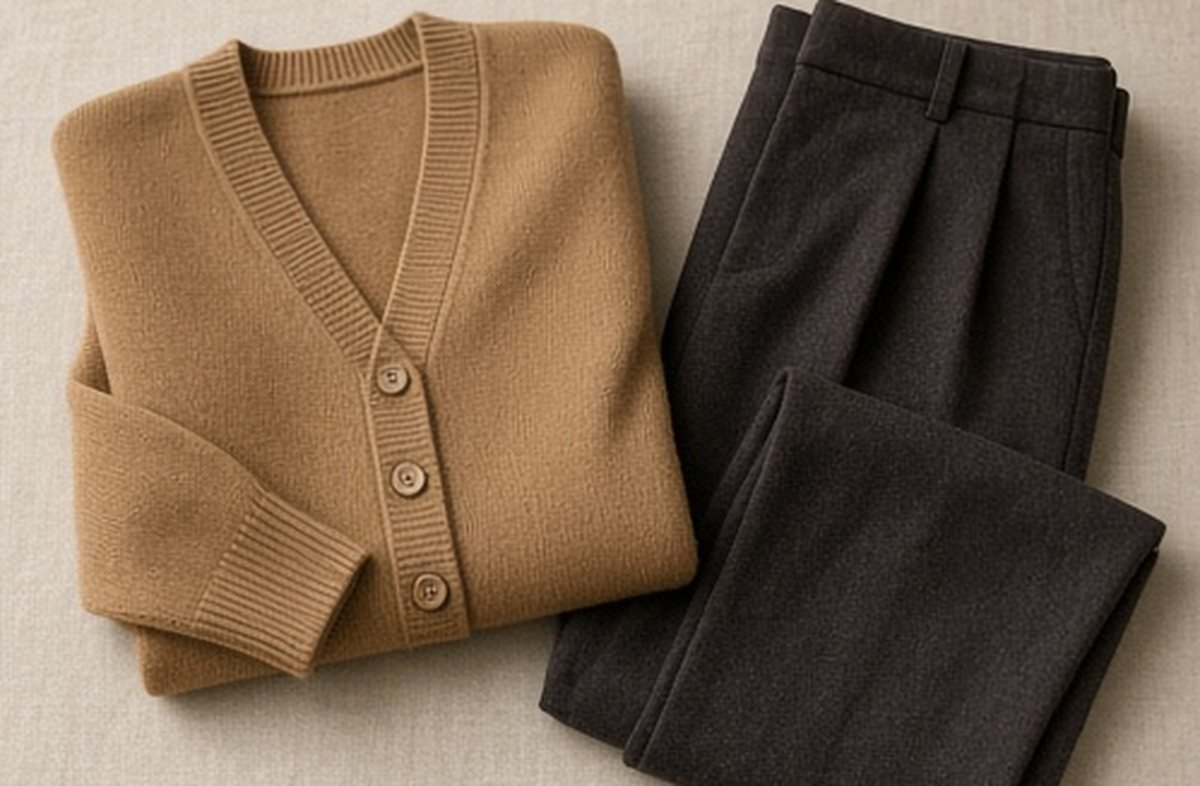
Choose a practical combination for demanding days
For a day involving repeated bag carrying, consider which existing clothing-and-bag combination you already find manageable. You may prefer an outer layer between the strap and knit, a different carrying position or another familiar garment. None of these choices guarantees protection, but they can be assessed as part of real use.
Avoid reserving every favourite garment indefinitely because it might show wear. The purpose is to wear clothes in suitable contexts, not preserve a perfect surface at all costs. A deliberate combination is more useful than an anxious rule that all knitwear is too delicate for ordinary travel or commuting.
Record changes before replacing anything
If you adjust the carrying arrangement, note what changed and inspect the garment over time through normal use. Do not claim a controlled test from a few outings. Weather, layers and different activities can all affect the comparison, and existing damage may remain visible regardless of a new arrangement.
The record can still help you decide whether a specific combination is worth repeating. Keep it simple: which bag, which layer and where contact occurred. If the issue persists or worsens, consider appropriate repair or professional assessment rather than repeatedly applying a cosmetic treatment without understanding what is happening.
Judge the outfit as a system
A sweater, bag and outer layer do not operate independently once you wear them together. Looking at their interaction can reveal a practical change that a garment-only judgment misses. It can also show that a particular piece needs care for reasons you cannot establish remotely.
The useful outcome is a better-informed next step: a bag repair, a revised carrying arrangement, a suitable clothing repair or a different existing combination. That is more specific than declaring a whole fibre or brand unsuitable, and it gives the clothes you own a fairer chance to work in ordinary life.