

The inside of a garment can answer questions that a styled front photograph leaves open. You may see a lining, a reinforced edge, a hem finish or a previous repair. Those details can help you decide what to ask next, especially when shopping secondhand or considering an alteration.
Interior photographs are evidence of visible construction, not a certificate of quality. A neat-looking seam does not establish durability, and an unusual finish is not automatically a flaw. Read the images in relation to the garment's intended use, the information in the listing and any questions that still require a closer look.
Distinguish the outer fabric from a lining
A lining is an additional layer inside some garments. It can cover the whole interior or only part of it, depending on the design. Look for where it begins and ends rather than assuming that a lined bodice means the skirt or sleeves are lined too.
Ask for the lining composition and care information where it matters. The outer fabric's description does not identify every internal material. Photographs may show a contrast in colour or texture, but they cannot reliably establish fibre content or how the layer will feel against your skin. Leave those questions open unless the listing answers them.
Recognise a facing without overreading it
A facing is a shaped piece used to finish an opening or edge, such as a neckline. It is not necessarily a full lining. In an interior image, you may see a relatively narrow section that follows the edge while the rest of the garment remains unlined.
This can explain why a product looks more structured around an opening than elsewhere. It does not by itself tell you whether the garment will stay in place or feel comfortable. If an edge appears to turn outward in photographs, ask about its condition and construction rather than diagnosing a fault from one angle.

Look at how raw edges are managed
Seam edges can be enclosed, bound or finished with visible stitching, among other methods. Different choices suit different fabrics and designs. A visible overlocked edge is not automatically inferior to an enclosed seam, and a deliberately exposed detail should be distinguished from accidental damage.
Look for consistency and any obvious change that needs explanation. Loose threads, fraying or an opening may merit a closer photograph, but do not assume every thread tail signals a failing seam. Ask the seller to identify damage and repairs directly. A construction vocabulary should help clarify the question, not create false certainty.
Follow the seam through stress areas
Request clear views of the areas relevant to your intended use: underarms, pocket attachments, seat seams or closures, for example. A general interior photograph may not show these well enough. Use the whole-garment image to locate them and a closer image to understand the visible condition.
Do not ask someone to pull hard on an item to demonstrate strength. Visible stitching and fabric condition can inform a decision without a destructive test. If the garment will need substantial repair or must meet a demanding requirement, a qualified professional's assessment may be more appropriate than confidence based on a remote photograph.
Check the hem and any changes
An interior hem photograph can show how the edge is finished and whether an alteration may have been made. Ask directly if the length has changed, especially if the listing's measurements differ from a known product specification. Do not infer the original length from the remaining fabric alone.
If you hope to lengthen or shorten the garment, photographs can support an initial discussion but cannot establish feasibility. Fabric marks, seam allowances, linings and decorative details may affect the options. Avoid buying solely on the assumption that a tailor can restore an imagined original length without inspecting the actual item.
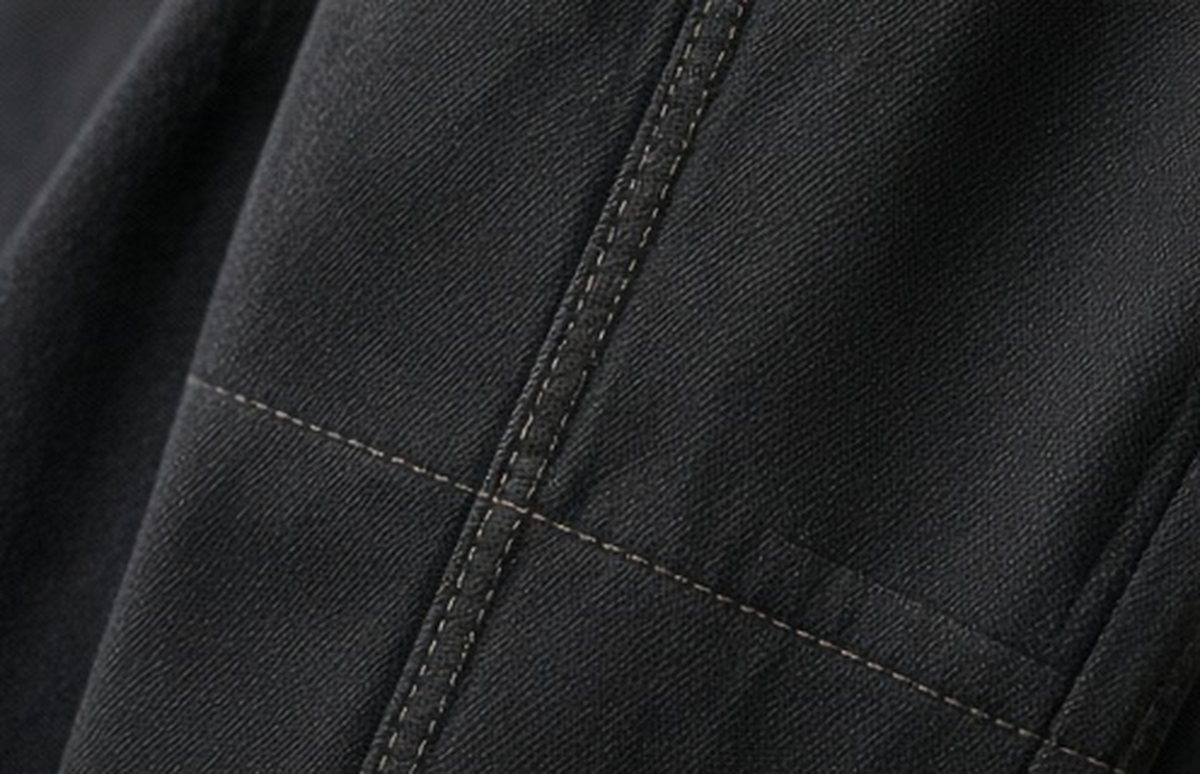
Read repair evidence neutrally
A visible repair is not automatically a reason to reject a garment. Its location, extent and suitability for your use matter. Ask what was repaired, how the area behaves now and whether further attention is known to be needed. Keep the questions factual rather than treating all mending as either a virtue or a defect.
Compare the repair view with the corresponding exterior. Some changes may be visible outside, while others may be mostly internal. You need enough information to decide whether the result suits you. A remote listing should not be expected to prove an unlimited remaining lifespan, and a repair photograph cannot provide that guarantee.
Include labels in the request
Ask for readable composition and care labels when those details are important. Check whether the lining or other components are identified separately. Do not replace a missing label with a visual guess, particularly when a purchase depends on avoiding a fibre or using a specific cleaning process.
Country-of-origin information, size labels and brand names answer different questions from construction photographs. Keep them separate in your notes. A label can provide a stated fact without establishing current condition, while a photograph can show condition without confirming composition. Neither type of evidence needs to be stretched beyond what it actually shows.
Turn photographs into a decision
Make a short list of what is visible, what the seller states and what remains unknown. If the unknowns affect comfort, care or the cost of making the garment usable, ask before committing. If they remain unresolved, you can decide that the uncertainty is too great without declaring the garment badly made.
Interior photographs are most useful when they improve the questions, not when they encourage instant grading. A thoughtful buyer may choose a simply finished garment that suits the job, accept a clear repair or decline a beautiful piece with unanswered care requirements. The useful standard is suitability supported by evidence, inside and out.