
This post may contain affiliate links. We may earn a commission if you buy through them, at no extra cost to you. See our Affiliate Disclosure.
Remade clothing brands rebuild garments from cloth that already exists: leftover mill rolls, deadstock, or cut-and-sew from previous clothes. The result is new-to-you design with a shorter raw-material story. Quality still varies, so read how each brand sources and finishes.
Quick answer
Remade clothing starts with existing fabric or garments. Look for mill names, fibre content, where it was sewn and how sizing works on one-of-a-kind cloth.
Key takeaways
- Remade overlaps with upcycled and deadstock, but not every piece is identical.
- Expect colour and panel variation.
- Returns can be stricter on unique items.
- Care labels still matter; old cloth can be delicate.
How is remade different from upcycled or deadstock?
People use the words loosely. Deadstock usually means unused surplus fabric. Upcycled often means cutting existing garments into new ones. Remade is a useful umbrella for both. Our primers on deadstock, circular fashion, upcycled denim and patchwork clothing map the overlaps.
What does a clear remade product page look like?
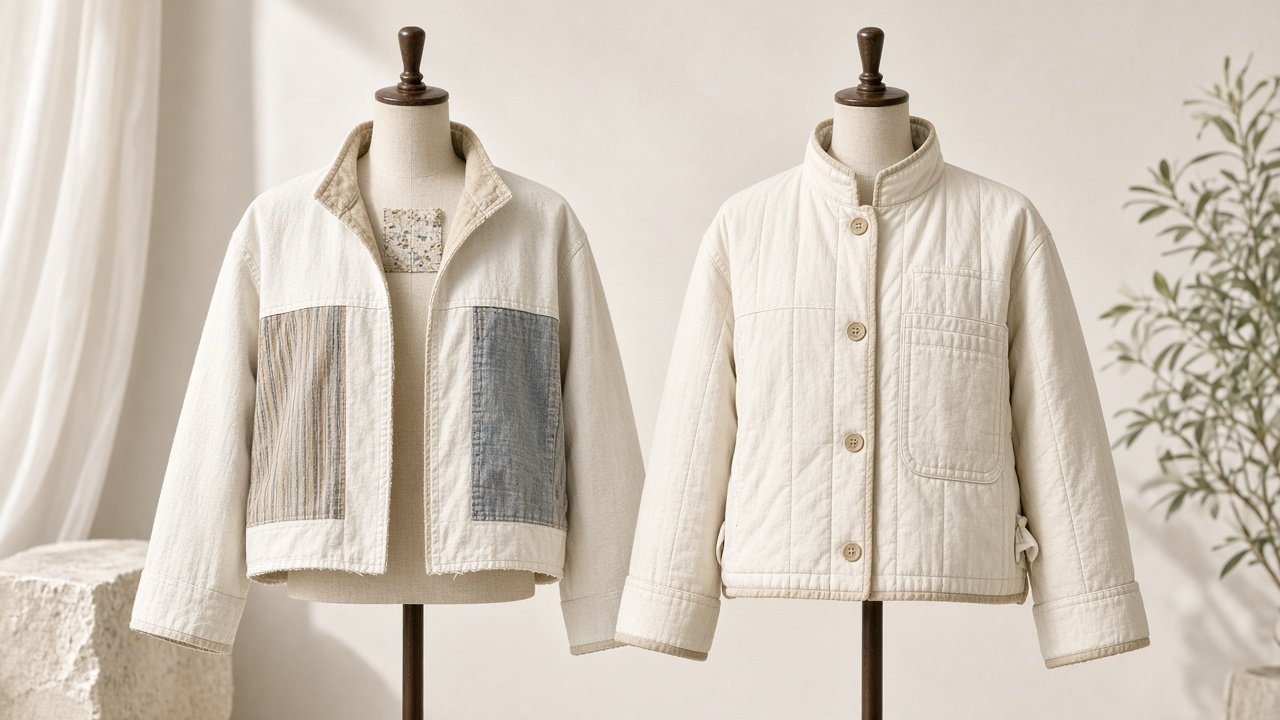
WE-AR4’s Court Jacket lists upcycled cotton, a reversible mix of cotton piqué and striped poplin, made in New York, and names rescued mill sources in Italy, per the brand. That level of detail (fibre, construction, place of make, mill notes) is what to reward when you shop remade.
Other remade and deadstock paths we have covered
- No More Nobody works with deadstock linen in London-made pieces such as the Valery skirt.
- Kantha and sari programmes rework existing cloth; see kantha clothing.
- Patchwork and visible mending extend clothes you already own: patchwork and visible mending.
| Question to ask | Why it matters |
|---|---|
| Where did the cloth come from? | Distinguishes remade from ordinary new fabric |
| Where was it sewn? | Labour and quality clues |
| Is each piece unique? | Affects sizing photos and returns |
| How do I wash it? | Older or mixed cloth can be fragile |
| What happens if it does not fit? | One-of-a-kind items may be final sale |
How should you care for remade pieces?
- Follow the coolest, gentlest option on the label.
- Wash less; spot clean when you can.
- Store structured jackets on hangers with room to breathe.
- Mend early so small issues do not end the garment.
Flow Check: WE-AR4
- What it is: Design-led pieces that include upcycled and rescued materials, with made-in-New-York production on styles like the Court Jacket.
- Who it’s for: Shoppers who want remade cloth with mill-level detail.
- What to know: Product pages may list mill geography and fabric codes. Confirm fit and return rules on unique fabrics. Visit WE-AR4
FAQ
No. The cloth may be unused deadstock or recovered mill stock that never reached a shop floor as a finished garment.
Often yes if graded normally, but unique panelled garments can vary. Read size notes carefully.
It can be, because sorting and cutting irregular cloth takes skill. You are paying for labour and design, not only fibre.
Yes. Simple rebuilds and mending count. Start with our visible mending guide before unpicking a whole jacket.
Bottom line
Remade clothing is strongest when the brand shows its working: where the cloth came from, who sewed it, how to care for it. Ask those questions every time.