
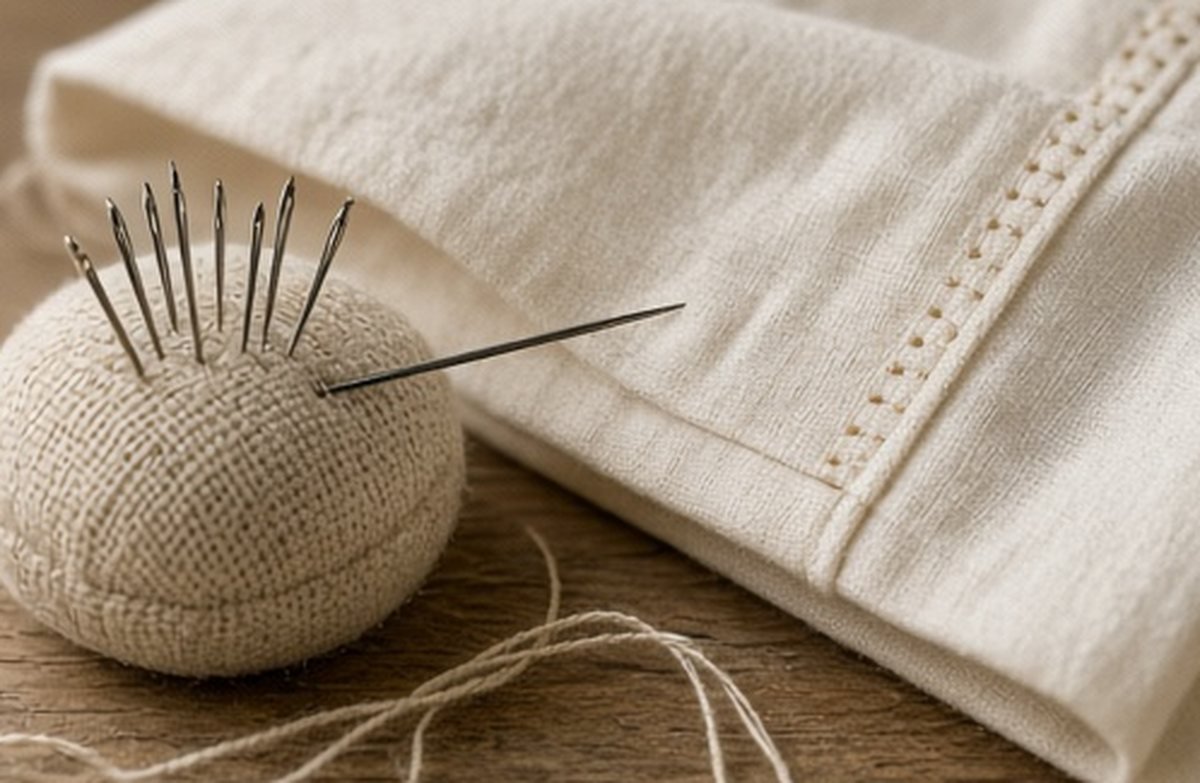
A clothing emergency kit does not need to turn a traveller into a tailor. Its useful role is limited: contain a small problem, support a familiar minor task or help you keep an item separate until it can receive proper attention. A kit full of tools you cannot confidently use may add complexity without adding practical capability.
Begin with the clothes you are taking and the repairs you already know how to handle. Use suitable supplies you own where possible. This is not a list of essential products to buy, and it does not replace a qualified repair professional when the construction or damage is beyond your experience.
Identify the likely small problems
Look at your actual garments before packing. A loose button or existing seam issue should be assessed in advance rather than deliberately deferred to the journey. The emergency kit is not a substitute for preparing clothes that are already known to need attention.
Think about modest, plausible needs such as keeping a detached original button secure or recording a small tear for a later repair. Do not design the kit around every imaginable failure. A realistic scope makes it easier to choose a few useful items and recognise when the sensible response is to stop wearing the garment.
Separate containment from repair
You may need a small secure container or labelled envelope for a loose part, even if you do not intend to sew it back on during the trip. Preserving the original button and identifying its garment can make a later repair easier without introducing a rushed task in an unsuitable setting.
Likewise, a note or photograph can record damage before it is forgotten. Keep any image private unless you deliberately choose to share it through an appropriate repair enquiry. Document the whole garment and the affected area clearly. Information can be a more useful emergency resource than another unfamiliar tool.
Include only familiar tools
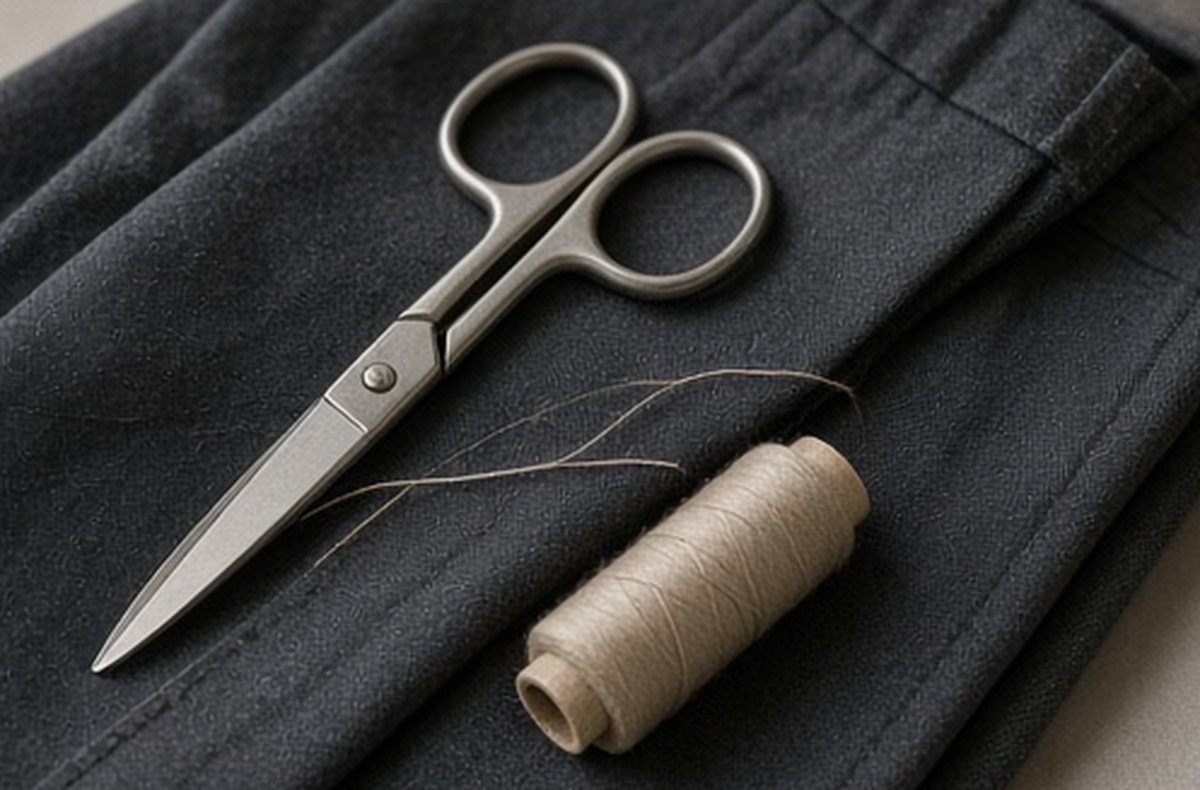
If you regularly carry out a particular minor sewing task, choose the appropriate small supplies for that task and keep them securely contained. Do not assume a prepacked kit contains a suitable needle, thread or replacement component for every garment in your bag.
Avoid learning an invasive repair on an unfamiliar garment while travelling. A damaged area may need support or assessment that a simple stitch does not provide. If you are uncertain, preserve the part, protect the rest of the luggage and seek help. A limited kit is successful when it supports sensible decisions, not when every problem is repaired immediately.
Check transport and venue restrictions
Before carrying needles, scissors or other tools, check the relevant rules for your actual transport and any venue involved. Requirements can differ, and a clothing article cannot establish what is permitted on a particular service. Do not assume that a small item is automatically allowed.
If a tool is unsuitable for the journey, leave it out and plan another route to assistance. Secure sharp objects appropriately and keep small parts away from children or anyone for whom they create a hazard. Safety and compliance are part of the kit's usefulness, not secondary details after the supplies are chosen.
Avoid improvised permanent fixes
Do not apply glue, strong tape, heat or a cleaning chemical to unfamiliar fabric simply because it is available. A quick-looking fix may change the garment or complicate later work. Follow the garment's care guidance and any appropriate product instructions rather than guessing compatibility.
Temporary measures also need judgment. Do not use a fastening in a way that creates an exposed sharp point or rely on an uncertain repair for clothing whose function is important to safety. If a garment is no longer suitable to wear, a spare outfit or another practical arrangement may be the right answer.
Add the information that tools cannot supply
Keep readable care details for garments whose labels are difficult to interpret, especially if you may need professional help away from home. A repair professional can assess the item, but a clear composition or care label may still be useful context. Do not replace missing information with a confident fibre guess.
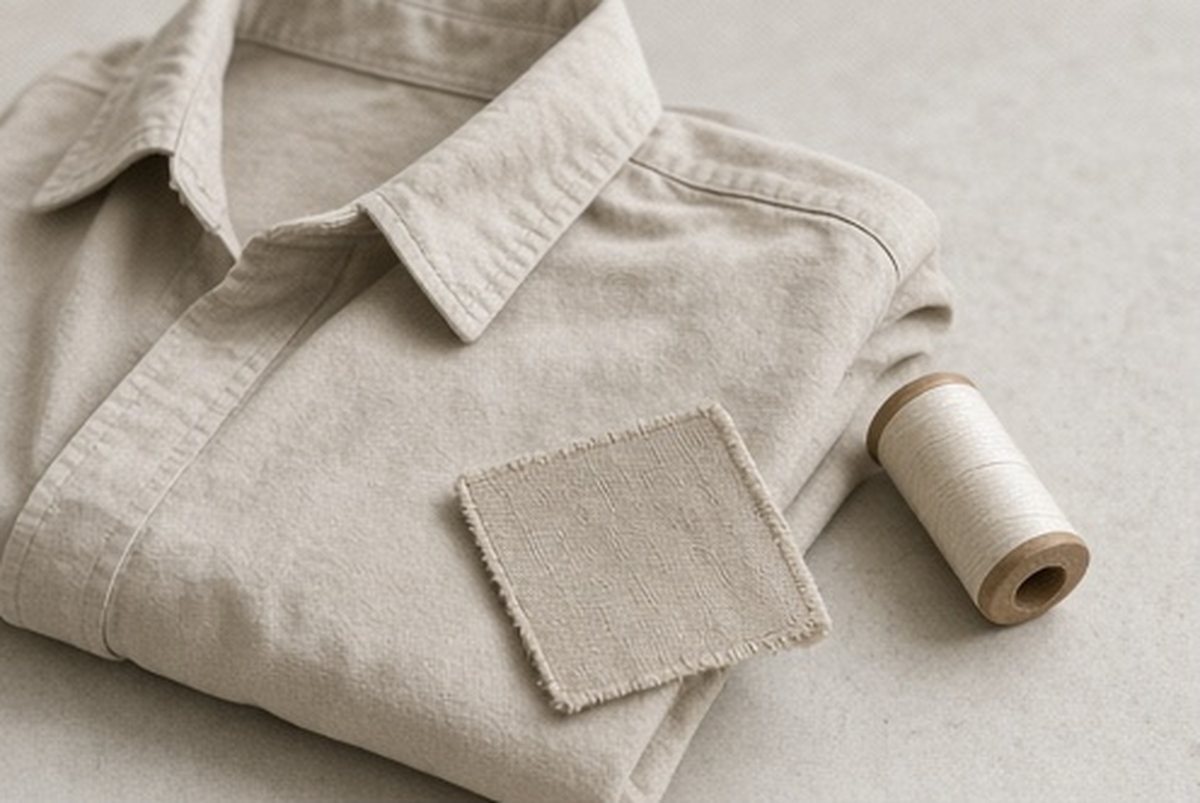
If you have an original spare button, identify it clearly and keep it secure. A generic replacement can be useful in some circumstances, but it should not be described as an exact match without evidence. The kit should preserve useful distinctions rather than turning every small component into an interchangeable emergency part.
Make the spare outfit part of the plan
A practical response to clothing damage may be changing clothes, not repairing in place. Keep an appropriate alternative available where the itinerary makes that important. It need not be an additional special emergency outfit if an existing packed combination can cover the role.
Know where you could change and how the affected garment will be contained afterward. Avoid putting a damp or soiled item against clean clothing merely because the repair task is unresolved. The overall plan includes transport, comfort and the next step, not only the contents of a tiny sewing pouch.
Review after actual use
After the trip, remove unnecessary items, replace anything safely used up and follow through on deferred repairs. A kit that helped you preserve a button or identify damage has done useful work even if no sewing took place. Do not measure its value by how many dramatic fixes it enabled.
Keep the scope modest and familiar. The best clothing emergency kit supports tasks you can manage, stores parts safely and makes it easier to recognise when another solution is needed. That is more useful than carrying a large collection of supplies whose purpose you would have to learn in the middle of the problem.